
Technical publication
Back to publications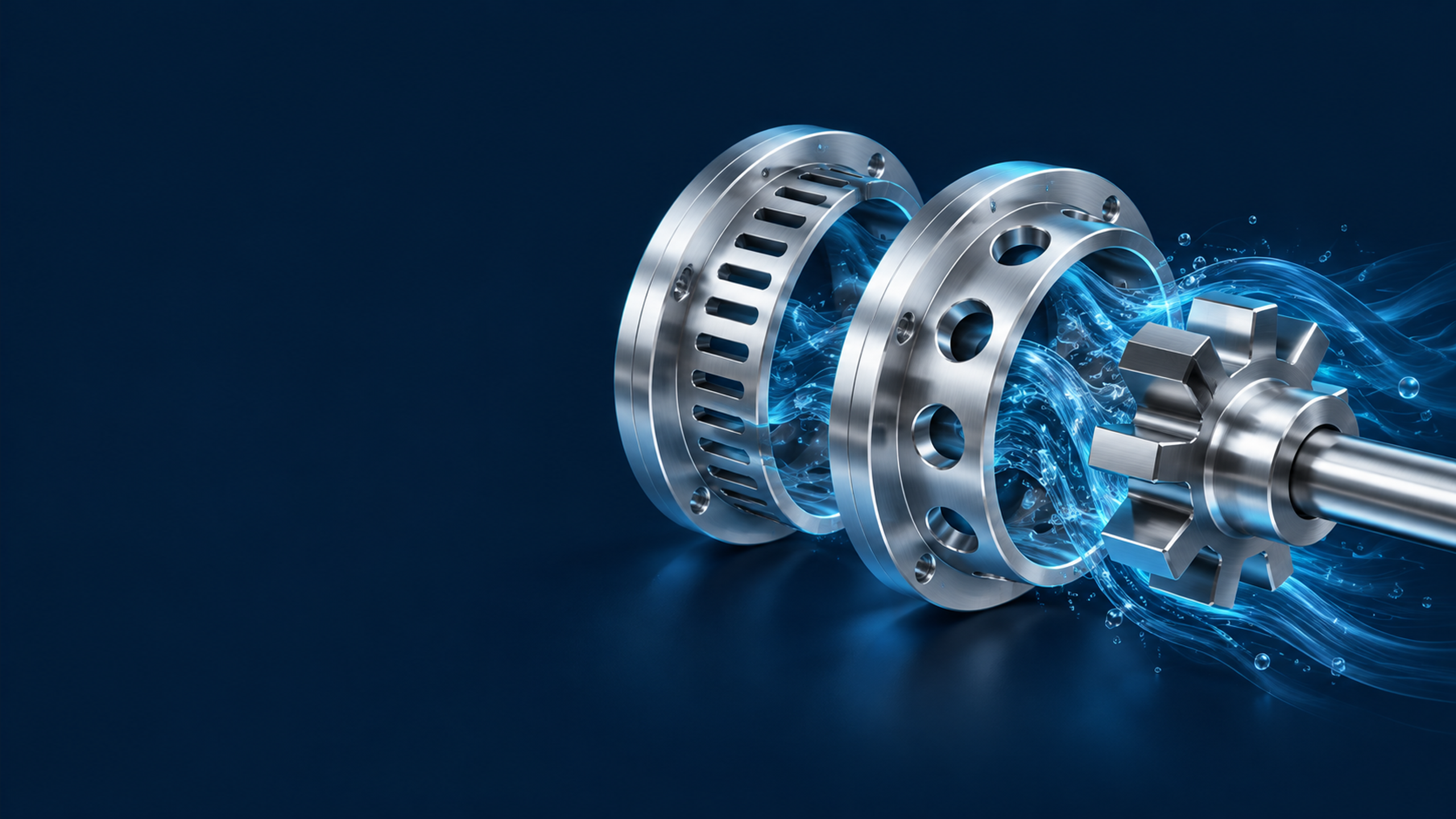
Other
Performance considerations in stator selection for high shear rotor-stator mixers
okozyuk.com
Published
Read complete publication for whole-document Find and printing. Browser Find and native printing on this reader include only loaded content.
9. Bottom line engineering selection guidance
Use coarse disintegrating heads when the controlling requirement is hydraulic throughput, whole vessel turnover, solids ingestion, and tolerance to broad viscosity variation. These heads are usually the safest first choice for initial incorporation, bulk recirculation, and difficult feeds that would overload finer stators.
Use square hole screens when the duty requires the best general purpose balance between shear generation, throughput, and operating practicality. They are often the most versatile option for routine dispersions and many emulsification services where neither extreme fineness nor extreme fouling resistance is the primary design driver.
Use slotted heads when the formulation contains fibrous, stringy, elastic, or tacky material, or when viscosity is high enough that screen restriction becomes a process bottleneck. Their advantage is not simply lower plugging risk, but better preservation of usable flow under difficult rheology and nonideal particle morphology.
Use fine screen heads only after the process is already conditioned for them. Their proper role is final stage droplet refinement, tight particle size reduction, or finishing of an already well wet and mobile system. They are usually poor choices for first contact powder incorporation or for feeds likely to blind the stator.
Use multistage and toothed work heads when the process economics favor tighter structural control, fewer recirculation passes, and improved reproducibility over maximum simplicity or raw throughput. These geometries are most justified when the target product requires a narrower final distribution, more repeatable endpoint, or higher energy density within a controlled residence path.