Recommended reading by Dr. Oleg Kozyuk
Books and practical references that complement the archive’s technical publications.
Foundations and reference
-

Book
Cavitation and Bubble Dynamics
A reference on the physical mechanisms behind bubbles and cavitation, connecting core theory to engineering situations such as pump and turbine performance, hydroelectric equipment damage, ship propellers, and combustion engines. It brings together bubble motion and cavitating flows across analysis and application for engineers and students studying the subject.
Find on Amazon (opens in a new tab; when scripting is available, later unmodified clicks reuse that tab when browser policy permits)
-

Book
Cavitation
This broad survey brings together hydrodynamic and acoustic foundations with experimental work across physics, chemistry, and biology. It follows cavitation into practical settings, including propeller erosion and ultrasonic cleaning, and related phenomena such as cell fragmentation and sonoluminescence, offering a single-volume introduction to a subject spread across many research areas.
Find on Amazon (opens in a new tab; when scripting is available, later unmodified clicks reuse that tab when browser policy permits)
-

Book
Hydrodynamic Cavitation: Devices, Design and Applications
A guide to passive hydrodynamic cavitation devices, covering axial and swirling designs, experimental characterization, and computational modeling. It examines applications such as water disinfection, wastewater treatment, biomass pretreatment, and other industrial processes, with case studies and discussion of emerging directions. The treatment addresses reactor design, performance, and scale-up.
Find on Amazon (opens in a new tab; when scripting is available, later unmodified clicks reuse that tab when browser policy permits)
-
Book
Analysis of Hydrodynamic and Acoustic Cavitation reactors: Numerical and experimental analysis, applications, operations and scale-up
A research account of hydrodynamic and acoustic cavitation reactors, combining bubble dynamics, computational fluid dynamics, and reaction kinetics with experimental and numerical analysis. It discusses operation and scale-up for microbial disruption, water and ballast-water disinfection, emulsification, and nanoparticle production. Steam-induced cavitation is also explored as a way to improve reactor performance.
Find on Amazon (opens in a new tab; when scripting is available, later unmodified clicks reuse that tab when browser policy permits)
-

Book
Application of Hydrodynamic Cavitation in Environmental Engineering
The first half builds a physical and thermodynamic account of cavitation in natural liquids, including bubble formation, growth, collapse, and reactor types. The second turns to environmental use, especially advanced oxidation and breakdown of persistent organic pollutants, with laboratory results and industrial prospects for water and effluent treatment.
Find on Amazon (opens in a new tab; when scripting is available, later unmodified clicks reuse that tab when browser policy permits)
-
Book
Cavitation-A New Horizon in Water Disinfection': Water disinfection by ultrasonic and hydrodynamic cavitation
This book reviews physical, chemical, and hybrid approaches to water disinfection, comparing how they work, where they can be used, and their effectiveness, advantages, and drawbacks. It considers energy use and harmful by-products in conventional methods, then examines ultrasonic and hydrodynamic cavitation as complementary or alternative treatments through experimental comparisons of efficacy and economics.
Find on Amazon (opens in a new tab; when scripting is available, later unmodified clicks reuse that tab when browser policy permits)
-

Book
New Advances of Cavitation Instabilities
A research collection on instabilities in cavitating flows, with studies spanning low-Reynolds-number and microscale cases. The contributions use experiments and numerical methods to examine cavity dynamics and shedding, including particle-based simulation and compressible detached-eddy approaches. The focus is on unsteady cavitation and its relevance to hydraulic machinery, vibration, noise, erosion, and performance loss.
Find on Amazon (opens in a new tab; when scripting is available, later unmodified clicks reuse that tab when browser policy permits)
-

Book
Cavitation: A Novel Energy-Efficient Technique for the Generation of Nanomaterials
Examines nanomaterial production using energy released when acoustically or hydrodynamically generated cavitation bubbles collapse. It describes cavitation alone and in combination with microwaves, photochemistry, and electrochemistry, emphasizing effects on particle shape, size, and size distribution. The focus is on technologically useful nanomaterials and the role of alternative energy sources in chemical processing.
Find on Amazon (opens in a new tab; when scripting is available, later unmodified clicks reuse that tab when browser policy permits)
-

Book
Cavitation and Associated Phenomena
A physics-led treatment of cavitation, moving from thermodynamic fundamentals and fluid motion to acoustic cavitation, bubble dynamics, hydraulic shocks, and light emission. It connects the behavior of individual gas cavities with larger-scale effects and engineering contexts, examining why cavitation can cause damage and how related phenomena such as sonoluminescence arise.
Find on Amazon (opens in a new tab; when scripting is available, later unmodified clicks reuse that tab when browser policy permits)
-

Book
Practical Sonochemistry: Applications of Power Ultrasound in Chemistry and Processing
A practical guide to applying power ultrasound in chemistry and processing, starting with equipment and sonochemical fundamentals before moving from laboratory experiments to larger systems. It explains how to select and operate ultrasonic equipment, plan reactions, and address the nonlinear challenges of scale-up, with applications for researchers in chemistry and chemical engineering.
Find on Amazon (opens in a new tab; when scripting is available, later unmodified clicks reuse that tab when browser policy permits)
-

Book
Cavitation And The Centrifugal Pump: A Guide For Pump Users
A pump-user guide to identifying and managing cavitation in centrifugal pumps. It explains how cavitation can reduce hydraulic performance, create flow surging, and erode components, then discusses operating guidance such as net-positive-suction-head margins and minimum flow rates. The recommendations include supporting evidence and reasoning to help users avoid unacceptable cavitation in service.
Find on Amazon (opens in a new tab; when scripting is available, later unmodified clicks reuse that tab when browser policy permits)
-
Book
Fundamentals of Cavitation (Fluid Mechanics and Its Applications Book 76
A theoretical treatment of cavitation in liquids and hydraulic equipment, explaining both the damage it can cause and its potential beneficial uses, including environmental applications. The book emphasizes physical reasoning and mathematical models, supported by figures, for readers studying bubble behavior, cavitating flows, and their consequences in engineering systems.
Find on Amazon (opens in a new tab; when scripting is available, later unmodified clicks reuse that tab when browser policy permits)
-
Book
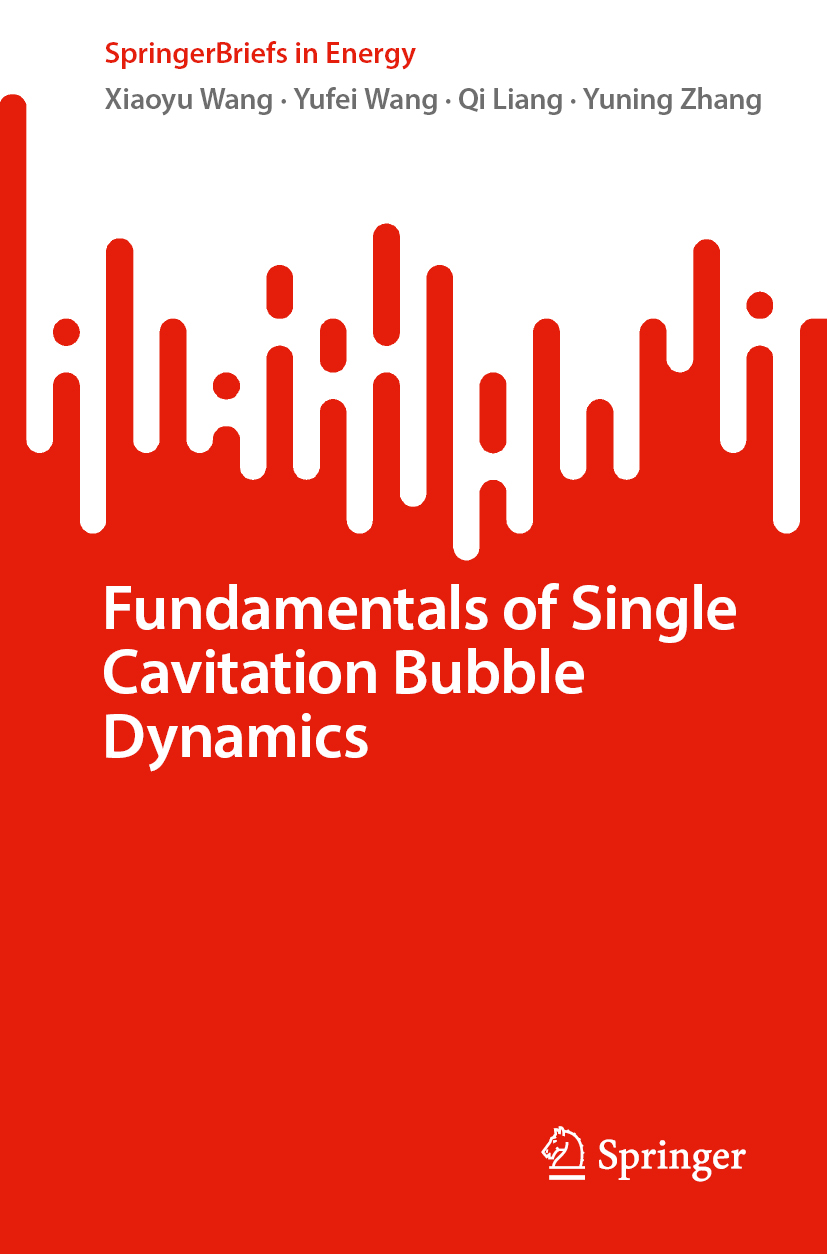
Fundamentals of Single Cavitation Bubble Dynamics (Springer Briefs in Energy)
This technical reference treats single-bubble motion from equations through collapse. It compares models for spherical, cylindrical, and droplet bubbles; analyzes free and driven oscillations; and explains jet prediction near boundaries. High-speed photography examples show collapse deformation, liquid jets, and shock-wave propagation, connecting theoretical descriptions with experimental methods for studying bubble behavior.
Find on Amazon (opens in a new tab; when scripting is available, later unmodified clicks reuse that tab when browser policy permits)
-

Book
Cavitation: Bubble Trackers
Examines how cavitation limits the performance of hydraulic components, including liquid vaporization caused by high velocities or pressure fluctuations and its effects on rotary machinery. A dedicated discussion covers cavitation noise in contexts such as surface ships and submarines. The book concludes with examples of useful cavitation applications and specialized measurement techniques.
Find on Amazon (opens in a new tab; when scripting is available, later unmodified clicks reuse that tab when browser policy permits)
-
Book
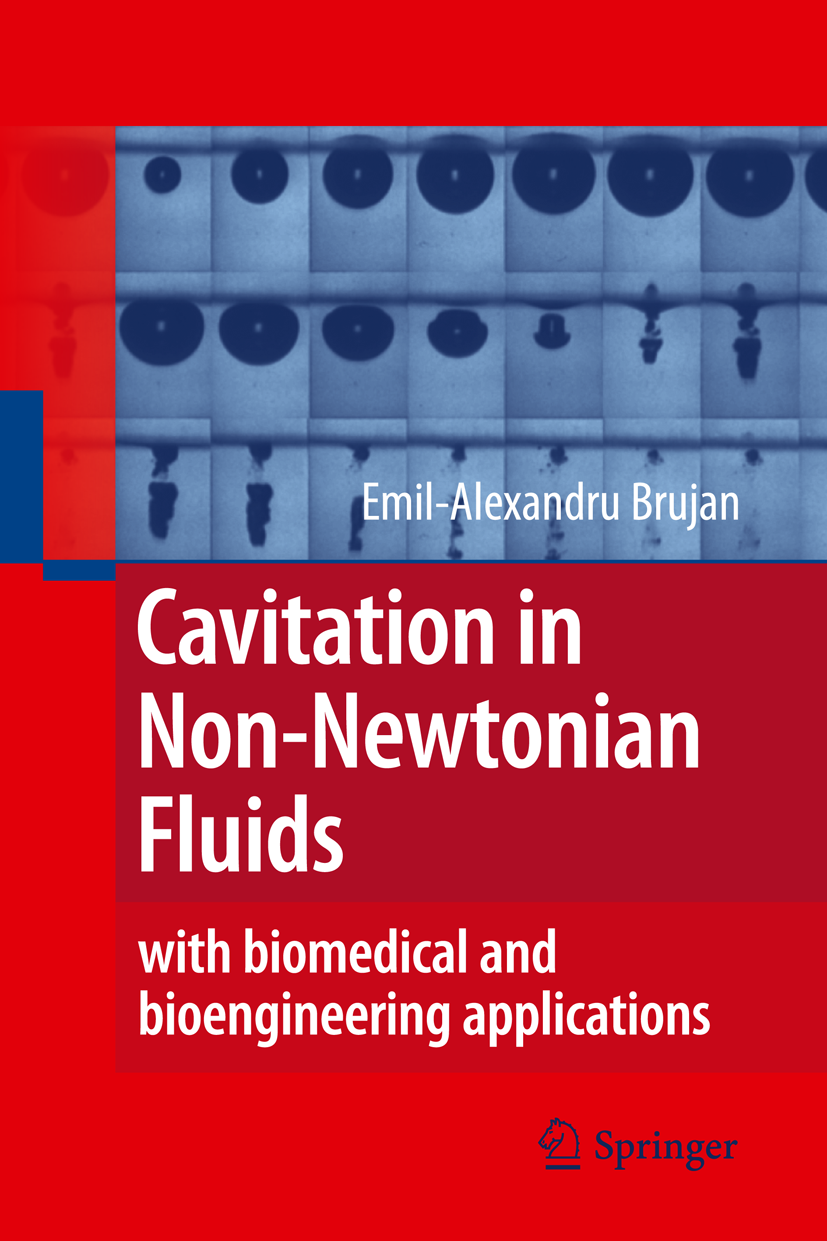
Cavitation in Non-Newtonian Fluids: With Biomedical and Bioengineering Applications
Explains how non-Newtonian fluid behavior changes bubble dynamics and cavitation, with emphasis on the large viscosity changes around growing or collapsing bubbles. It connects these mechanics to biological fluids such as blood, synovial fluid, and saliva, then explores biomedical, bioengineering, and process-industry examples. The approach brings fluid mechanics together with biomedical and engineering applications.
Find on Amazon (opens in a new tab; when scripting is available, later unmodified clicks reuse that tab when browser policy permits)
-

Book
Sonochemistry and the Acoustic Bubble
Introduces how ultrasound drives bubbles into collapse and creates localized high-energy conditions that can produce light and chemical reactions. It explains the physics and chemistry of acoustic cavitation, describes experimental methods for studying it, and surveys possible industrial and medical uses. The book addresses scientists and graduate students beginning work in ultrasound-related chemistry and engineering.
Find on Amazon (opens in a new tab; when scripting is available, later unmodified clicks reuse that tab when browser policy permits)
-
Book
Aeration, Mixing, and Energy: Bubbles and Sparks
A reference on aeration and mixing in water and wastewater treatment, focusing on how to measure system performance and use those measurements for design, control, and sustainable operation. It reviews aeration technologies and explains why efficient oxygen transfer and mixing matter to treatment, drawing on specialist contributions to complement broader references on water reclamation.
Find on Amazon (opens in a new tab; when scripting is available, later unmodified clicks reuse that tab when browser policy permits)
-
Book
Bubbly Flows: Analysis, Modelling and Calculation (Heat and Mass Transfer)
This edited research volume presents findings from 24 projects on gas-liquid multiphase flows in chemical and biochemical reactors. It covers bubble columns, airlift loop reactors, and aerated stirred vessels, alongside measurement methods and models for describing flow behavior. The work links experimental data with analytical and numerical tools intended to improve reactor prediction, design, and scale-up.
Find on Amazon (opens in a new tab; when scripting is available, later unmodified clicks reuse that tab when browser policy permits)
-
Book
High-Pressure Homogenisation: Hydrodynamics, Disruption Mechanisms, and Industrial Applications
This reference links high-pressure homogenizer valve hydrodynamics to the breakup of droplets, cells, particles, and fibers and to industrial processing. It examines turbulence, cavitation, shear, wear, and impingement, then discusses design, operation, and scale-up through cases from food, pharmaceutical, petroleum, and chemical applications. The emphasis is on the mechanisms underlying homogenization.
Find on Amazon (opens in a new tab; when scripting is available, later unmodified clicks reuse that tab when browser policy permits)
-
Book
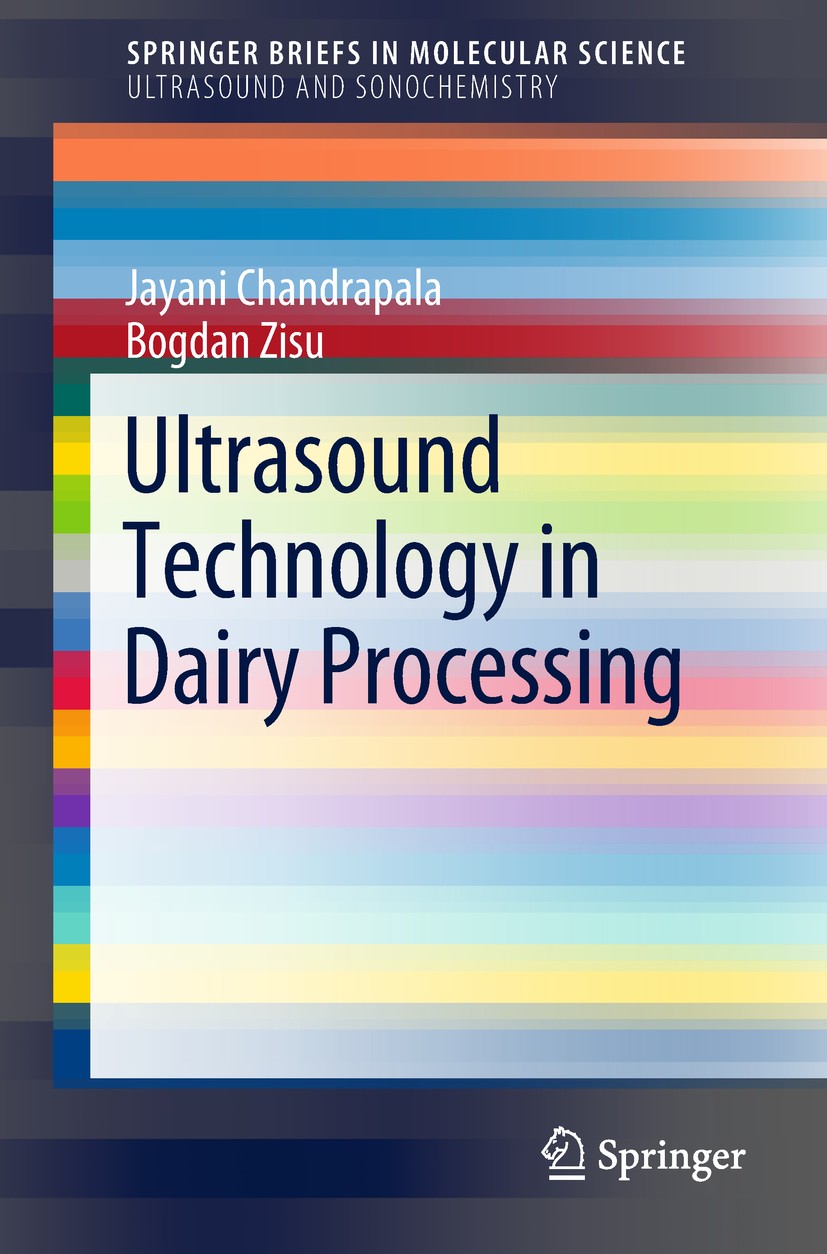
Ultrasound Technology in Dairy Processing (SpringerBriefs in Molecular Science)
Reviews power ultrasound in dairy processing, including its physical and chemical effects at high and low frequencies. Applications include emulsification, filtration, crystallization, microbial inactivation, product functionality, and fat separation. The book also considers which methods have moved beyond laboratory studies and how ultrasound may improve processing efficiency and product quality.
Find on Amazon (opens in a new tab; when scripting is available, later unmodified clicks reuse that tab when browser policy permits)
-

Book
Ultrasonics: Fundamentals, Technologies, and Applications
This reference covers the physical acoustics of ultrasonics and transducer technologies, then surveys low-power sensing and high-power processing for research, industry, and medicine. Topics include modeling, materials characterization, nondestructive testing, process monitoring, diagnosis, therapy, and surgery. The fourth edition also addresses inspection techniques and applications across metals, nonmetals, food, and process industries.
Find on Amazon (opens in a new tab; when scripting is available, later unmodified clicks reuse that tab when browser policy permits)
-

Book
High-Intensity Ultrasonics: Theory and Industrial Applications
Introduces the physics of high-intensity ultrasound and ultrasonic vibration systems, then turns to generator and radiator design and acoustic control in processed media. Its industrial section emphasizes metallurgy, including metal shaping, heat treatment, welding, cutting, refining, and surface hardening, with additional attention to mineral processing. The book connects wave behavior in fluids and solids to process technology.
Find on Amazon (opens in a new tab; when scripting is available, later unmodified clicks reuse that tab when browser policy permits)
-
Book
Ultrasound Technologies for Food and Bioprocessing (Food Engineering Series)
Explores power ultrasound as an alternative or complement to conventional food and bioprocessing methods. It connects physical principles and technological developments with current and potential industrial applications, including characterization of foods and biomaterials. The discussion considers demands for product quality, safety, processing efficiency, and new functionality, addressing both specialists and newcomers.
Find on Amazon (opens in a new tab; when scripting is available, later unmodified clicks reuse that tab when browser policy permits)
-

Book
Ultrasonic Chemical Process Intensification
Introduces the acoustic basis and cavitation mechanisms behind ultrasound-based process intensification. It describes methods for enhancing reactions, mass and heat transfer, separation, pulverization, and other unit operations, alongside reactor designs and industrial equipment. Applications span chemical reactions, electrochemistry, materials, and process industries; the closing discussion identifies technical challenges and future directions.
Find on Amazon (opens in a new tab; when scripting is available, later unmodified clicks reuse that tab when browser policy permits)
-
Book
Theoretical and Experimental Sonochemistry Involving Inorganic Systems
Reviews ultrasound-driven chemistry in inorganic systems from both theoretical and experimental perspectives. The discussion brings together nanoparticle formation, catalysis, the aqueous chemistry of metallic solutions, and their oxidation and reduction behavior. These topics provide a focused account of inorganic sonochemistry for researchers examining the chemical applications of ultrasound.
Find on Amazon (opens in a new tab; when scripting is available, later unmodified clicks reuse that tab when browser policy permits)
-

Book
Sonoluminescence
An account of sonoluminescence from its early discovery through later experiments and competing explanations. It connects acoustic cavitation and bubble collapse to the properties of emitted light, reviewing studies of single-bubble behavior, pulse duration, bubble stability, and gas effects. The closing chapters consider future questions and possible uses across fluid physics, acoustics, pipelines, sonochemistry, ultrasonics, and medicine.
Find on Amazon (opens in a new tab; when scripting is available, later unmodified clicks reuse that tab when browser policy permits)
-
Book
Emulsions, Microemulsions and Foams (Soft and Biological Matter)
Uses interface science to explain emulsions, microemulsions, and foams through the surfactant layers formed between their fluid phases. It connects the properties of interfacial layers, thin films, and bulk fluids to structure, rheology, and stability. Comparisons among these dispersions highlight shared behavior and questions that remain unresolved, particularly around foam and emulsion stability.
Find on Amazon (opens in a new tab; when scripting is available, later unmodified clicks reuse that tab when browser policy permits)
-
Book
Industrial Valves: Calculations for Design, Manufacturing, Operation, and Safety Decisions
Explains modeling and calculation methods for industrial valve design, manufacturing, and operation, with particular attention to material failure from corrosion and cavitation. Practical calculations use industrial cases and refer to international standards such as NORSOK and IEC. Topics apply to the safety and reliability of valves used in marine, oil and gas, piping, and related industrial systems.
Find on Amazon (opens in a new tab; when scripting is available, later unmodified clicks reuse that tab when browser policy permits)
-
Book
Slurry Transport Using Centrifugal Pumps
Based on an engineering course, this fourth edition covers hydraulic design of slurry pipelines, the pumps that drive them, and pump-system interactions. It combines theory with practical methods for design and operation, including slurry flow characterization, pipeline and pump models, complex non-Newtonian slurries, testing, computational modeling, wear, and operating costs. Case studies and worked examples support engineering analysis.
Find on Amazon (opens in a new tab; when scripting is available, later unmodified clicks reuse that tab when browser policy permits)
-
Book
Centrifugal Pumps
A handbook on hydraulic design issues in centrifugal pumps, presenting research relevant to manufacturers, system planners, and operators. It emphasizes physical principles and practical use, supported by diagrams and calculation tables for application and troubleshooting. The fourth edition adds material on vertical-pump vibration, impeller forces and fatigue, numerical-flow accuracy, and inlet housing and double-spiral design.
Find on Amazon (opens in a new tab; when scripting is available, later unmodified clicks reuse that tab when browser policy permits)