
Technical publication
Back to publications
Reactors & equipment
Hydrodynamic Cavitation in Emulsification and Homogenization
okozyuk.com
Published
Read complete publication for whole-document Find and printing. Browser Find and native printing on this reader include only loaded content.
7 Examples of Use for Emulsification and Homogenization
Hydrodynamic cavitation is best viewed as a platform. The same physical mechanism can produce a stable consumer emulsion, increase reagent contact in an industrial reaction, reduce milk fat globule size, disperse water in fuel, or improve extraction. Product requirements differ, so the target diameter and stability test must be defined for each application.
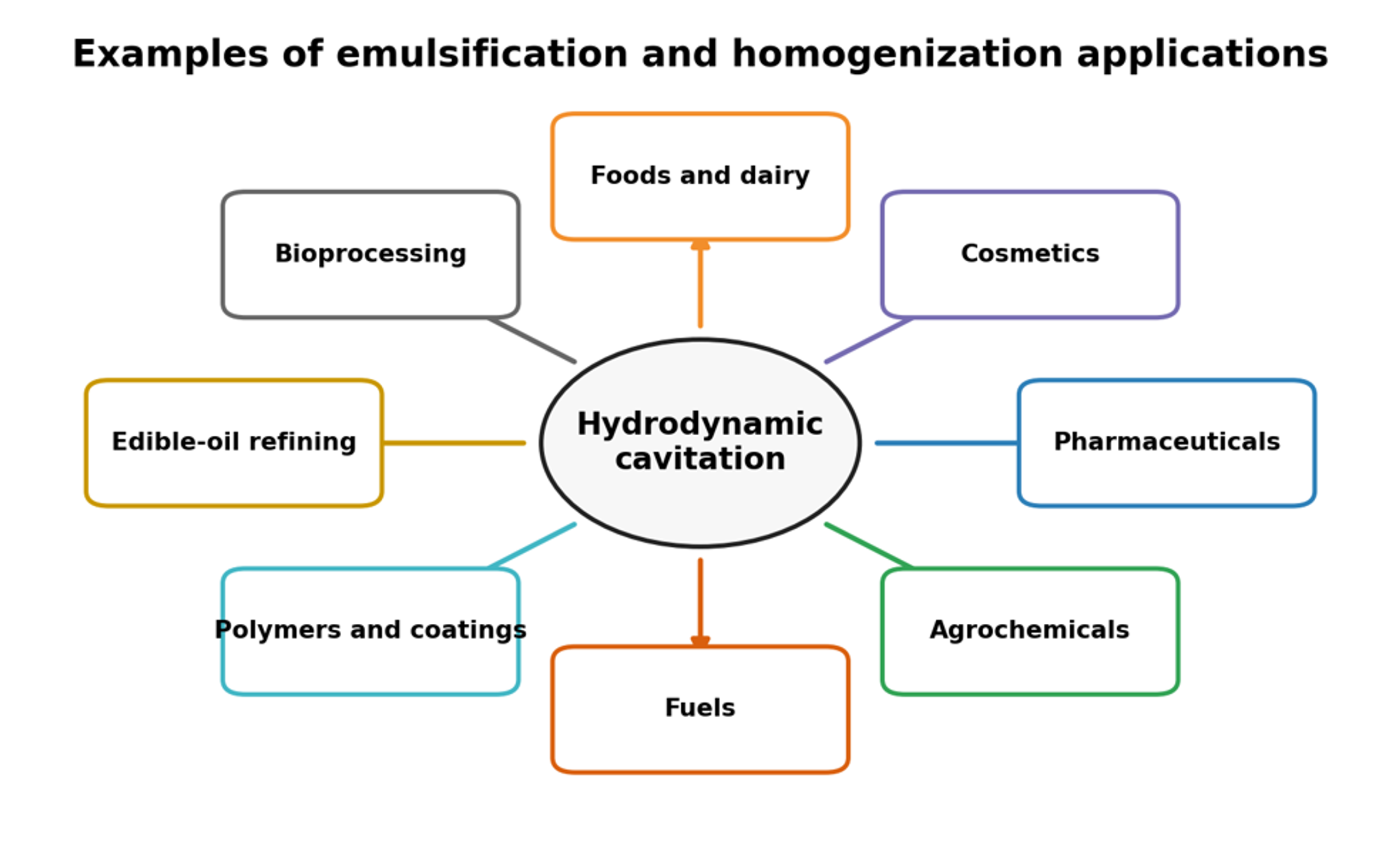
Figure 28. Representative application sectors for hydrodynamic cavitation emulsification and homogenization [9].
7.1 Results from High Pressure Cavitation Devices
Published Microfluidizer application data provide useful examples of one pass droplet size reduction in food and cosmetic formulations [50–54]. Because the reported performance depends on formulation and operating conditions, these data are most appropriately used to establish target validation parameters rather than as substitutes for pilot scale trials.
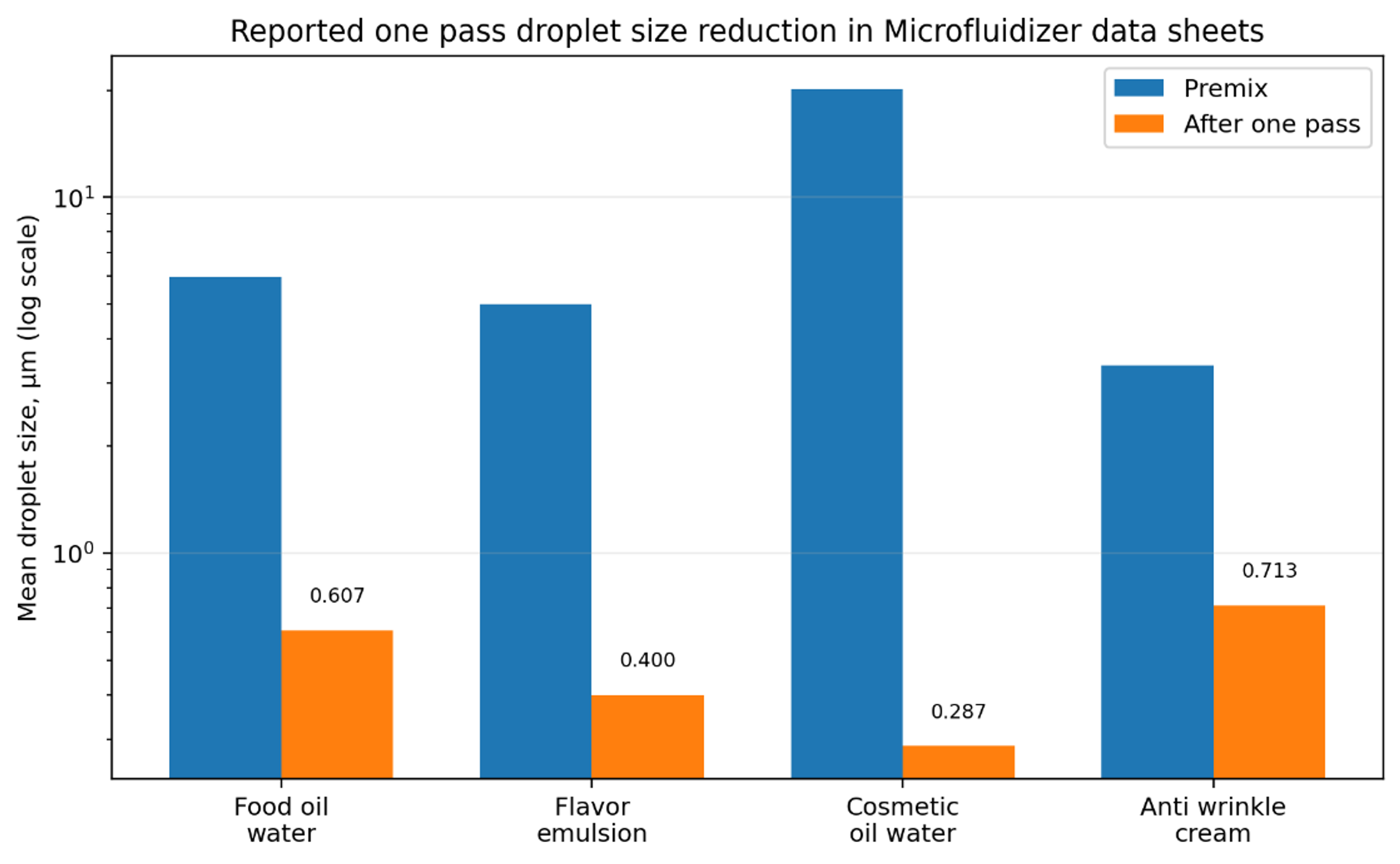
Figure 29. Comparison of reported premix and one pass mean droplet sizes for four Microfluidizer case studies [51–54].
Table 10. Reported one pass Microfluidizer case studies [51–54].
| Product | Pressure | Premix mean | One pass mean | Reported outcome |
|---|---|---|---|---|
| Food oil and water emulsion | 3,000 psi | 5.97 µm | 0.607 µm | D₉₀ reduced from 12.5 to 0.98 µm |
| Flavor emulsion | 18,000 psi | 5.0 µm | 0.40 µm | Stable at least five days at ambient or refrigerated conditions |
| Cosmetic 2% oil in water emulsion | 15,000 psi | 20.187 µm | 0.287 µm | Target below 0.3 µm achieved in one pass |
| Anti-wrinkle cream | 23,000 psi | 3.365 µm | 0.713 µm | Reported improvement in smoothness and product feel |
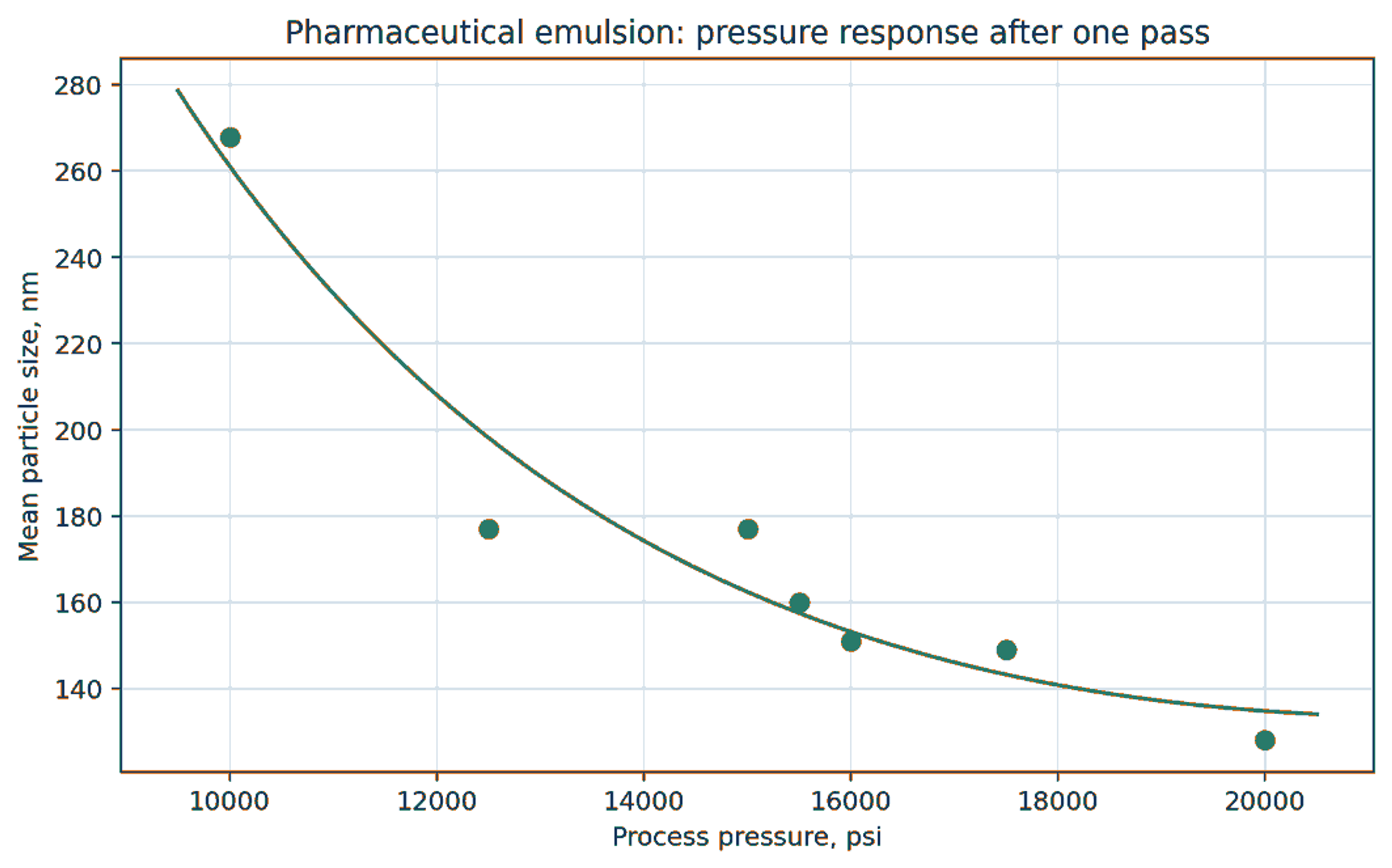
Figure 30. Approximate pressure response for a pharmaceutical emulsion processed once through an M110Y system [55].
The pressure response exhibits diminishing returns. Raising pressure from the lower end of the tested range caused a large reduction in mean size, while additional pressure produced progressively smaller gains. The same pattern appears in multiple pass cavitation systems because the coarse droplets are disrupted first and the remaining population is increasingly resistant to further breakup.
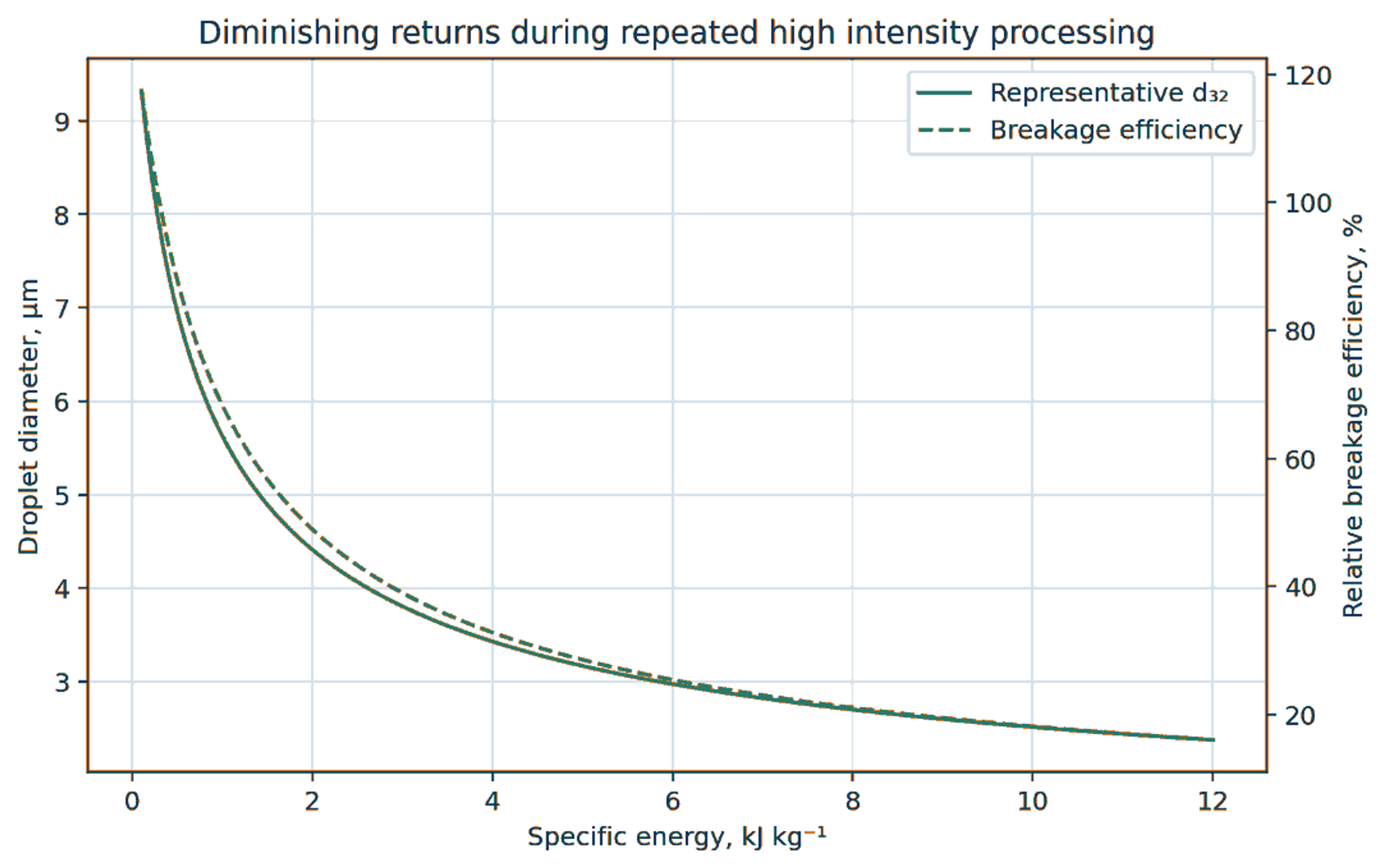
Figure 31. Conceptual relation between specific energy, droplet size, and breakage efficiency [24,28,56].
7.2 Flavor emulsion and cosmetic microscopy
The flavor emulsion data sheet reports a reduction in mean diameter from 5 µm to 0.4 µm after one pass at 18,000 psi through the Microfluidizer M-110Y. The accompanying microscopy shows the disappearance of readily visible coarse droplets after treatment. The reported stability period was at least five days. This result illustrates that droplet size, and stability must be evaluated together: a small initial mean size is not sufficient when interfacial coverage is incomplete [52].
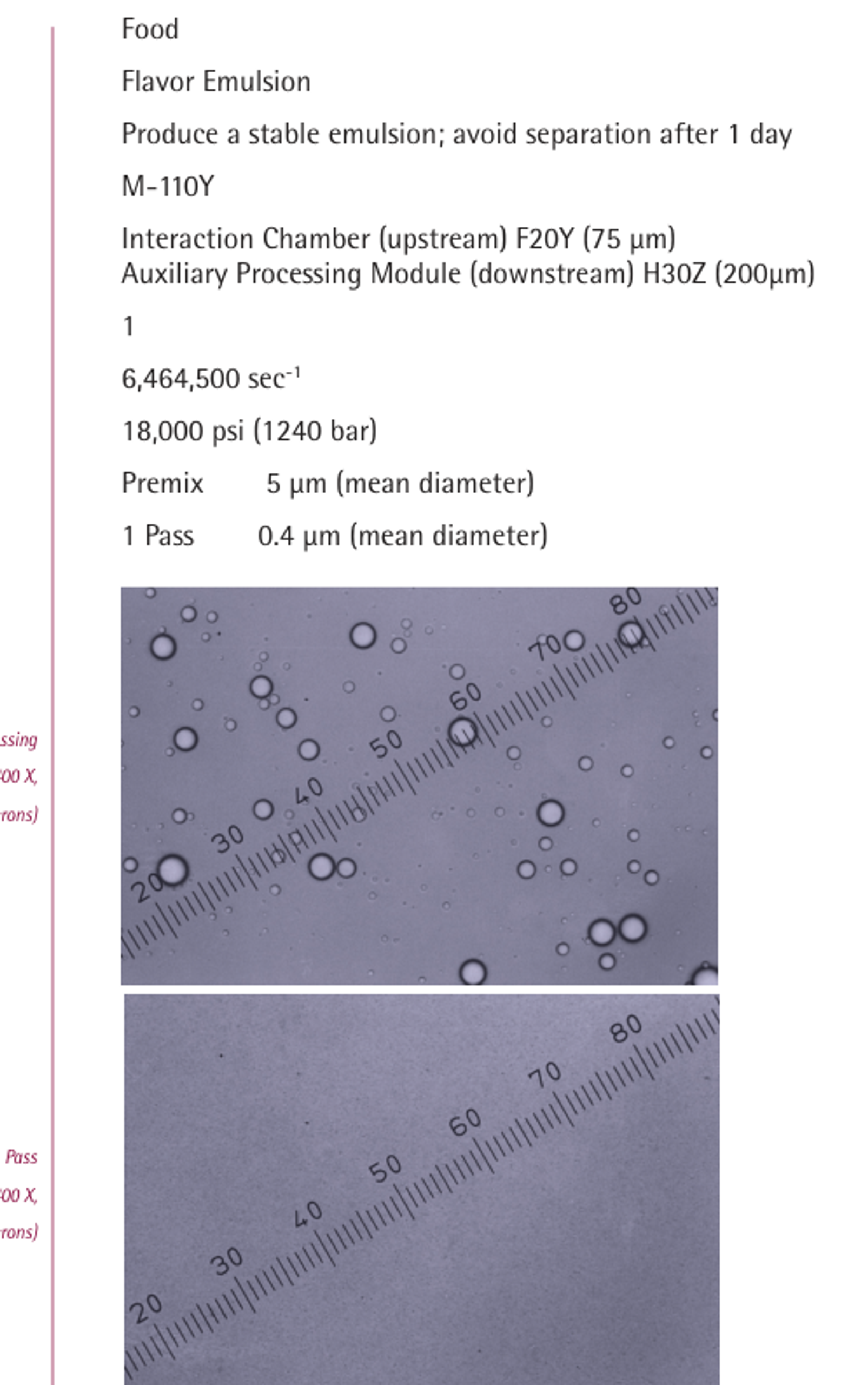
Figure 32. Flavor emulsion case showing operating conditions before and after one pass through the Microfluidizer M-110Y [52].
The anti-wrinkle cream example reports a decrease in mean particle size from 3.365 µm to 0.713 µm after one pass at 23,000 psi through the Microfluidizer M-110Y. The treated distribution shifts toward smaller sizes but retains a measurable coarse tail, which is important for sensory quality and long term stability. Cosmetic validation should therefore include microscopy, D₉₀ or D₉₉, rheology, sensory assessment, and accelerated storage rather than only the mean [54].
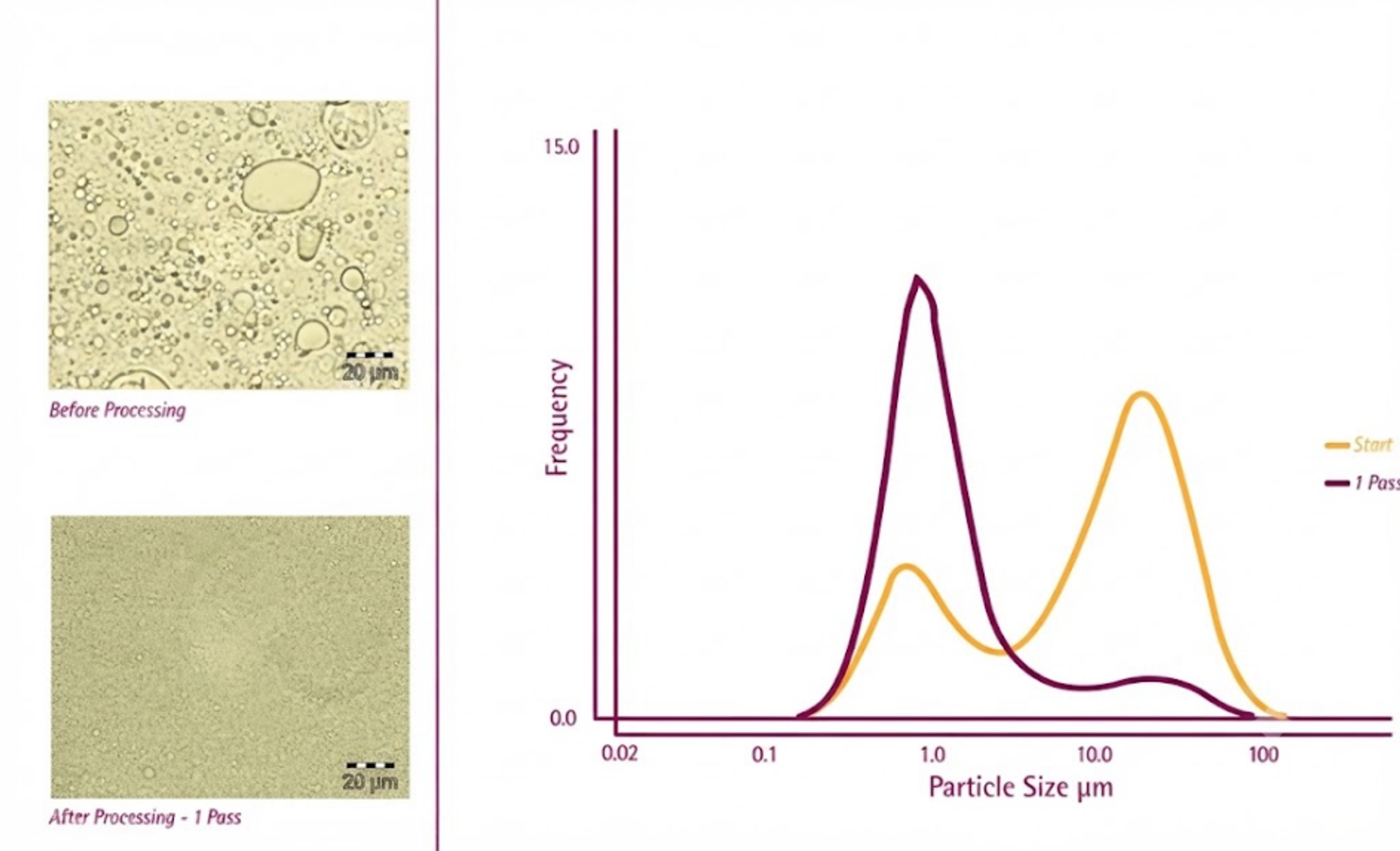
Figure 33. Anti-wrinkle cream example before and after one pass through the Microfluidizer M-110Y [54].
7.3 Foods, dairy products, and beverages
Food emulsions include milk, cream, nondairy beverages, sauces, mayonnaise, salad dressings, flavor emulsions, cloud emulsions, ice cream mixes, and encapsulated lipophilic ingredients. Cavitation can reduce droplet size, modify protein functionality, intensify mixing, and sometimes contribute to microbial reduction. Open access food and protein studies demonstrate that useful treatment windows are product specific and can reverse under overtreatment [49,57–59].
South Dakota State University evaluated hydrodynamic cavitation in dairy processing over 50 to 300 L/h, 600 to 3600 rpm, 70 to 85 °C, and 10 to 110 s residence time. Combined hydrodynamic cavitation and thermal treatment produced a 3.5 log reduction of Bacillus coagulans, compared with 2.77 log for thermal treatment alone. In cream and ice cream mix, operation at 3600 rpm and 100 L/h reduced particle size and improved stability; the resulting mixes showed medium shear viscosities at least twice those of conventionally homogenized controls under the reported conditions [57].
Mayonnaise and dressings are concentrated, non Newtonian emulsions. A suitable cavitation process usually requires a robust premix, controlled addition of oil, adequate emulsifier or egg protein, and a device with passages large enough to avoid blockage. The endpoint should include yield stress, viscosity curve, oiling off, droplet size distribution, and sensory quality. In ice cream mix, homogenization affects fat destabilization and overrun, so excessive reduction can be as undesirable as insufficient reduction.
Flavor and nutraceutical nanoemulsions benefit from small droplets for optical clarity and increased apparent solubility. Oxidation and flavor loss can become limiting because of the very large interfacial area. Nitrogen blanketing, chelators, antioxidants, low oxygen pickup, and rapid cooling may be necessary. [10,11,60–63].
7.4 Edible oil processing and interphase reaction
In edible oil degumming, neutralization, washing, and enzymatic treatment, hydrodynamic cavitation produces fine aqueous droplets in oil and increases contact between reagents and phospholipids, free fatty acids, soaps, metals, or enzymes. Controlled flow cavitation has been applied to reduce mixing time and compact the process [4,36,64,65]. The desired droplet size is not always the smallest possible. After reaction, droplets and soapstock must coalesce and separate in centrifuges. Overly stable emulsions can decrease separation efficiency. A complete design therefore includes both a high area reaction zone and a downstream coalescence or separation strategy.
The same principle applies to biodiesel reactions, liquid to liquid extraction, and reactive washing. Cavitation can accelerate mass transfer and reaction, but the final product specification may require rapid phase disengagement. Emulsifier formation during reaction, such as soaps in alkali refining, can change interfacial tension dynamically and must be included in the design.
7.5 Cosmetics and personal care products
Lotions, creams, sunscreens, cleansing products, hair conditioners, fragrances, and active delivery systems require controlled droplet size, rheology, sensory properties, oxidation resistance, and microbiological stability. Studies of essential oil, pharmaceutical, and food protein nanoemulsions show that homogenization conditions, interfacial composition, and storage temperature can materially change droplet distribution and stability [1,10,14,62,63]. Hydrodynamic cavitation can be evaluated as the energy input step, but acceptance criteria should also include centrifugation, freeze thaw cycling, thermal cycling, preservative efficacy, and package compatibility.
Cosmetic scale up should preserve addition order, phase temperature, neutralization sequence, polymer hydration, and air management. Many thickeners are shear sensitive or require time to develop viscosity. The cavitation step may therefore be placed before final thickener addition, or a low shear finishing stage may follow the reactor.
7.6 Pharmaceuticals and nutraceutical carriers
Pharmaceutical emulsions are used for parenteral nutrition, injectable drug delivery, oral delivery of poorly soluble compounds, topical products, vaccines, and diagnostic formulations. The process must control the coarse droplet tail because a small number of large droplets may be more important for safety than the mean diameter. Sterility, endotoxin, extractables, leachable, active degradation, and validated cleaning are additional constraints.
Hydrodynamic cavitation may be useful as a continuous prehomogenization or polishing step where the formulation is compatible with pressure cycling and local heat. It is not automatically interchangeable with a validated high pressure homogenizer. A regulatory development program should establish comparability of full DSD, active assay, degradation products, sterility assurance, and long term stability.
7.7 Fuel water and fuel biodiesel water emulsions
Water in oil biofuel emulsions require adequate storage stability together with acceptable ignition, emissions, and materials compatibility. Sahota and Dakka screened 14 water in sunflower oil emulsions produced by ultrasonication. Two remained stable for at least 14 days, HLB 5 gave the best tested stability, and additional specific energy between 75 and 200 W s/mL could overprocess the emulsion rather than improve it [66,67]. Although this was not a hydrodynamic cavitation study, it illustrates why a cavitation process must be optimized jointly with surfactant balance and energy exposure instead of by intensity alone.
Fuel service requires careful evaluation of flash point, electrostatic risk, seal compatibility, conductivity, corrosion, water specification, and storage stability. Cavitation equipment and motors must meet the area classification and mechanical integrity requirements for flammable liquids.
7.8 Agrochemicals, polymers, coatings, and specialty chemicals
Agrochemical emulsifiable concentrates and suspension emulsions require fine droplets for dilution stability, spray coverage, and active delivery. Cavitation can provide inline production and reduce dependence on batch high shear mixing. The formulation must remain stable in hard water, across pH, and after temperature cycling.
Polymer latexes, resin emulsions, wax dispersions, lubricants, inks, and coatings may benefit from continuous droplet or particle size control. Polymerization systems require special caution because cavitation can affect nucleation, chain scission, temperature, and gas content. Abrasive pigments and fillers increase erosion risk, so replaceable cavitation inserts or bulk flow vortex devices may be preferable. Cavitation based preparation of bitumen emulsions has also been investigated [68].
7.9 Bioprocessing, extraction, and fermentation support
Cavitation can assist extraction of lipids, flavors, pigments, and bioactive compounds by disrupting structures and increasing liquid solid contact. In fermentation and biotechnology, it may be used for media homogenization, cell disruption, or pretreatment. The same intensity that improves extraction can deactivate enzymes or damage desired cells. Process development must therefore define whether the biological structure is a target for preservation or destruction.
Table 11. Selected application examples and reported outcomes.
| Application | Device or method | Representative reported outcome | Critical qualification |
|---|---|---|---|
| Tilapia myofibrillar protein O/W emulsion | 3 mm orifice, 0.14 MPa, 550 W | At 10 min: droplet size 2754 to 2138 nm; ESI 71.28 to 91.73 min | Treatment at 15 to 20 min reversed several gains [49] |
| Coconut oil O/W emulsion | Circular and slit Venturis | Minimum about 170 nm at higher emulsifier fraction | Slit Venturi required fewer passes in the tested setup [35] |
| Palm oil submicron emulsion and curcumin encapsulation | Liquid whistle HC reactor | Submicron emulsion with encapsulated curcumin | Product and reactor specific formulation [69] |
| Dairy cream and ice cream mix | Rotational cavitation with thermal control | Reduced particle size and improved stability at 3600 rpm and 100 L/h | Open access M.S. thesis; product, temperature, and residence time specific [57] |
| Oxidized soy protein isolate | Cavitation jet treatment | Modified protein structure and improved emulsification properties | Protein oxidation state and treatment intensity were specific to the study [58] |
| Dense rapeseed oil emulsion | Vortex cavitation device | Oil fraction up to 0.60; | Critical oil fraction and diminishing energy efficiency [24] |
| Water in sunflower oil biofuel emulsion | Ultrasonication formulation benchmark | Two of 14 formulations stable for at least 14 days; HLB 5 performed best | Not an HC study; demonstrates surfactant and overprocessing constraints [66] |
| Edible oil degumming and reaction | Controlled flow cavitation | Fine reagent dispersion and shorter contacting time | Downstream coalescence and centrifugation must remain effective [4,36,64] |