
Technical publication
Back to publications
Industrial applications
Hydrodynamic Cavitation for Wastewater Processing
okozyuk.com
Published
Read complete publication for whole-document Find and printing. Browser Find and native printing on this reader include only loaded content.
7 Oxidation of Organic Components
7.1 Reaction Domain Selection
Organic oxidation encompasses several distinct objectives: transformation of a parent compound, ring opening, dehalogenation, reduction of COD, reduction of TOC, detoxification, and complete mineralization to carbon dioxide, water, and inorganic ions. HC can accomplish some or all of these objectives, but required exposure and chemistry differ among targets. Volatile organic compounds can enter the cavity and undergo pyrolysis or radical attack. Hydrophobic nonvolatile compounds preferentially occupy the interface. Hydrophilic nonvolatile compounds remain in the bulk liquid, where radical delivery is limited by short radical lifetime and matrix scavenging [2,4,18,21].
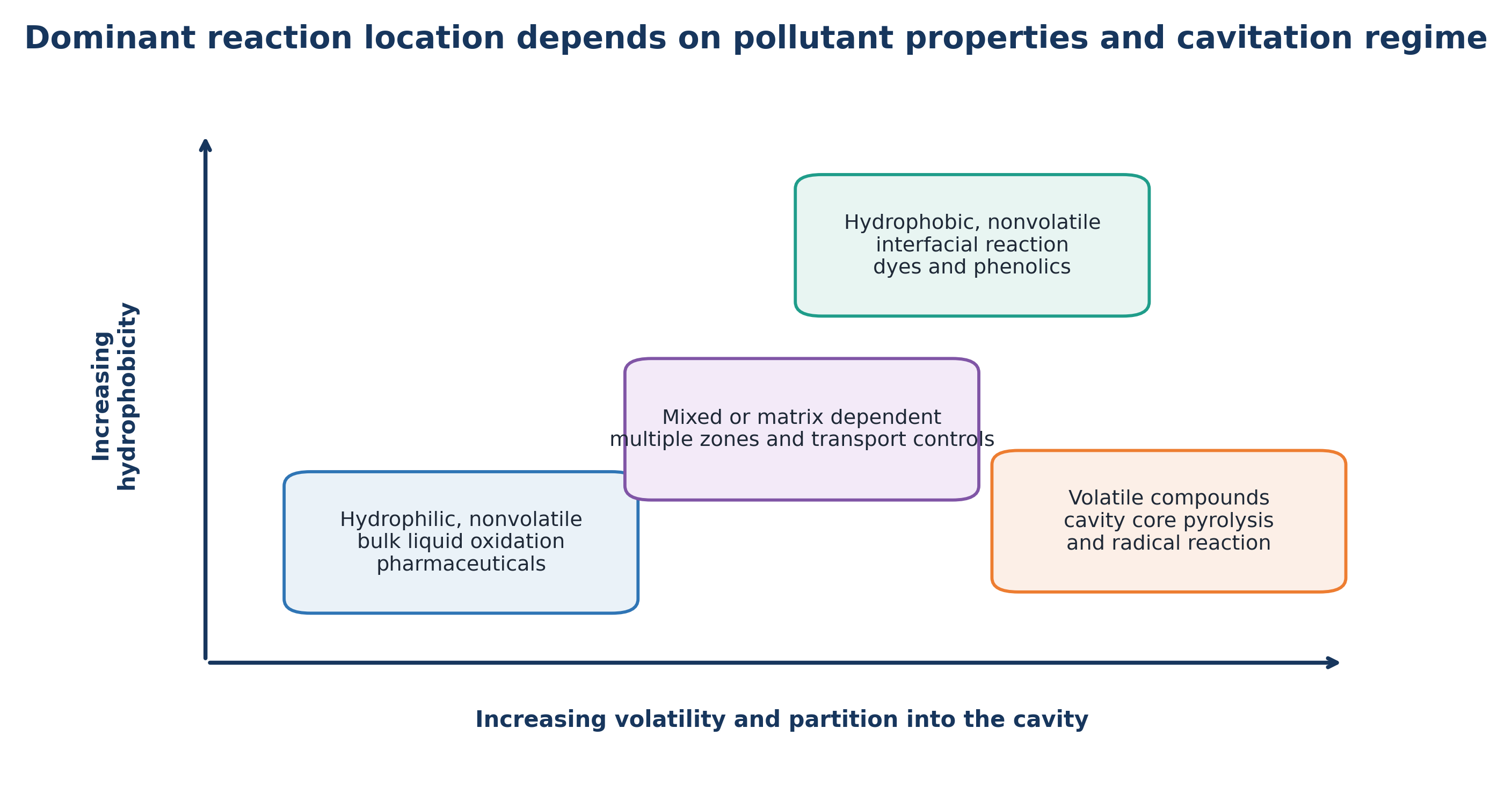
Figure 7.1. Dominant organic contaminant reaction domain as a function of volatility, hydrophobicity, and partitioning [11].
Equation (7.1) represents hydrogen abstraction by a hydroxyl radical (•OH), a fundamental elementary step in free radical chemistry, advanced oxidation processes, and cavitation induced degradation.
Equation (7.2) represents a reaction sequence rather than a single elementary step. The intermediate pathway depends on molecular structure and water matrix. Chlorinated compounds can form chloride and low molecular weight acids, nitrogen containing pharmaceuticals can form nitrogenous intermediates, and aromatic compounds can produce hydroxylated and ring opened products. Analytical screening is therefore necessary when treated water will be reused or discharged to a sensitive receiving environment.
7.2 Phenols, Dyes, Pesticides, and Industrial Organics
Phenols and dyes are frequently used as model compounds because they are analytically convenient and span different reaction domains. The p-nitrophenol study demonstrates the pressure optimum discussed previously [16]. Experiments with Methyl Orange and 2,4-D using cavitating jets showed that maximum removal rate and maximum energy efficiency can occur at different jet pressures [17]. The advanced Fenton study on 2,4-D showed that HC alone generated insufficient radicals for deep mineralization, whereas combination with hydrogen peroxide and zero valent iron reduced residual TOC to about 30% after 20 minutes in the reported system [22].
For nonvolatile compounds, Sayyaadi introduced an enhanced cavitation oxidation process in which H₂O₂ was injected upstream of a Venturi. Across the tested range, peroxide dose affected 2-chlorophenol degradation more strongly than cavitation number. Energy efficient operation favored mild cavitation, an adequate peroxide dose, and short injection duration, whereas maximum decomposition rate favored more intense cavitation [21]. The operating point that minimizes treatment time is therefore not necessarily the point that minimizes cost or carbon intensity.
7.3 Pharmaceuticals and Personal Care Products
Pharmaceuticals present a difficult treatment target because they occur at low concentrations, can remain biologically active, and coexist with natural organic matter and inorganic radical scavengers. In the reviewed pharmaceutical study, six compounds were treated with HC and H₂O₂. In deionized water, naproxen, carbamazepine, and diclofenac showed high removal under optimized conditions, whereas clofibric acid, ibuprofen, and ketoprofen showed less consistent response. In real effluent, removal decreased unless exposure and oxidant dose were increased [4,44].
A review by Liu et al. concluded that pharmaceutical HC research includes standalone HC and combinations with H₂O₂, persulfate, peroxymonosulfate, percarbonate, Fenton reagents, catalysts, ozone, and photocatalysis [45]. Recent scale up work combined HC with nonthermal electrical discharge plasma. A pilot reactor operating at 600 L h⁻¹ and a semi industrial reactor at 3200 L h⁻¹ achieved near quantitative degradation of ibuprofen and diclofenac solutions after 13 passes, with comparable energy efficiency and no detectable final byproducts under the reported conditions [46]. A 2026 ofloxacin study reported 74.93% degradation by optimized standalone HC at pH 3 and 4 bar, increasing to approximately 95% with advanced Fenton coupling [47]. Recent studies have also extended HC and hybrid HC treatment to cefixime, antibiotics in aquaculture seawater, triclosan, and rhodamine B, reinforcing the need to optimize aeration, ozone or peroxide dose, and hydraulic severity for each compound and matrix [48-51]. These studies indicate continued progress, but real wastewater performance, chronic toxicity, maintenance, and life cycle comparisons remain necessary before broad implementation.
Table 7.1. Selected organic contaminant studies and design lessons.
| Target or matrix | Treatment | Representative outcome | Lesson |
|---|---|---|---|
| p Nitrophenol [16] | Venturi HC | Optimum near 0.4-0.45 MPa | Hydraulic severity has a nonmonotonic optimum |
| 2,4-D [17,22] | Cavitating jet; HC with advanced Fenton | Order of magnitude jet reduction; deep TOC reduction with hybrid process | Mechanical and chemical routes can be combined |
| 2-Chlorophenol [21] | Venturi HC plus injected H₂O₂ | Dose dominated response; excess oxidant reduced yield | Optimize oxidant and cavitation jointly |
| Wood finishing wastewater [20] | Rotor stator HC plus H₂O₂ | High COD reduction at optimum speed and dose | Real wastewater can respond when volatile and interfacial compounds are present |
| Six pharmaceuticals [4,44] | HC plus H₂O₂ | Compound- and matrix specific removal | Clean water results cannot be transferred directly to effluent |
| Ibuprofen and diclofenac [46] | HC plus nonthermal plasma | Pilot to 3200 L h⁻¹, 13 passes, near complete degradation | Preserving residence time and energy efficiency can enable scale up |
| Ofloxacin [47] | HC, H₂O₂, hypochlorite, Fenton, advanced Fenton | 74.93% HC alone; up to 95.18% hybrid | Hybrid chemistry can substantially increase antibiotic removal |
7.4 Hybrid Process Selection
Hybrid treatment is justified when the target resides mainly in the bulk liquid, when the real water matrix consumes radicals, when standalone HC produces only partial transformation, or when residual disinfection is required. Hydrogen peroxide is simple to dose but has a narrow optimum and requires residual measurement. Ozone benefits from HC enhanced gas liquid transfer and decomposition but requires off gas management and bromate control. Fenton chemistry can be highly effective at acidic pH but introduces iron management and sludge production. Persulfate and peroxymonosulfate can generate sulfate radicals but require activation and byproduct evaluation. Plasma and photocatalysis can add reactive species without a bulk chemical inventory, although electrical and reactor complexity increase [21,22,25,45-47].
| Process | Radical supply | Mass transfer | Matrix tolerance | Byproduct control | Scale readiness |
|---|---|---|---|---|---|
| H₂O₂ | 4 | 3 | 3 | 3 | 5 |
| Ozone | 5 | 5 | 4 | 4 | 4 |
| Iron and H₂O₂ | 5 | 3 | 5 | 4 | 4 |
| Persulfate or PMS | 5 | 3 | 4 | 4 | 3 |
| Biological polishing | 2 | 3 | 1 | 1 | 5 |
Figure 7.2. Qualitative selection matrix for hydrodynamic cavitation hybrid processes [11].
7.5 Industrial, Mining, and High Solids Effluent Treatment
Industrial and mining effluents often contain multiple contaminant classes that require different treatment mechanisms. Suspended mineral particles and oil can be separated physically, dissolved metals can be oxidized or precipitated, ammonia and cyanide require targeted chemistry, and refractory organic compounds may require radical oxidation. HC is most effective when it intensifies one of these unit operations rather than when it is treated as a universal separator.
The National Research Council presentation reviewed in the source material proposed integrated process trains for drill water, mine water, flotation, oil dispersion, electrocoagulation, and ozone assisted treatment [67]. These examples are process concepts rather than a uniform performance dataset. They nevertheless support a consistent design principle: HC should be positioned after gross solids removal and before the reaction or separation step that benefits from rapid micromixing, gas transfer, surface renewal, or nucleation.
Hydrodynamic cavitation does not independently remove dissolved metal ions. It can accelerate oxidation of ferrous iron, improve reagent dispersion, increase precipitation nuclei, or support electrocoagulation, after which solids must be separated. In petroleum wastewater, aggressive mixing can either assist flotation through gas dispersion or create a stable emulsion that is more difficult to separate. The treatment objective and downstream separation method should therefore be defined before cavitation severity is selected.
High suspended solids and abrasive grit affect both hydraulic performance and equipment life. Particles can increase the population of cavitation nuclei, but they can also block small openings and erode pumps, valves, and rotor surfaces. Pilot testing should therefore use the actual particle size distribution, mineral hardness, oil content, temperature, and chemical composition. Clean water hydraulic tests are necessary for commissioning but are insufficient for process prediction.
Table 7.2. Industrial wastewater mechanisms and downstream requirements.
| Dominant contaminant | Potential role of HC | Required downstream step | Critical evidence |
|---|---|---|---|
| Refractory dissolved organics | Radical formation, oxidant activation, improved mass transfer | Biological treatment, adsorption, membrane, or final oxidation | TOC, transformation products, toxicity, EEO |
| Dissolved metals | Oxidation state control, reagent dispersion, precipitation nucleation | Clarification, flotation, filtration, or sludge handling | Dissolved and total metals, pH, solids settleability |
| il and grease | Gas dispersion, droplet breakup, interfacial renewal | Flotation, coalescer, skimming, or membrane | Droplet size, residual oil, emulsion stability |
| Mineral suspended solids | Agglomerate breakup or enhanced flotation contact | Hydrocyclone, clarifier, filter press | Wear rate, pressure loss, particle size, cake properties |
| Ammonia, cyanide, or sulfide | Targeted oxidation with selected reagent | Gas control, biological polishing, residual removal | Stoichiometry, off gas, byproducts, acute toxicity |
| Mixed high COD wastewater | Pretreatment to improve biodegradability | Aerobic or anaerobic biological process | BOD to COD ratio, respirometry, methane potential, inhibition |
7.6 Recent Developments
Recent research has shifted from demonstrating cavitation effects toward defining reactor function, upper treatment limits, and scale. In waste activated sludge, Abdelrahman et al. found that 0.83 MPa produced a larger methane benefit than 1.72 MPa, while Son et al. reported biogas improvement ranging from 14.4% to 96.5% across advanced rotational conditions and warned that excessive treatment could reduce yield [30,31]. These results reinforce the need to optimize HC against downstream biological response rather than maximum SCOD alone.
Pharmaceutical research now includes standalone HC and combinations with peroxide, Fenton chemistry, persulfate, peroxymonosulfate, ozone, catalysts, photocatalysis, and plasma [45]. Verdini et al. extended a cavitation plasma process from approximately 600 L h⁻¹ to 3200 L h⁻¹ and reported near complete degradation of ibuprofen and diclofenac solutions after repeated passes [46]. Gandhi and Gogate reported 74.93% ofloxacin degradation by optimized HC alone and approximately 95% with advanced Fenton coupling [47].
These developments indicate progress, but the evidence hierarchy remains important. Many high removal values are obtained in prepared solutions at acidic pH and low contaminant concentration. Real effluent contains carbonate, chloride, dissolved organic matter, surfactants, solids, and mixed pollutants that consume radicals and modify cavitation. Scale up claims should therefore include results for the actual matrix, energy per order, chemical demand, transformation product screening, toxicity, and continuous operating data.
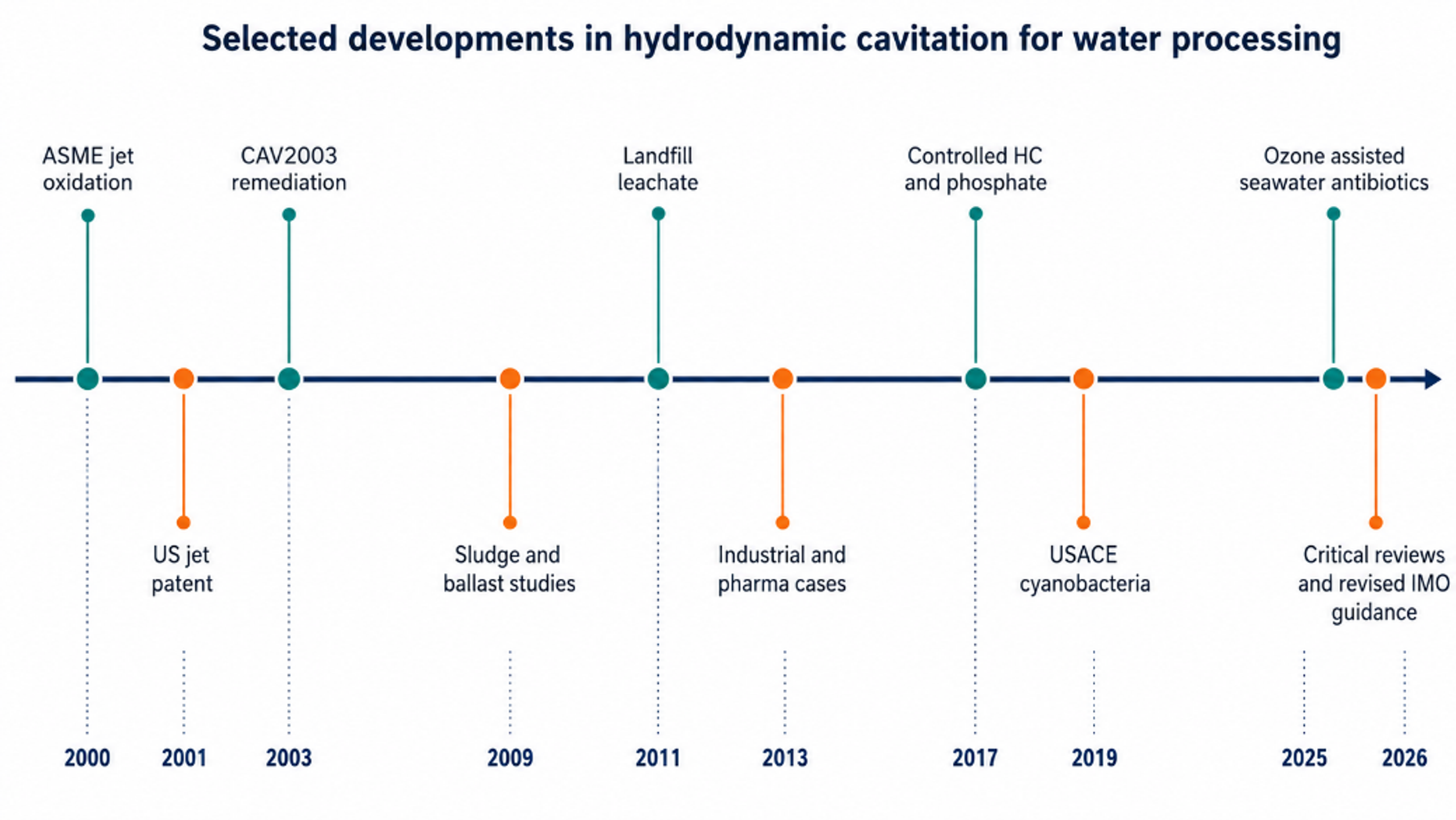
Figure 7.3. Selected developments in hydrodynamic cavitation for water processing through 2026 [11].