
Technical publication
Back to publications
Industrial applications
Hydrodynamic Cavitation for Wastewater Processing
okozyuk.com
Published
Read complete publication for whole-document Find and printing. Browser Find and native printing on this reader include only loaded content.
5 Ballast Water Cavitation for Treatment
5.1 Regulatory and Process Context
Ballast water can transport bacteria, viruses, phytoplankton, zooplankton, larvae, cysts, and other organisms between ecosystems. The International Maritime Organization Ballast Water Management Convention establishes the D-2 performance standard for discharged ballast water. The phase in schedule for existing ships reached its final compliance date on 8 September 2024. The mandatory Code for Approval of Ballast Water Management Systems was adopted in 2018 and entered into force in October 2019, replacing the earlier G8 approval guidelines. Systems that use active substances remain subject to the additional environmental evaluation procedure associated with G9 [33-36].
As reported in the source material, by December 2025 the Convention had 101 Parties representing 93.73% of world merchant shipping tonnage [55]. Because the regulatory framework continues to evolve through the IMO experience building and review process, any commercial design, retrofit, or statement of approval status should be checked against current IMO, flag state, classification society, and port state requirements rather than inferred from historical literature.
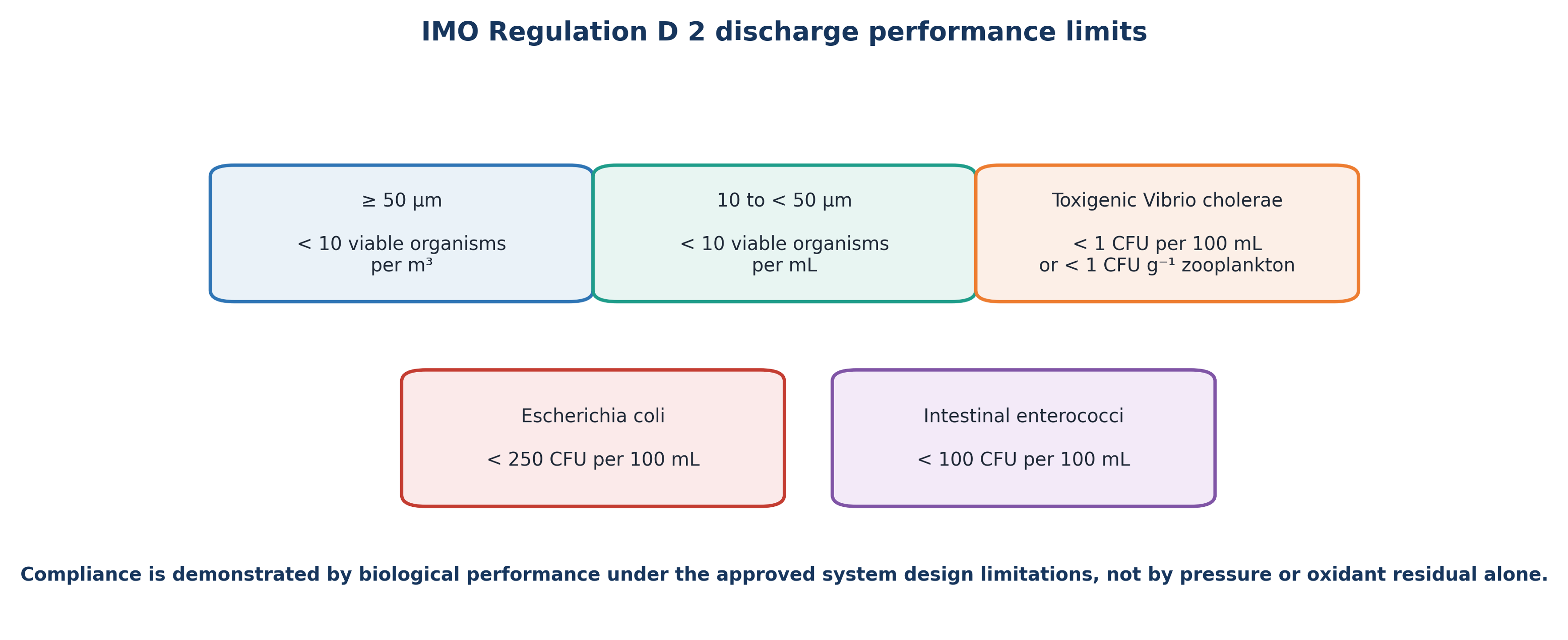
Figure 5.1. IMO Regulation D-2 ballast water discharge performance standard [34-36,55].
Table 5.1. IMO D-2 ballast water discharge limits.
| Organism or indicator | Maximum concentration in discharged ballast water |
|---|---|
| Viable organisms, minimum dimension ≥50 μm | <10 organisms m⁻³ |
| Viable organisms, 10 to <50 μm | <10 organisms mL⁻¹ |
| Toxigenic Vibrio cholerae O1 and O139 | <1 CFU 100 mL⁻¹ or <1 CFU g⁻¹ wet zooplankton |
| Escherichia coli | <250 CFU 100 mL⁻¹ |
| Intestinal enterococci | <100 CFU 100 mL⁻¹ |
5.2 Treatment Architecture and Biological Mechanisms
Ballast water systems normally combine unit operations because no single mechanism is equally effective for all organism size classes and water qualities. Filtration or hydrocyclonic separation removes larger organisms and protects downstream equipment. HC can then damage cells, improve oxidant contact, and expose organisms to repeated pressure and shear. An active substance, ozone, deoxygenation, or another disinfectant can provide residual control and suppress regrowth. Neutralization may be required before discharge when an active oxidant remains [33,37,38].
Hydrodynamic cavitation can inactivate organisms through membrane deformation, shear, microjet impact, pressure oscillation, shock waves, reactive species, and enhanced transport of chemical disinfectants. Large plankton and zooplankton are particularly susceptible to mechanical disruption, whereas bacteria and viruses may require repeated exposure or chemical assistance. Salinity, temperature, turbidity, dissolved organic carbon, organism type, and holding time influence the final response.
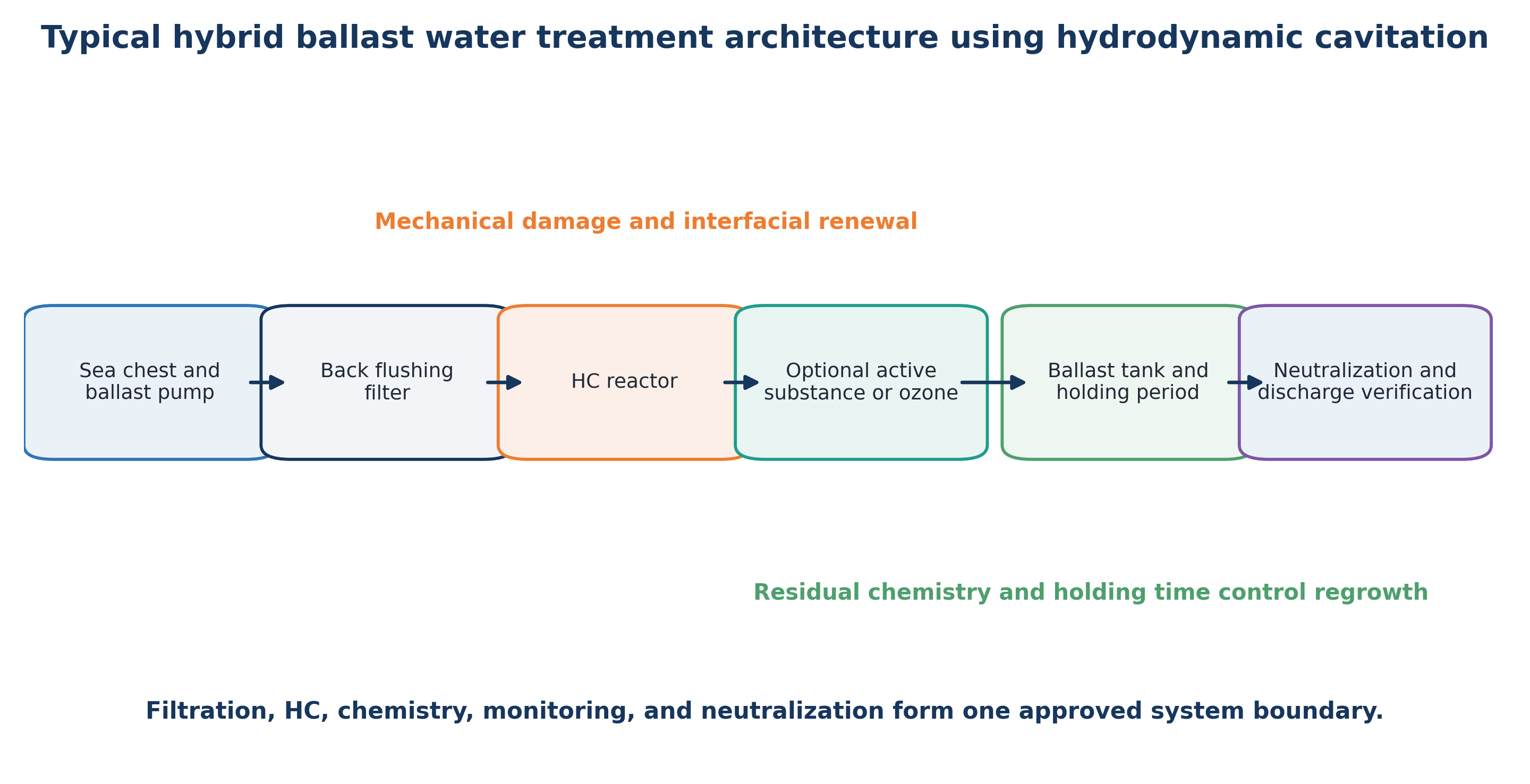
Figure 5.2. Typical hybrid ballast water treatment architecture incorporating filtration, hydrodynamic cavitation, oxidant generation, residual monitoring, and neutralization [33,37,38].
5.3 Historical Systems and the HyCator Case Study
The review by Cvetković et al. identified four type approved or commercial systems that incorporated HC as one treatment stage: JFE Ballast Ace, OceanSaver, FineBallast OZ, and Venturi Oxygen Stripping. Each system combined cavitation with filtration, chemical treatment, ozonation, nitrogen supersaturation, or deoxygenation [37]. These examples are historically important because they demonstrate commercial implementation of HC as part of a treatment train, but they should not be interpreted as evidence of current product availability or approval status.
Sangave, Mukherjee, and Pandit described a HyCator ballast water system that combined automatic back flushing filtration, controlled HC, and sodium hypochlorite generated by seawater electrolysis. The reported ballasting sequence used approximately 3 mg L⁻¹ total residual oxidant. Residual disinfectant was maintained during the holding period and was neutralized with sodium thiosulfate during deballasting to less than 0.1 mg L⁻¹. The reported tests met the selected D-2 biological endpoints in a single pass treatment train [38]. Because the paper was authored by personnel affiliated with the technology developer, the results should be treated as vendor associated performance evidence and supplemented by independent type approval data where available.
Yoshimura et al. evaluated mechanochemical ballast treatment using cavitating water jets with sodium hypochlorite. At a nozzle diameter of 3.1 mm, a flow rate of 30 L min⁻¹, and 5 mg L⁻¹ sodium hypochlorite, the authors reported complete extinction of the test plankton population. Ejector nozzles supported higher flow than the tested Venturi arrangement, indicating that chemical suction, nozzle pressure, and organism exposure should be designed as an integrated system [72].
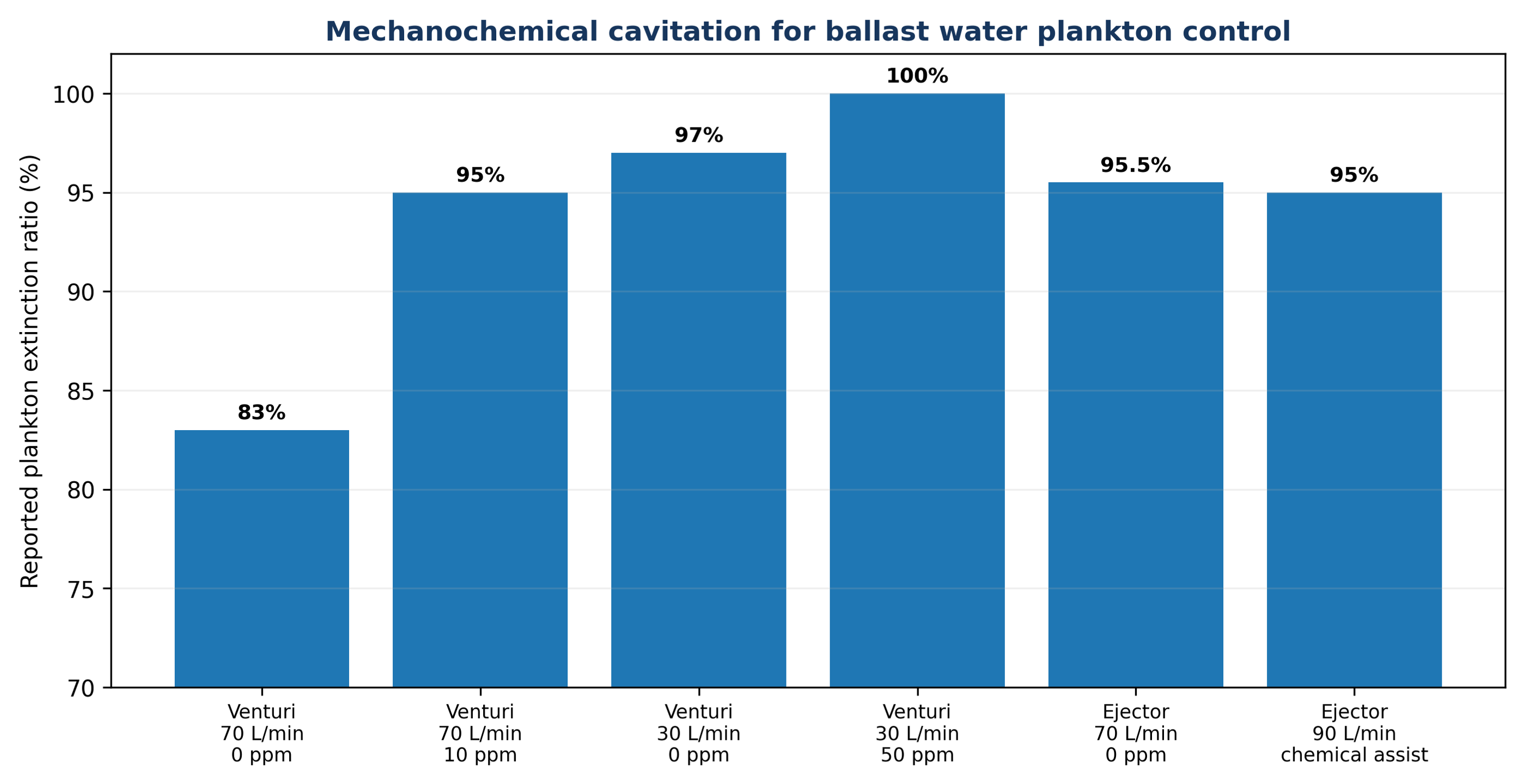
Figure 5.3. Plankton extinction reported for mechanochemical cavitation with sodium hypochlorite [72].
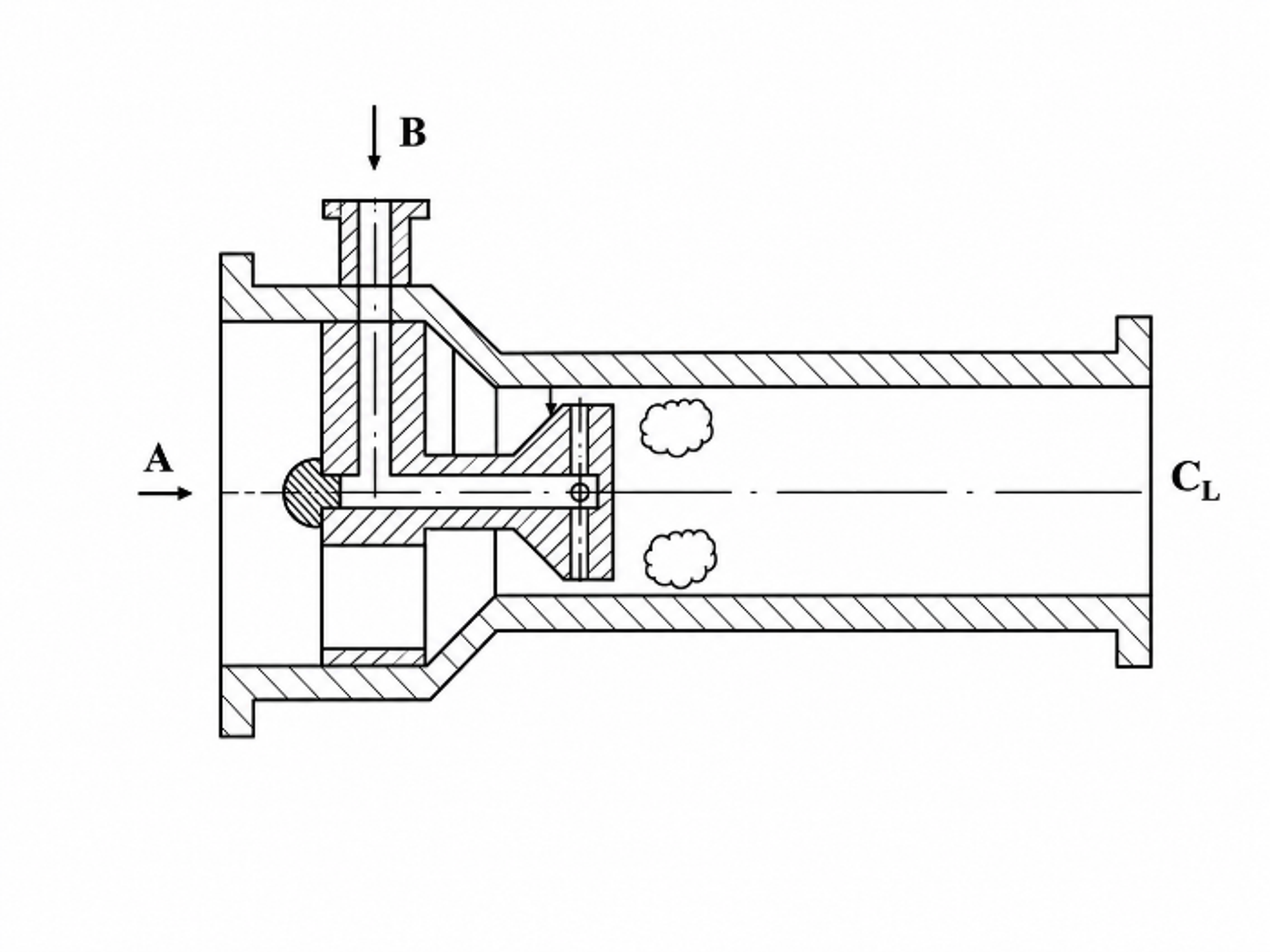
Figure 5.4. Water treatment cavitation device with chemical injection near the constriction [52].
5.4 Current Approval, Monitoring, and Verification Requirements
The HyCator process diagram illustrates the practical complexity of a physicochemical ballast water system. The ballasting line included filtration, a booster pump, a cavitation reactor, a side stream electrochlorination unit, total residual oxidant monitoring, hydrogen separation, and a ballast tank. During deballasting, sodium thiosulfate was metered into the discharge line and residual oxidant was measured before overboard discharge [38]. The cavitation reactor was therefore one controlled element within a larger safety and compliance system.
The source material states that the final D-2 implementation date for existing ships was 8 September 2024 and that, by December 2025, the Convention had 101 Parties representing 93.73% of world merchant shipping by tonnage [35,55]. It further reports that the IMO adopted revised G4 guidance in 2026 through resolution MEPC.409(84). The earlier G8 approval guidelines have been superseded by the mandatory BWMS Code, while systems using active substances remain subject to the G9 procedure [36].
A current design should document certified system design limitations, approved flow range, salinity and temperature envelope, turbidity limits, active substance dose, neutralization capacity, monitoring accuracy, and contingency procedures. Biological performance must be demonstrated using the prescribed organism size classes and indicator microbes rather than by pump pressure, cavitation number, or oxidant residual alone. Commissioning tests and operational sampling should also verify that bypasses, valve condition, sensor drift, and changing water quality do not compromise treatment.
Table 5.2. Ballast water management system verification items.
| Verification area | Required evidence | HC specific concern |
|---|---|---|
| Biological performance | D 2 organism size classes and indicator microbe limits under approved test conditions | Mechanical damage may not equal loss of viability; regrowth and assay method matter |
| System design limitations | Certified range for flow, salinity, temperature, UV transmittance or turbidity, and holding time | Cavitation pattern changes with vapor pressure, gas content, and backpressure |
| Active substances | IMO approval, dose control, byproduct evaluation, and neutralization | HC can intensify oxidant transfer and may alter residual demand |
| Mechanical integration | Pump, filtration, bypass protection, pressure relief, corrosion, and hydrogen safety where electrolysis is used | Pressure oscillation, erosion, noise, and gas release require engineered safeguards |
| Operational monitoring | Calibrated sensors, alarms, records, commissioning, and contingency actions | Pressure and power are surrogate indicators and cannot replace biological verification |