
Technical publication
Back to publications
Other
Fabrication of High Performance Catalysts by Controlled Flow Cavitation
okozyuk.com
Published
Read complete publication for whole-document Find and printing. Browser Find and native printing on this reader include only loaded content.
6 Representative Catalyst and Precursor Systems
6.1 Multimetal Oxides and Perovskites
La₀.₆Sr₀.₄FeO₃ was used to demonstrate phase formation in a multication oxide. The cavitation prepared patterns closely matched the reference perovskite, whereas the conventional preparation in the technical disclosure contained additional reflections. Reported calcined crystallite sizes were approximately 16-18 nm [6,23-27]. The result supports rapid coprecipitation and compositional homogenization but does not by itself establish improved oxygen transport, redox capacity, or catalytic durability. These properties require measurement after a defined thermal history.
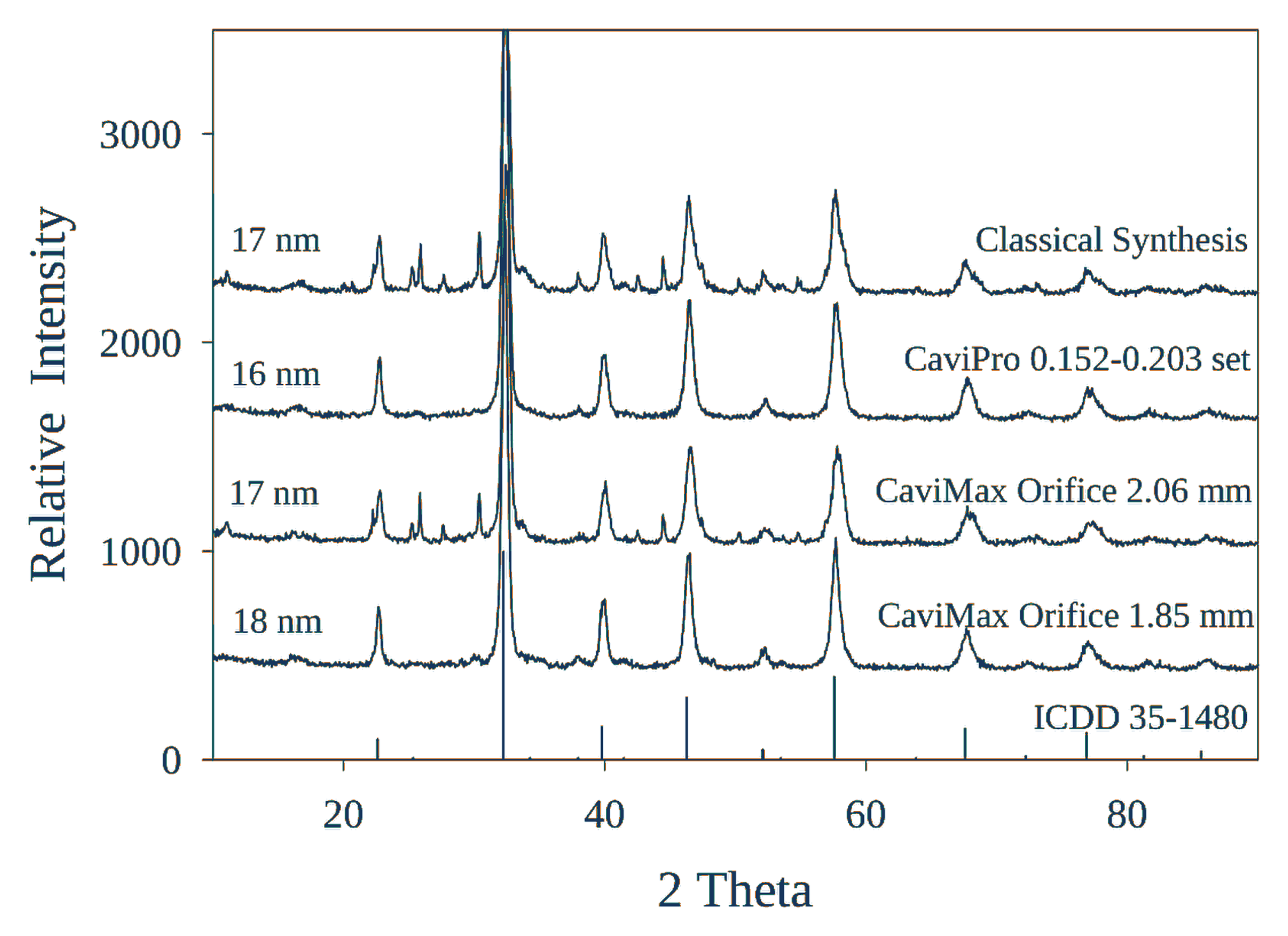
Figure 6.1. X-ray diffraction comparison for La₀.₆Sr₀.₄FeO₃ prepared by cavitation and conventional precipitation. [6].
6.2 Copper Zinc Aluminum Oxide for Methanol Synthesis
Copper-zinc-aluminum oxide illustrates the interaction between precursor chemistry and mechanical settings. In the source data, changing the second restriction produced CuO crystallite sizes of approximately 6-13 nm after calcination and a nonmonotonic microstrain response. The highest strain occurred near the smallest reported crystallite size. The result demonstrates mechanical control of a structural response within a fixed formulation, but the dependence is not monotonic and cannot be transferred to another chemistry without calibration [6,7,23-27].
For methanol synthesis, CuO size before reduction is only a precursor metric. The active catalyst contains metallic copper interacting with ZnO and an oxide matrix, and reduction can reconstruct dispersion and interfacial structure. A valid comparison therefore requires identical reduction conditions, copper surface area by chemisorption, microscopy or absorption spectroscopy of the reduced state, productivity normalized to copper area, selectivity, and deactivation under identical gas composition and heat transfer conditions.
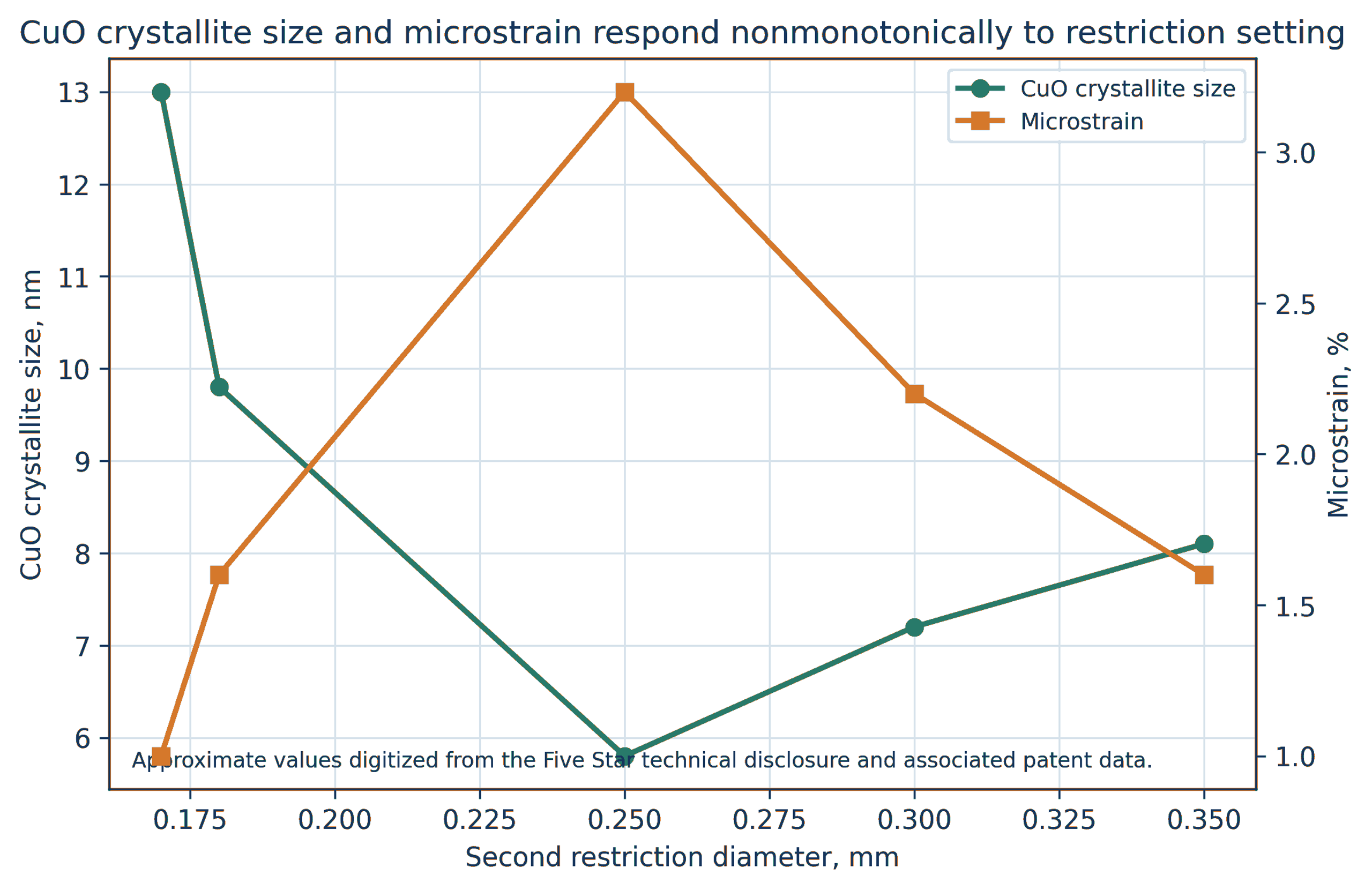
Figure 6.2. Reported CuO crystallite size and microstrain as a function of second restriction diameter for Cu₀.₂₂Zn₀.₆₈Al₀.₁₀Oₓ. [6,7,23-27].
6.3 Cobalt Molybdate on Alumina and Silica
Cobalt molybdate was examined because phase segregation is readily detected by X-ray diffraction and because cobalt molybdenum precursors are industrially important. In supported and unsupported formulations, cavitation generally increased the fraction of CoMoO₄ and reduced separate MoO₃ relative to mechanically stirred precipitation. On gamma alumina, reported cavitation crystallites were approximately 18-20 nm compared with about 38 nm for the conventional sample. Under selected conditions on silica, separate MoO₃ reflections were substantially reduced [1-7].
The active hydrotreating phase is not crystalline CoMoO₄. After sulfidation, performance depends on MoS₂ slab length and stacking, cobalt promotion at edge sites, sulfur vacancies, support interactions, and resistance to sintering and poisoning. Precursor phase purity is therefore a useful process response but not the final performance metric.
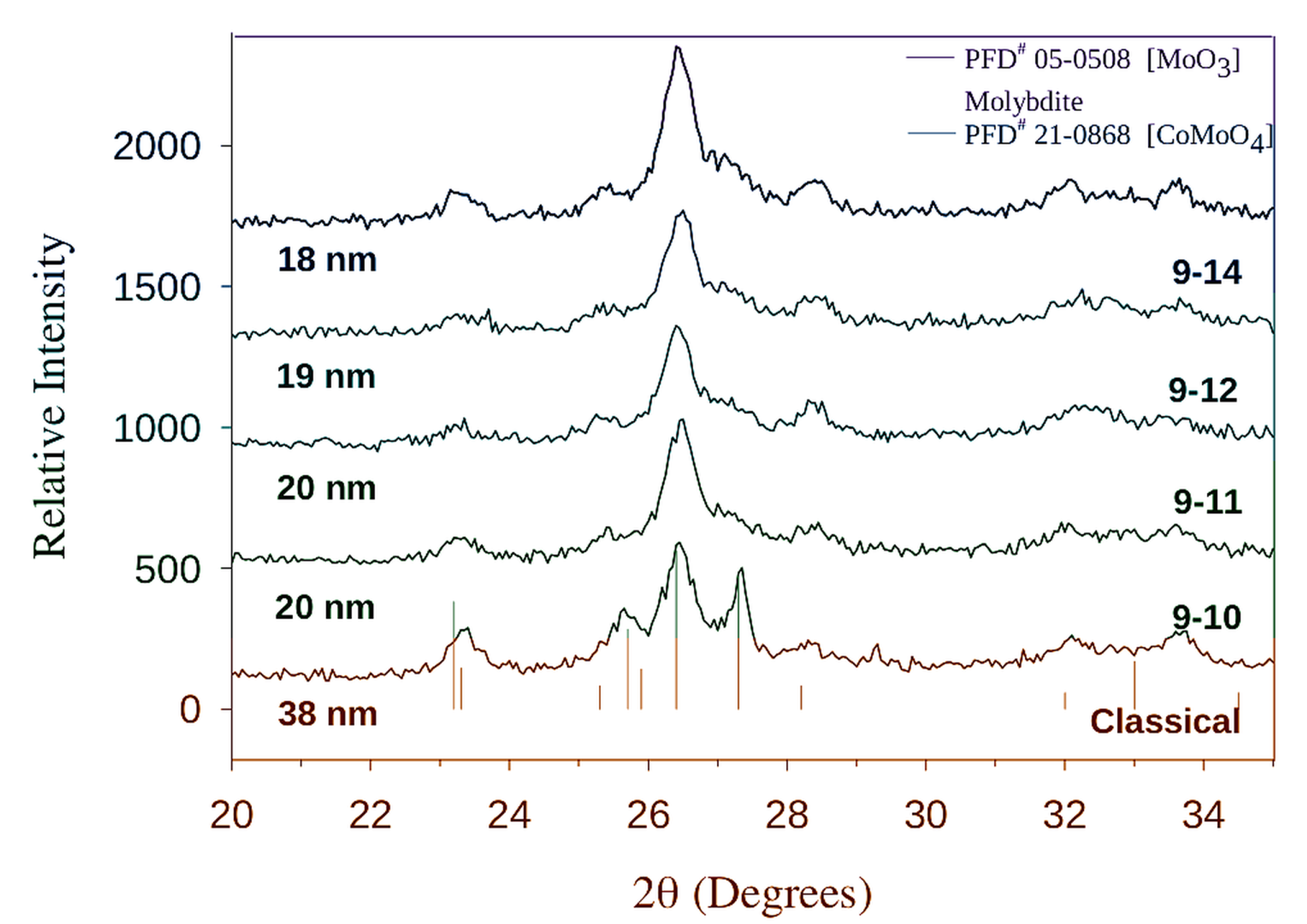
Figure 6.3. X-ray diffraction patterns for cobalt molybdate on gamma alumina prepared with several CaviPro restriction sets and by conventional precipitation. [6].
6.4 Gold on Titania and the Importance of Chemical Regime
Supported gold provides a clear warning against attributing every response to cavitation severity. Emerson found that low pressure hydrodynamic cavitation, approximately 6.9-48 bar, had little effect on gold crystallite size at fixed gold content for several precipitation systems. When hydrazine reduction chemistry, precursor dilution, restriction diameter, and reductant addition rate were changed together, gold size could be adjusted from approximately 8-80 nm. Individual factors were weak, whereas their interactions were important [7].
A modified basic hydrazine route at pressures above approximately 689.5 bar produced 2-9 nm gold crystallites at a gold content near 2.27%. In selected single restriction experiments, the dissertation reported 2.5 nm at 10,000 psig, 8.2 nm at 13,000 psig, 5.8 nm at 17,000 psig, and replicate values of 3.8 and 2.7 nm at 20,000 psig. Gold yield was generally higher in the hydrodynamic runs than in conventional preparation. However, CO oxidation activity was low for most high pressure basic hydrazine samples, and sodium titanate formation was identified as a likely cause. Thus, smaller crystallites and higher incorporation did not necessarily produce a better catalyst [7].
The same source showed that gold loading dominated activity in another synthesis series. Reducing loading from about 0.50% to 0.05% by weight increased the rate per mole of gold by approximately nineteenfold, presumably because of improved dispersion. A cavitation development program should therefore vary chemical concentration and hydrodynamic conditions independently and include conventional controls at matched composition.
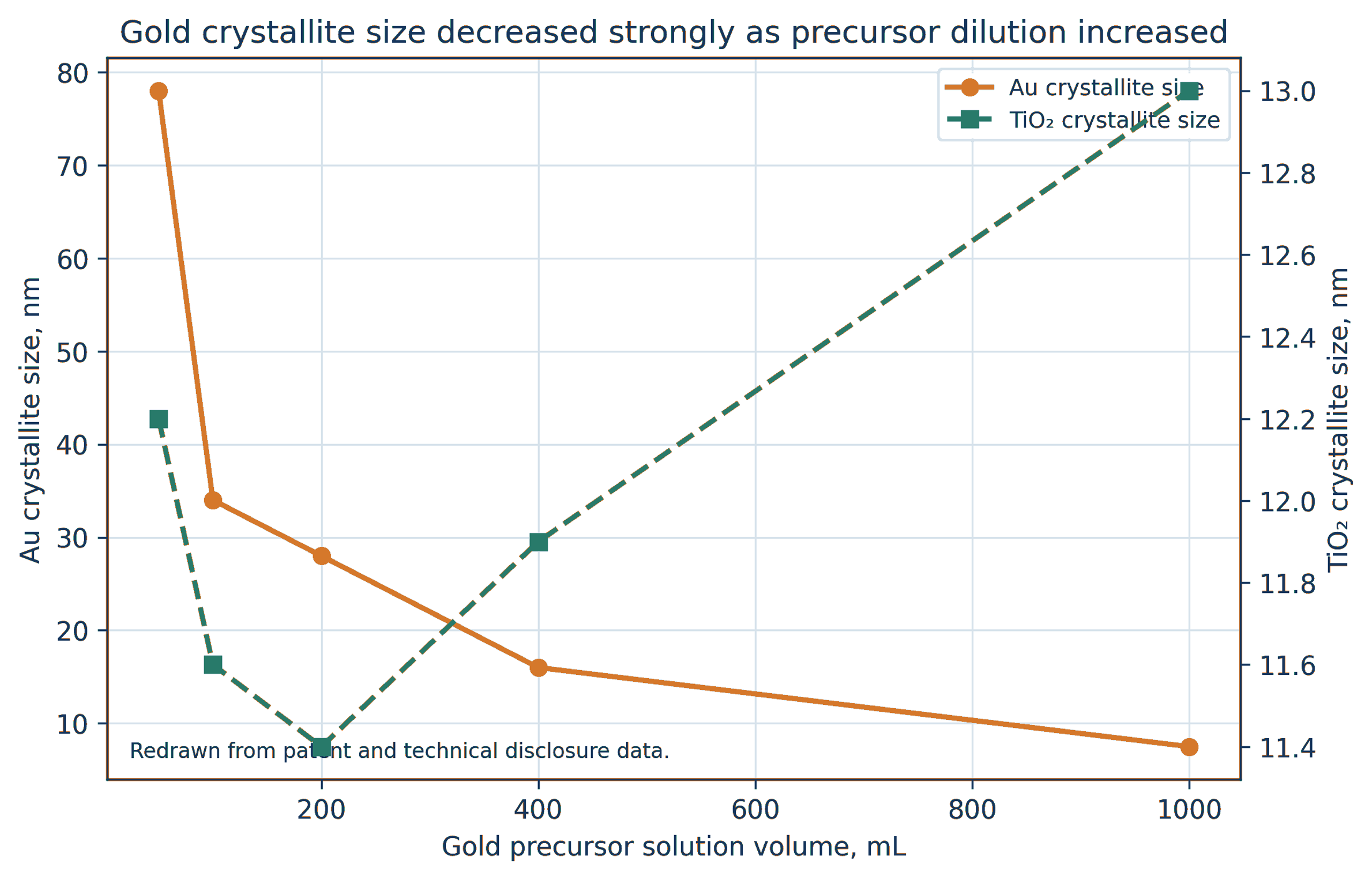
Figure 6.4. Gold crystallite size on titania as a function of precursor solution volume at fixed nominal loading. [1-3,6,7].
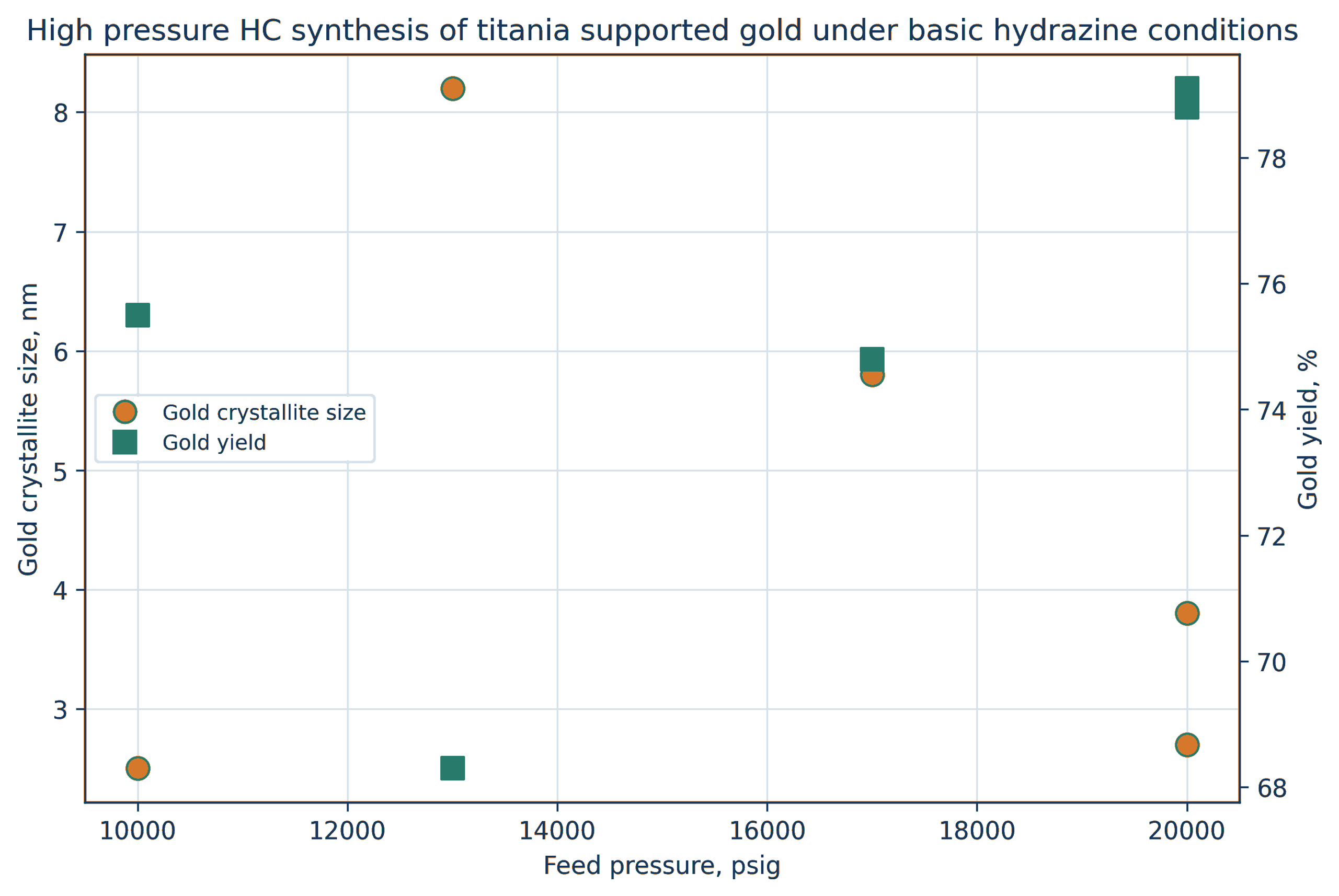
Figure 6.5. High pressure hydrodynamic synthesis of titania supported gold under basic hydrazine conditions. Crystallite size and gold yield are plotted from single 0.006 inch restriction data [7]. Replicate 20,000 psig runs are shown separately.
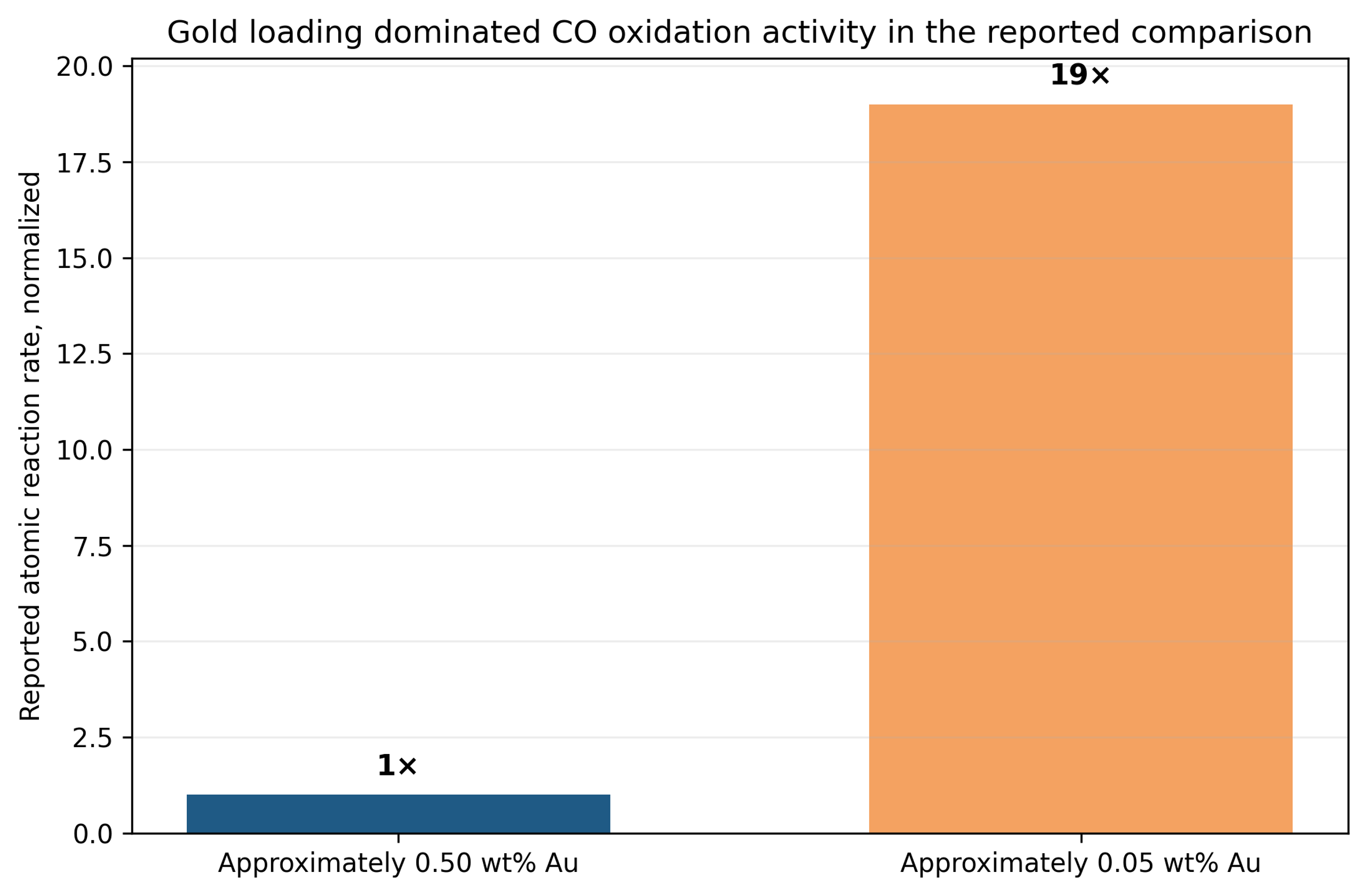
Figure 6.6. Normalized effect of gold loading on atomic CO oxidation rate. The rate per mole of gold increased approximately nineteen fold as loading decreased from about 0.50-0.05 weight percent [7].
6.5 Silver, Platinum, Palladium, and Supported Noble Metals
Patent and technical disclosure data indicate size control for several supported noble metals. Silver on titania prepared by cavitation showed less growth during calcination at 400 °C than a conventional sample. Reported platinum crystallites were approximately 3.7-4.1 nm for selected CaviPro conditions compared with about 5.4 nm for conventional preparation. Silver on alpha alumina and unsupported palladium showed nonmonotonic responses to throat cavitation number [1-7].
These comparisons require careful interpretation. X-ray diffraction may not detect the smallest or most dilute particles. Oxidation state, support hydroxylation, chloride retention, reduction temperature, and strong metal-support interactions can dominate catalytic activity. Thermal stability should therefore be evaluated through repeated reaction and regeneration cycles rather than at a single calcination condition.
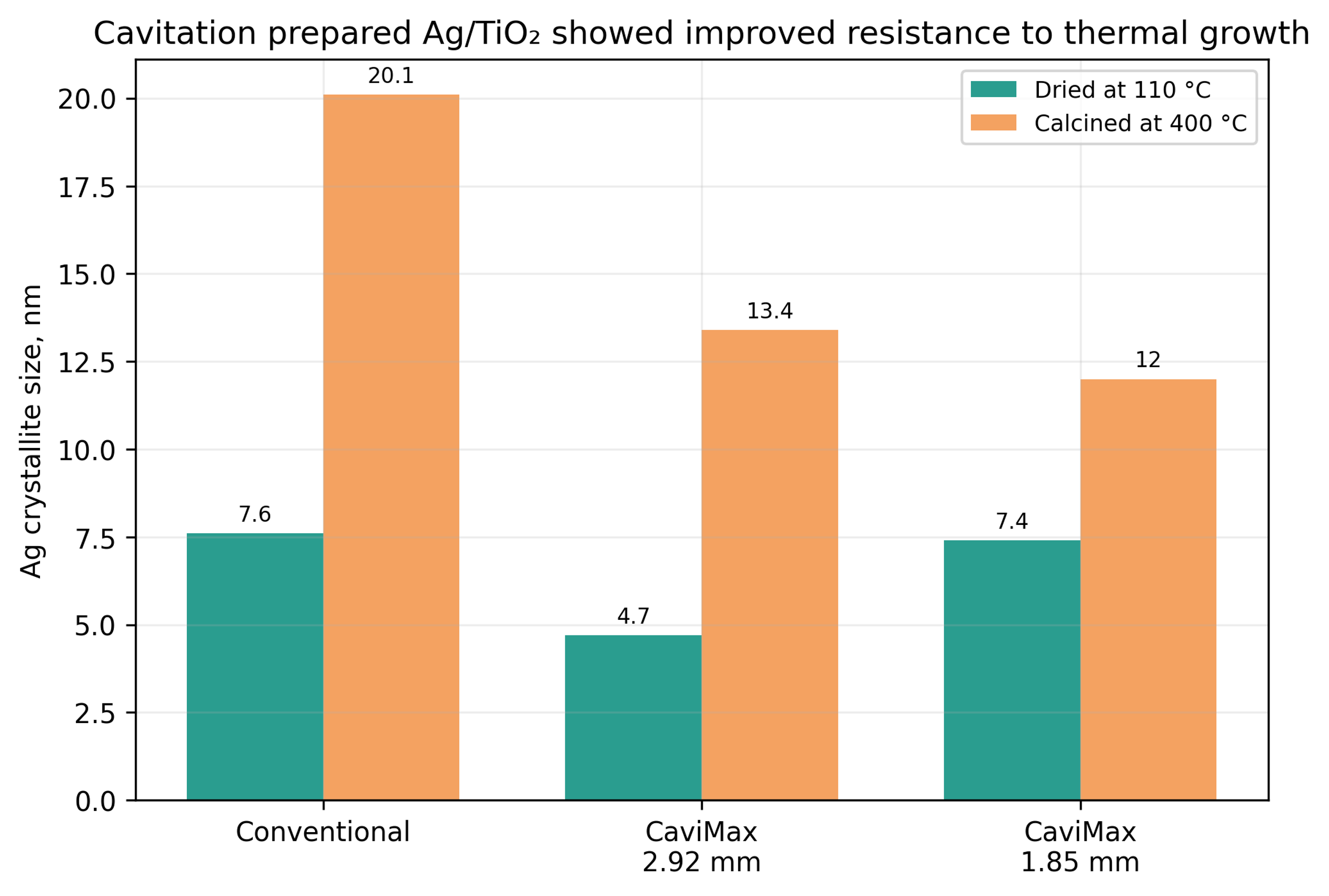
Figure 6.7. Silver crystallite size on titania before and after 400 degree Celsius calcination. [1-3].
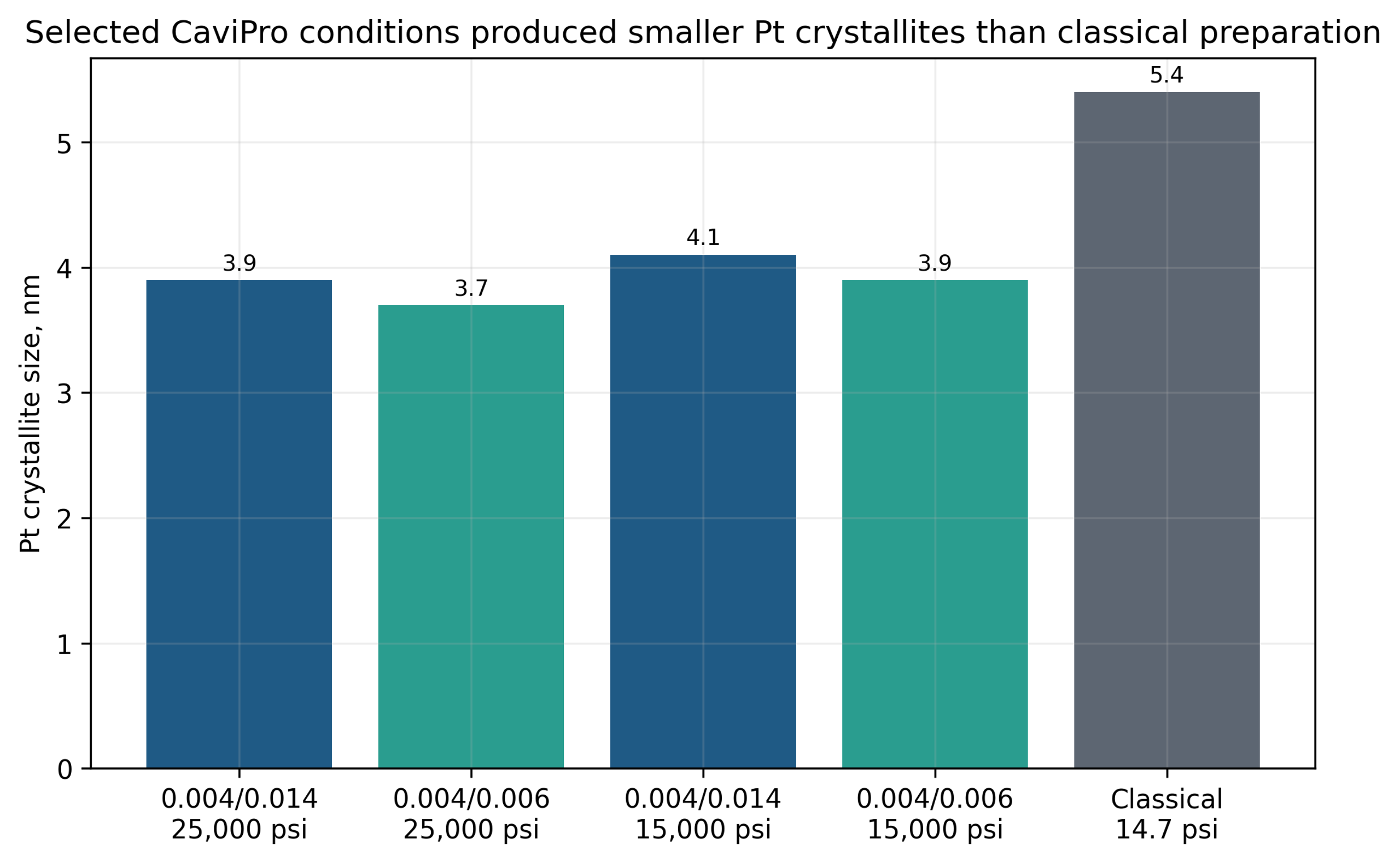
Figure 6.8. Platinum crystallite size for selected CaviPro pressure and restriction conditions compared with conventional preparation. [1-3].
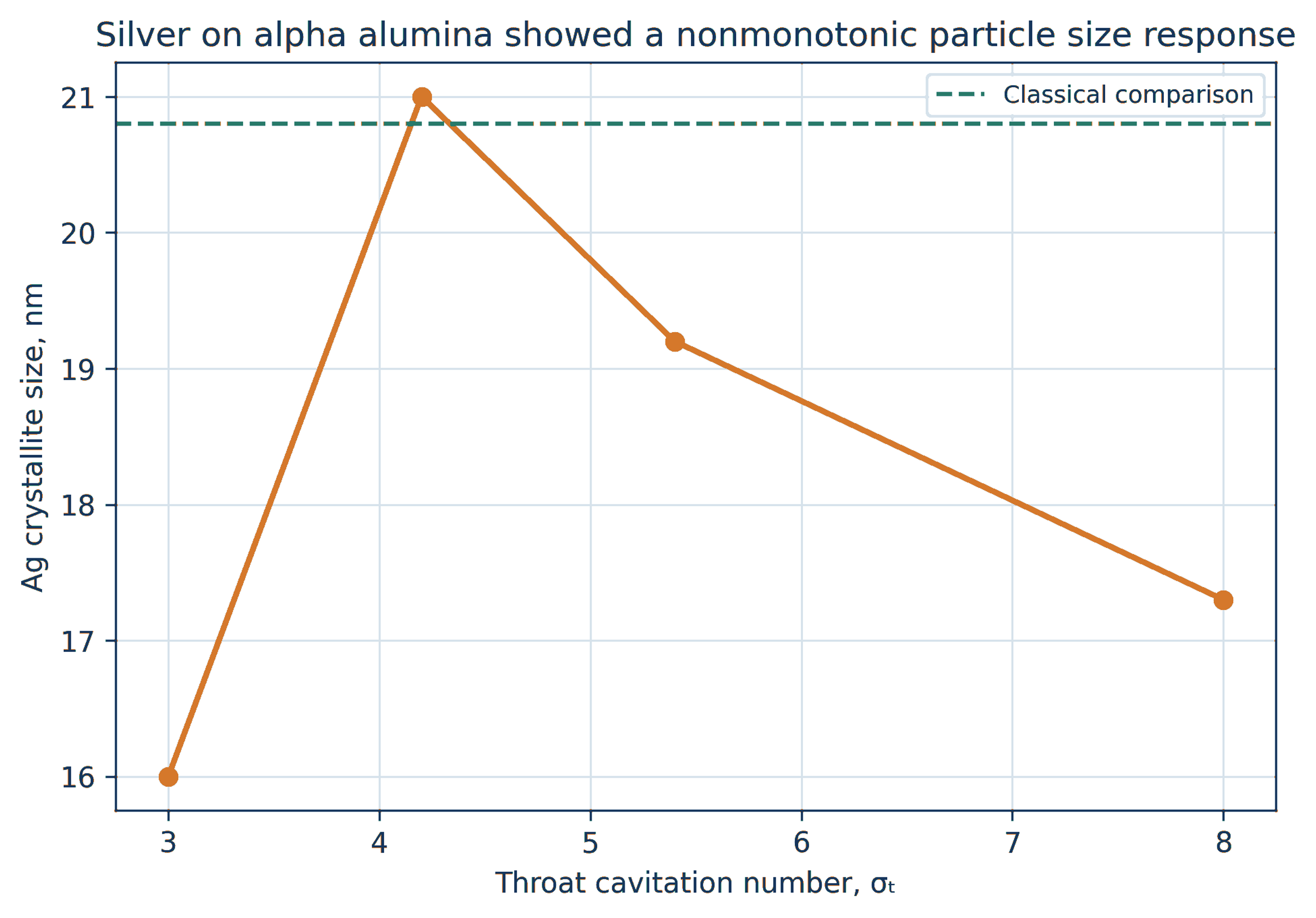
Figure 6.9. Silver crystallite size on alpha alumina as a function of throat cavitation number. The response is nonmonotonic. [1-3].
6.6 Bismuth Molybdate, Titania, and Defect Probes
Beta bismuth molybdate was reported as phase pure for several CaviMax restrictions, while crystallite size varied from approximately 11-28 nm. The smallest value occurred at the largest restriction in that series, again demonstrating that restriction diameter is a proxy for a coupled pressure and residence state rather than a universal monotonic control.
Titania and lead zirconate titanate are useful mechanistic probes because crystallite size and strain can be quantified over several reflections. Patent data for titania showed microstrain increasing from approximately 0.23% to 0.43% across the tested CaviMax restriction range. Lead zirconate titanate showed adjustable strain with a comparatively stable crystallite size near 20 nm. These observations support the possibility that CFC modifies defect retention independently of mean size [1-7].
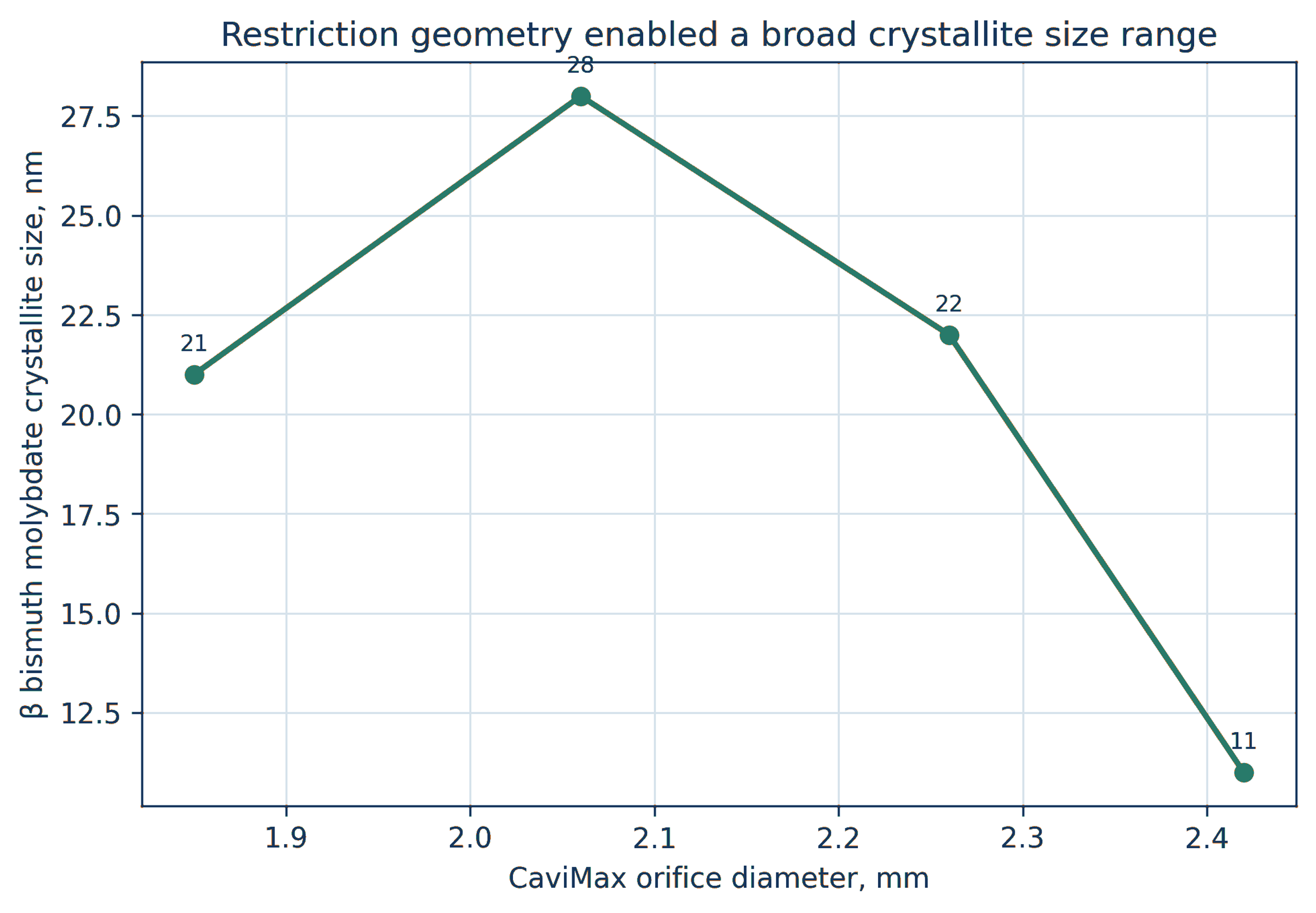
Figure 6.10. Beta bismuth molybdate crystallite size as a function of CaviMax restriction diameter. [1-3].
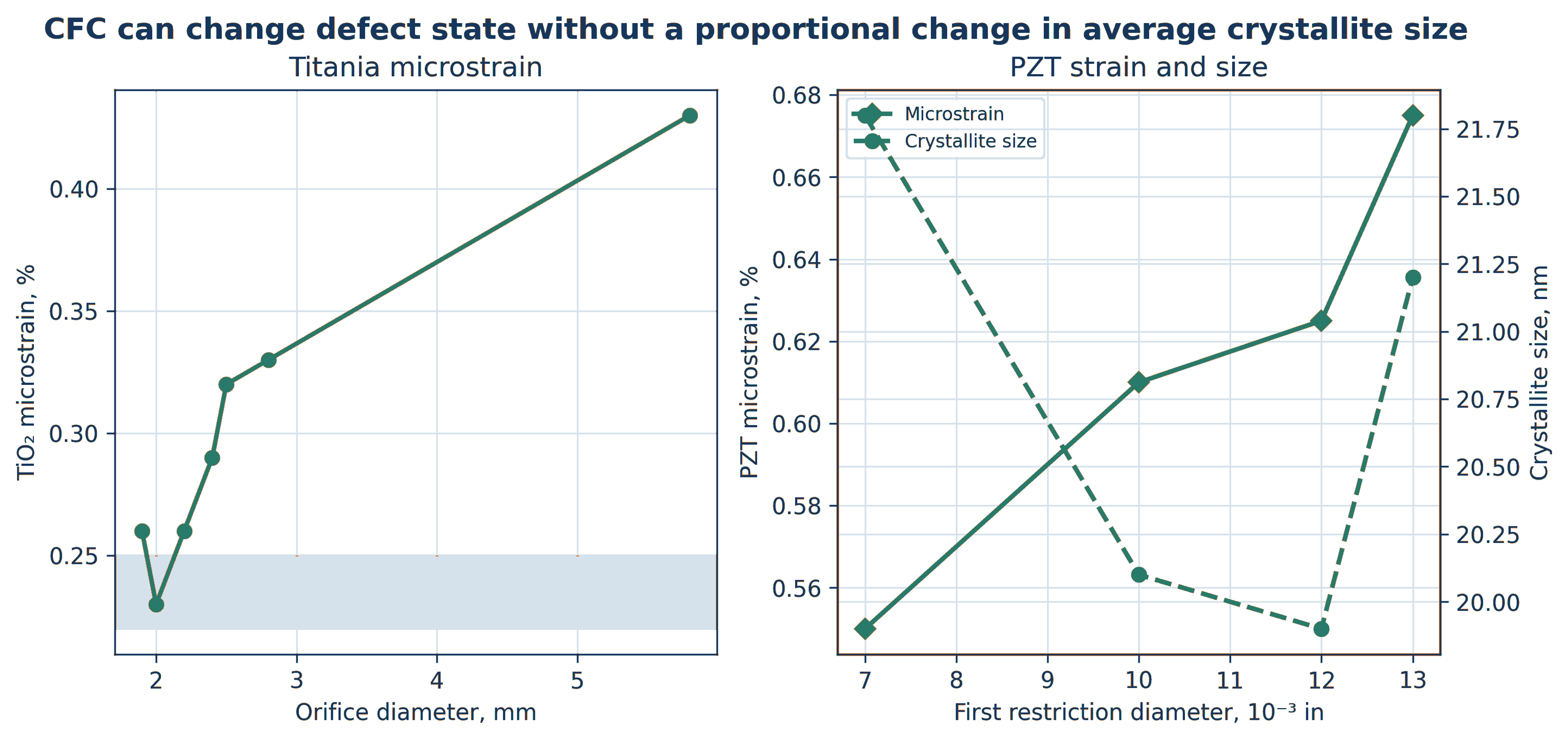
Figure 6.11. Microstrain and crystallite size responses for titania and lead zirconate titanate used as defect sensitive probes. [1-7].
Table 6.1. Representative cavitation catalyst and precursor outcomes
| Material system | Reported structural response | Likely controlling factors | Required catalytic follow up |
|---|---|---|---|
| LaSrFe perovskite | Higher phase purity and about 16–18 nm crystallites | Coprecipitation uniformity and calcination history | Oxygen transport, redox cycling, activity, and durability |
| CuZnAl oxide | CuO size and strain adjustable over processor settings | Chemistry, restriction pair, pressure, and lattice interaction | Reduced copper area, interface, methanol productivity, and deactivation |
| CoMoO₄ on alumina or silica | More CoMoO₄, less separate MoO₃, smaller crystallites | Cation mixing, support interaction, and recovery pressure | Sulfided active phase, HDS activity, and stability |
| Gold on titania | Single digit crystallites in selected high pressure chemistry | Precursor concentration, reduction, sodium chemistry, pressure | CO oxidation normalized to gold dispersion and sodium content |
| Silver and platinum on oxides | Smaller crystallites and improved thermal resistance in selected runs | Reduction, support chemistry, drying, calcination | Oxidation activity, selectivity, and regeneration stability |
| Titania and PZT probes | Adjustable microstrain with limited size change | Pressure, restriction, bubble population, defect retention | Defect specific surface reactivity and thermal relaxation |