
Technical publication
Back to publications
Other
Fabrication of High Performance Catalysts by Controlled Flow Cavitation
okozyuk.com
Published
Read complete publication for whole-document Find and printing. Browser Find and native printing on this reader include only loaded content.
4 Catalyst Fabrication Workflow
4.1 Precursor Selection and Precipitation Timing
The chemical step is inseparable from the hydrodynamic step. Reported oxide syntheses used metal nitrate, chloride, or related salt solutions with ammonium hydroxide, sodium hydroxide, sodium carbonate, ammonium carbonate, or mixed precipitating agents. Reduction routes for noble and base metals used hydrazine or other reductants. Supports included gamma alumina, alpha alumina, silica, fumed silica, titania, and zirconia [1-7].
For multimetal oxides, compatible hydrolysis and precipitation behavior is essential. If one cation precipitates well before the others, intense mixing cannot reconstruct compositional homogeneity that was never established. Useful strategies include separately metered feeds, a low volume premixer, pH controlled addition, staged precipitation, complexing ligands, solvent selection, and temperature control. The design target is a reproducible interval between the onset of supersaturation and the first cavitation exposure, and this interval should be measured or bounded rather than described only as immediate.
Support deposition requires the same level of control. The support may be present during precipitation, added after formation of a metal colloid, or contacted in a second cavitation stage. These alternatives create different nucleation sites and different probabilities of burying the active phase. The WPI gold studies showed that precursor concentration, reduction chemistry, feed rate, support addition, and drying can dominate final properties even when the hydrodynamic equipment is unchanged [7].
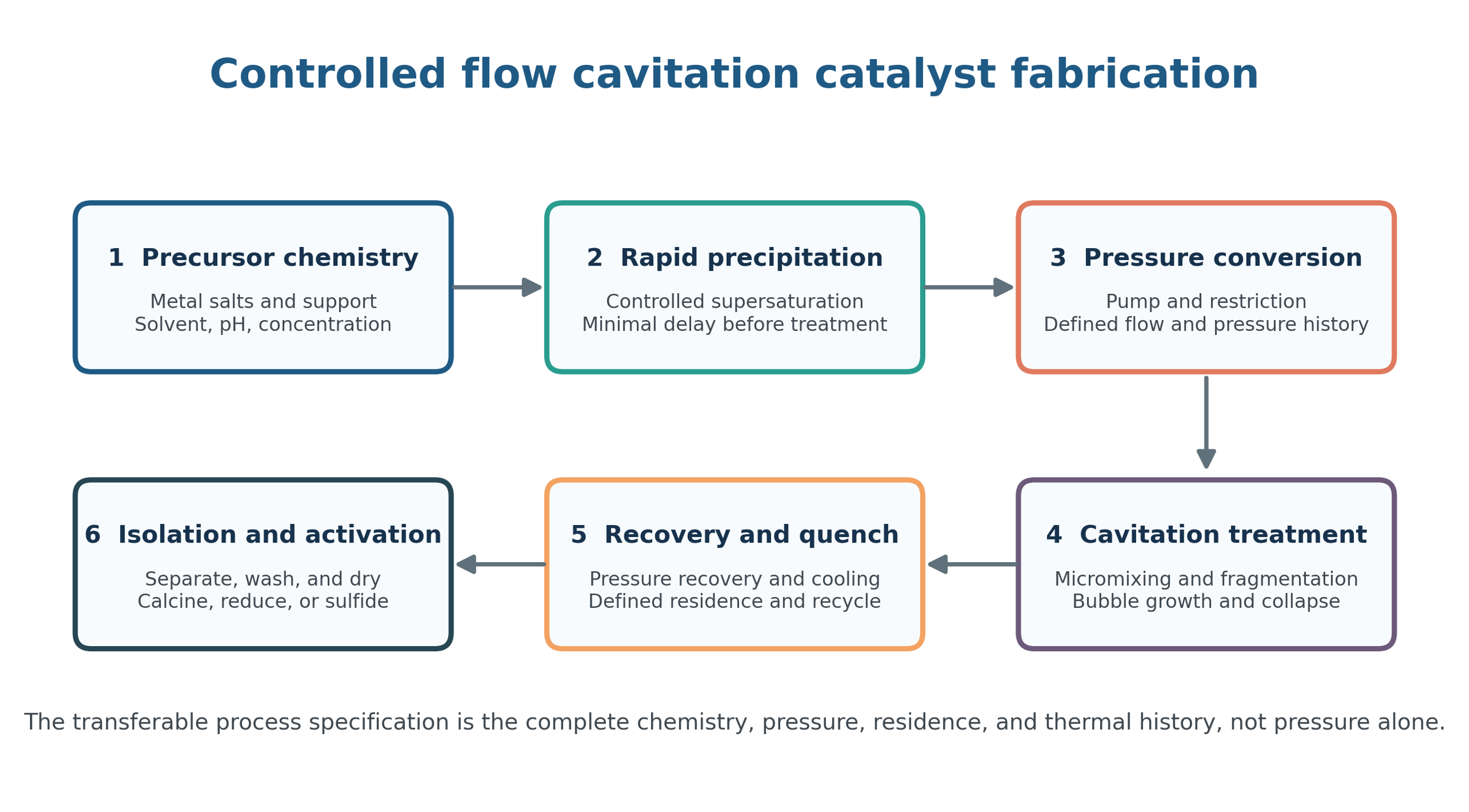
Figure 4.1. Engineering control points from precursor preparation through isolation and activation. [29].
4.2 Single Pass and Recycle Operation
Single pass operation is preferred when the objective is to identify reaction and nucleation kinetics because it provides a narrow definition of the interval between feed contact, pressurization, restriction passage, and product collection. Recycle is useful when one pass does not provide sufficient deagglomeration or conversion and can also smooth feed disturbances. Its principal disadvantage is the distribution of pass counts together with continued aging in the loop.
A recycle experiment should report slurry inventory, line and heat exchanger volume, flow rate, processing time, solids concentration, bypass fraction, and final isolated yield. Reporting only a processing time is insufficient because a given duration can correspond to less than one nominal pass or to hundreds of passes depending on loop volume and flow. Samples removed during recycle should be returned only when the sampled mass is included in the material balance.
4.3 Separation, Washing, Drying, and Activation
Cavitation does not eliminate downstream solids handling. The finest fraction can be selectively lost during filtration, retained in wash liquor, or agglomerated during drying. The separation method should therefore be selected according to particle size, solids concentration, filter cake compressibility, solvent properties, and required purity. Centrifugation, cross flow filtration, pressure filtration, and membrane concentration can recover different particle distributions.
Washing must remove counterions and residual precipitant without redispersing or dissolving the active component. Conductivity and ion analysis of the wash stream are more informative than a fixed number of wash cycles. Drying can be as influential as cavitation treatment: oven drying can create capillary necks, whereas freeze drying, spray drying, supercritical drying, or solvent exchange can preserve a more open structure. The WPI gold work identified drying history as a significant source of crystallite size variability [7].
Additional calcination, reduction, sulfidation, or other activation may remain necessary after synthesis. In this article, the term in situ calcination refers primarily to partial decomposition of a precipitated salt during processing and does not establish that every catalyst exits the processor in its final active state. Copper-zinc oxide catalysts require reduction, cobalt molybdate hydrotreating precursors require sulfidation, and supported noble metals can restructure under the reaction gas.
Table 4.1. Fabrication stages, critical variables, and acceptance criteria
| Stage | Critical variables | Recommended measurements | Acceptance criterion |
|---|---|---|---|
| Precursor preparation | Purity, concentration, metal ratio, solvent | ICP composition, density, pH, conductivity | Verified composition and no uncontrolled precipitation |
| Feed contact | Feed ratio, addition rate, premix time, temperature | Calibrated pumps and residence estimate | Reproducible supersaturation history |
| CFC treatment | Pressure, flow, geometry, back pressure, passes | Pressure traces, flow, temperature, acoustic or vibration signal | Stable hydraulic window without plugging |
| Separation and washing | Recovery method, wash volume, ion removal | Mass balance and filtrate analysis | High yield with counterions below specification |
| Drying | Temperature, time, atmosphere, capillary stress | Moisture, agglomerate size, BET area | Structure retained within target range |
| Activation | Temperature program, gas composition, space velocity | TPR, TPO, XRD, chemisorption, mass change | Defined active phase and dispersion |
| Final qualification | Composition, phase, area, size, activity, stability | Statistical product testing | All critical quality attributes within control limits |