
Technical publication
Back to publications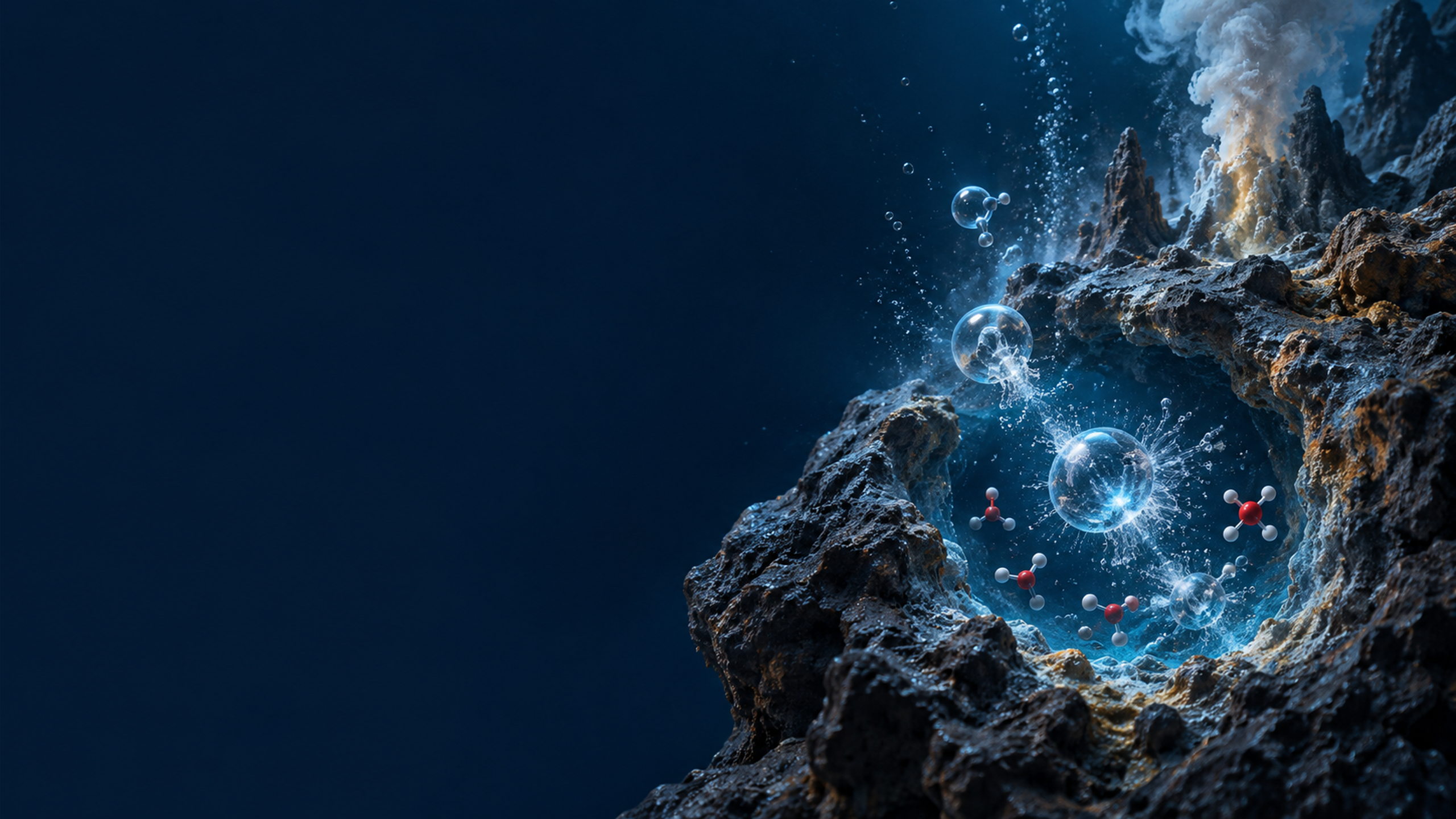
Reactors & equipment
The Rise of Life on Earth: Cavitation in Nature
okozyuk.com
Published
Read complete publication for whole-document Find and printing. Browser Find and native printing on this reader include only loaded content.
Abstract
The phenomenon of cavitation has been known in science and technology for more than a hundred years. It was first recognized as an important hydrodynamic phenomenon in connection with high speed marine propulsion, including early observations associated with British destroyers in the late nineteenth century. Osborne Reynolds and later researchers helped establish cavitation as a serious problem in ship propellers, pumps, and turbines [1,2].
Cavitation in Nature
Although cavitation is often discussed in engineering, it also occurs naturally. It may appear in fast moving streams, waterfalls, breaking ocean waves, hydrothermal systems, underwater volcanic activity, and shock waves caused by impacts or earthquakes [7,8].
In a waterfall, for example, water accelerates and flows around rocks and irregular surfaces. These obstacles can create low pressure zones. If the water is moving fast enough, vapor bubbles form. When the bubbles move back into higher pressure regions, they collapse.
Similar effects may occur during underwater volcanic eruptions, meteorite impacts into oceans, violent storms, or seismic disturbances. On the early Earth, such events were likely common. The young planet was geologically active, volcanically intense, and frequently affected by energetic environmental processes.
This means cavitation may have occurred not occasionally, but repeatedly and widely. Across millions of years, countless cavitation bubbles could have formed and collapsed in oceans, rivers, shorelines, hydrothermal systems, and impact zones.