
Technical publication
Back to publications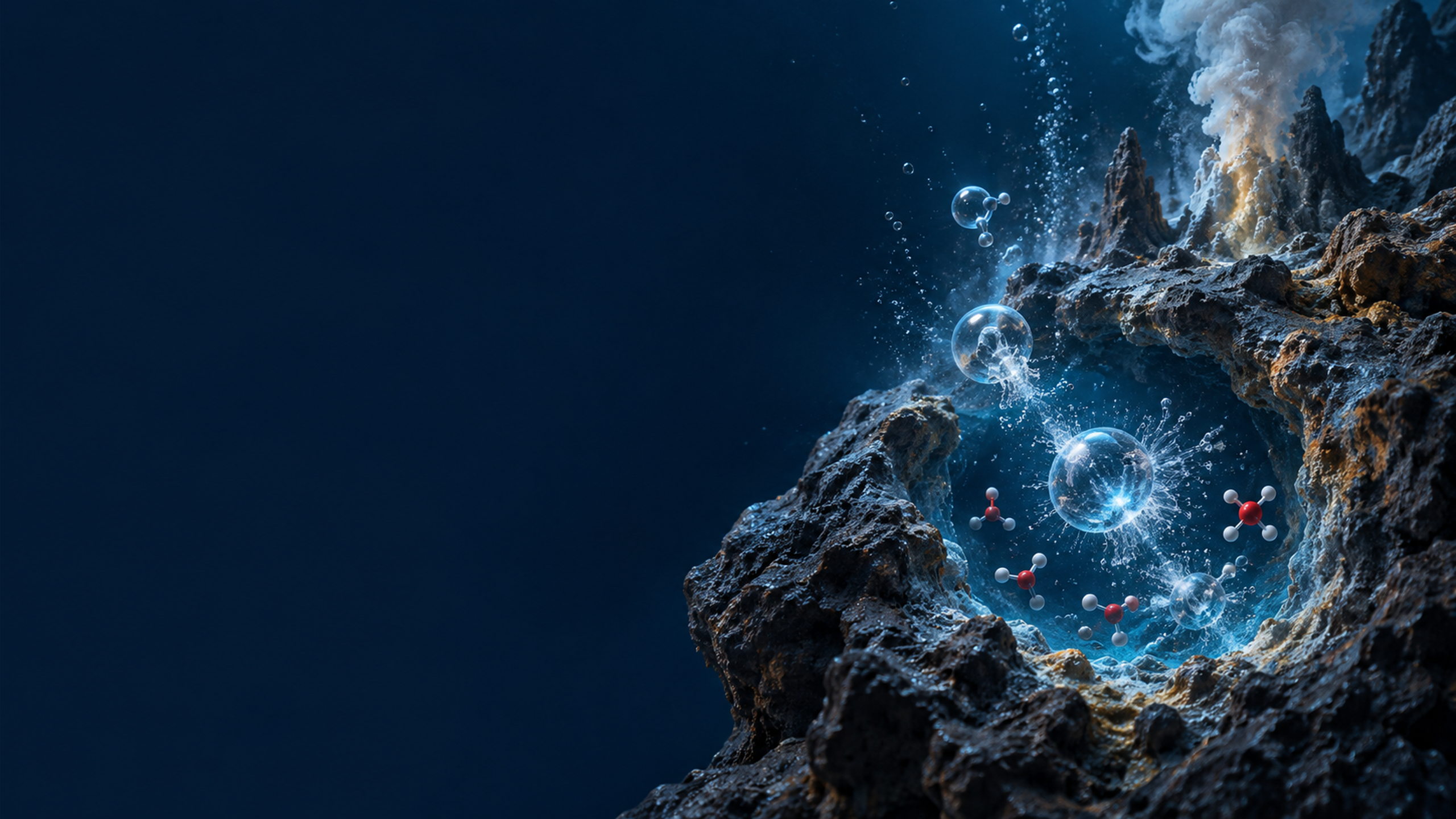
Reactors & equipment
The Rise of Life on Earth: Cavitation in Nature
okozyuk.com
Published
Read complete publication for whole-document Find and printing. Browser Find and native printing on this reader include only loaded content.
Abstract
The phenomenon of cavitation has been known in science and technology for more than a hundred years. It was first recognized as an important hydrodynamic phenomenon in connection with high speed marine propulsion, including early observations associated with British destroyers in the late nineteenth century. Osborne Reynolds and later researchers helped establish cavitation as a serious problem in ship propellers, pumps, and turbines [1,2].
The Energy of a Collapsing Bubble
A cavitation bubble may be microscopic, but its collapse can concentrate energy into a very small volume. Experimental studies of acoustic cavitation and sonoluminescence show that collapsing bubbles can produce extremely high local temperatures, reactive radicals, and light emission [4–6].
In water, cavitation can split water molecules into hydrogen atoms and hydroxyl radicals. These reactive fragments can recombine or react with dissolved gases and other molecules. Thus, the collapse of a bubble is not merely a mechanical event. It is also a chemical event [4,6].
At the moment of collapse, the bubble behaves like a tiny reactor. It may contain water vapor, dissolved oxygen, nitrogen, carbon dioxide, carbon monoxide, methane, ammonia, or other gases depending on the surrounding environment. Under the extreme conditions of collapse, these molecules can be activated and transformed into new chemical compounds [7,8].