
Technical publication
Back to publications
Industrial applications
Hydrodynamic Cavitation in Pharmaceutical Particle Engineering, Crystallization, and Drug Delivery
okozyuk.com
Published
Read complete publication for whole-document Find and printing. Browser Find and native printing on this reader include only loaded content.
5 Cavitation Assisted Crystallization and Bottom Up Particle Creation
5.1 Supersaturation, Nucleation, and Growth
Crystallization forms particles from dissolved molecules. It therefore controls attributes that cannot always be repaired by later milling, including polymorphic form, crystal habit, internal defects, residual solvent inclusion, surface condition, and primary crystal size. Conventional batch antisolvent crystallization can create local zones of high supersaturation near the feed point and low supersaturation elsewhere. This spatial nonuniformity can produce a broad distribution of nucleation and growth histories. Rapid micromixing reduces the lifetime of these gradients and can favor a large nucleation population before extensive growth occurs [26–30].
Supersaturation is the thermodynamic driving force for nucleation and growth. Concentration based supersaturation is commonly expressed as the ratio of actual solute concentration to equilibrium solubility at the same temperature and solvent composition:
where S is the supersaturation ratio; C is actual solute concentration; and is equilibrium solubility at the same temperature and solvent composition. A value of S greater than 1 denotes a supersaturated solution.
Classical nucleation theory represents the competition between favorable bulk free energy and unfavorable creation of a new interface. The homogeneous nucleation barrier decreases sharply as the magnitude of the volumetric free energy driving force increases. Heterogeneous surfaces, seed crystals, impurities, bubbles, and equipment walls can reduce the effective barrier.
where ΔG* is the critical nucleation free energy barrier; γ is crystal solution interfacial energy; and ΔGᵥ is the volumetric free energy change for formation of the solid phase.
where J is nucleation rate; J₀ is the kinetic preexponential factor; is the Boltzmann constant; and T is absolute temperature.
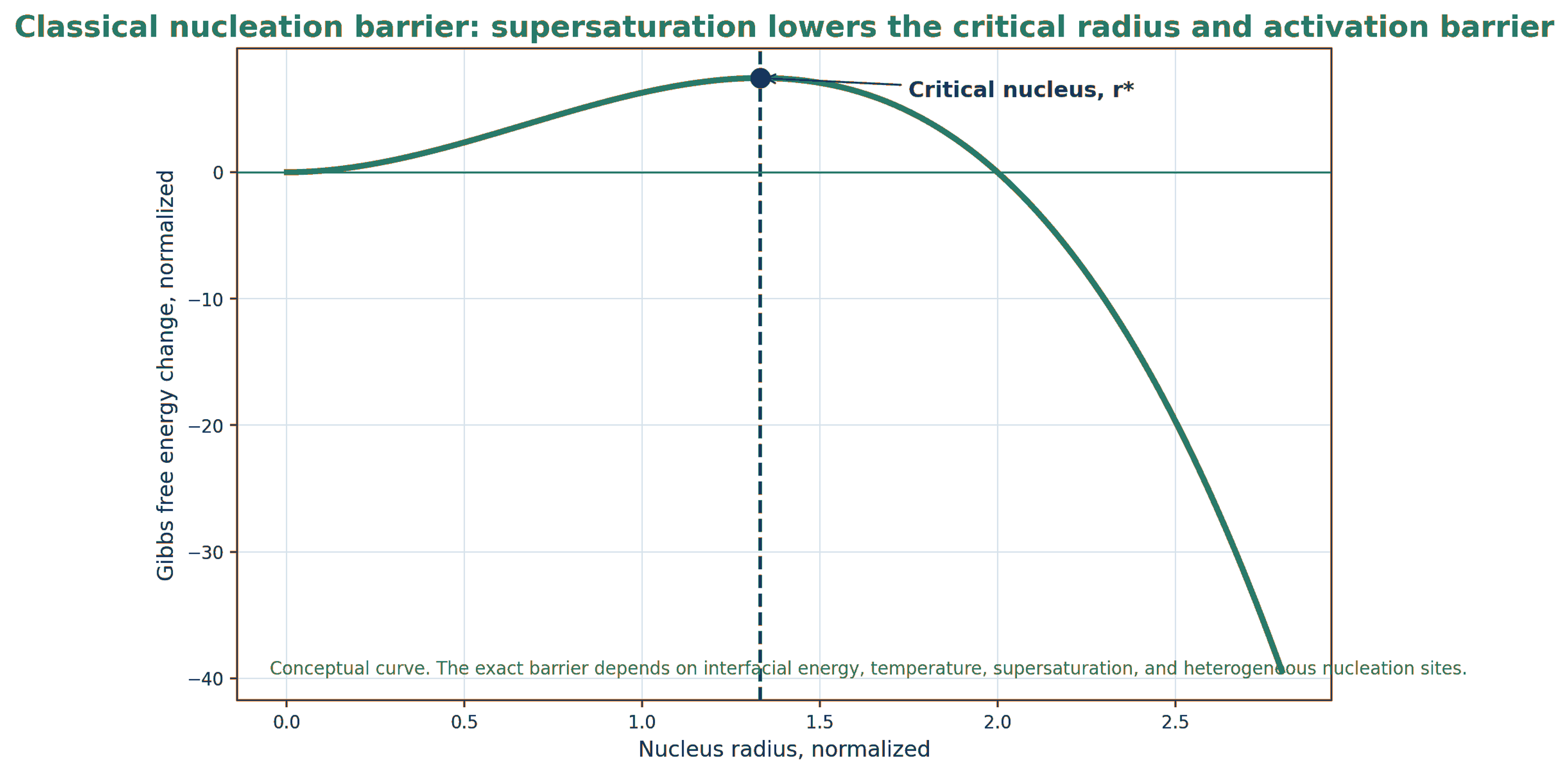
Figure 5.1. Conceptual free energy barrier for formation of a critical nucleus [42].
The equations clarify why mixing and surface effects matter. Fast solvent and antisolvent contact generates supersaturation. Cavities and interfaces can provide transient heterogeneous sites. Collapse induced pressure pulses and collisions can dislodge incipient crystals, create new fragments, and increase secondary nucleation. At the same time, excessive temperature rise or insufficient stabilization can accelerate growth, agglomeration, or polymorphic conversion. The net result depends on the full time history of supersaturation, temperature, and surface coverage [1,5,29,30].
5.2 How Hydrodynamic Cavitation Can Alter Crystallization
Hydrodynamic cavitation can influence crystallization through several coupled mechanisms. Rapid acceleration and pressure reduction can intensify macro mixing and micro mixing. Cavity interfaces can act as transient nucleation sites. Collapse can create localized high pressure, deformation, and secondary nucleation by crystal fragmentation. The circulating flow can return crystals to active zones, creating repeated opportunities for breakage and surface renewal. In a multistage device, nucleation and growth sections can be separated so that different energy levels are applied to different stages [1,29,30].
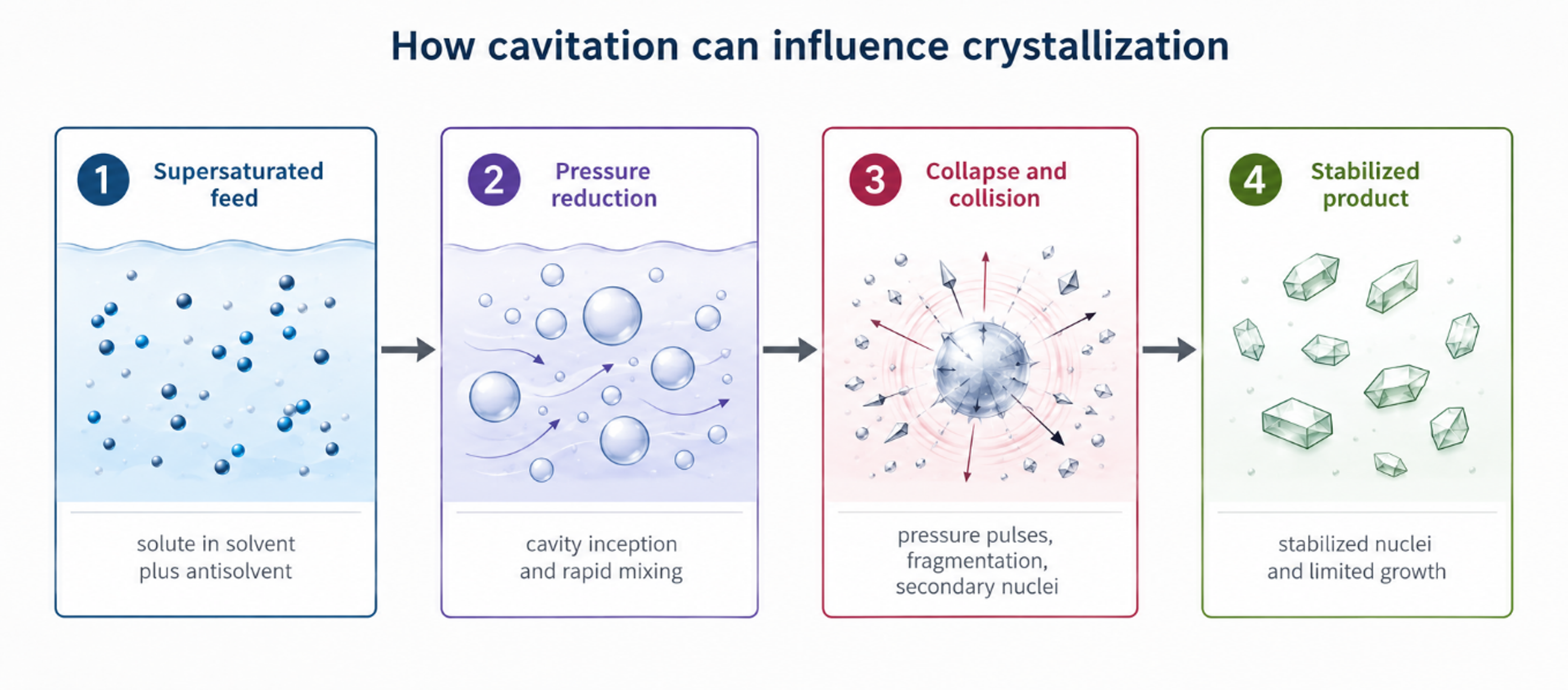
Figure 5.2. Conceptual sequence for cavitation influenced crystallization [42].
The patent literature describes several flow arrangements. One process mixes feed solution and antisolvent, passes the combined stream through a local constriction to create hydrodynamic cavitation and seed crystals, then uses an intermediate section and a second cavitation growth section. Other embodiments vary the sequence of nucleation, growth, recirculation, and pressure recovery. These patents provide useful engineering concepts, but product specific claims require experimental confirmation and freedom to operate analysis [29–32].
5.3 Naproxen Cavitational Crystallization Example
In the example of naproxen crystallization via cavitation, a solution of the substance in ethanol was introduced into an aqueous antisolvent phase containing polyvinylpyrrolidone and a Pluronic stabilizer. The cavitation device was equipped with a single 2 mm diameter orifice and operated at a pressure of 0.7 MPa and a flow rate of 12 L/min. Comparative data showed that the D4.3, D50, D80, and D90 values obtained via cavitation crystallization were significantly lower than those obtained via conventional crystallization with stirring; specifically, the D50 values were 0.35 µm and 2.91 µm, respectively [1].
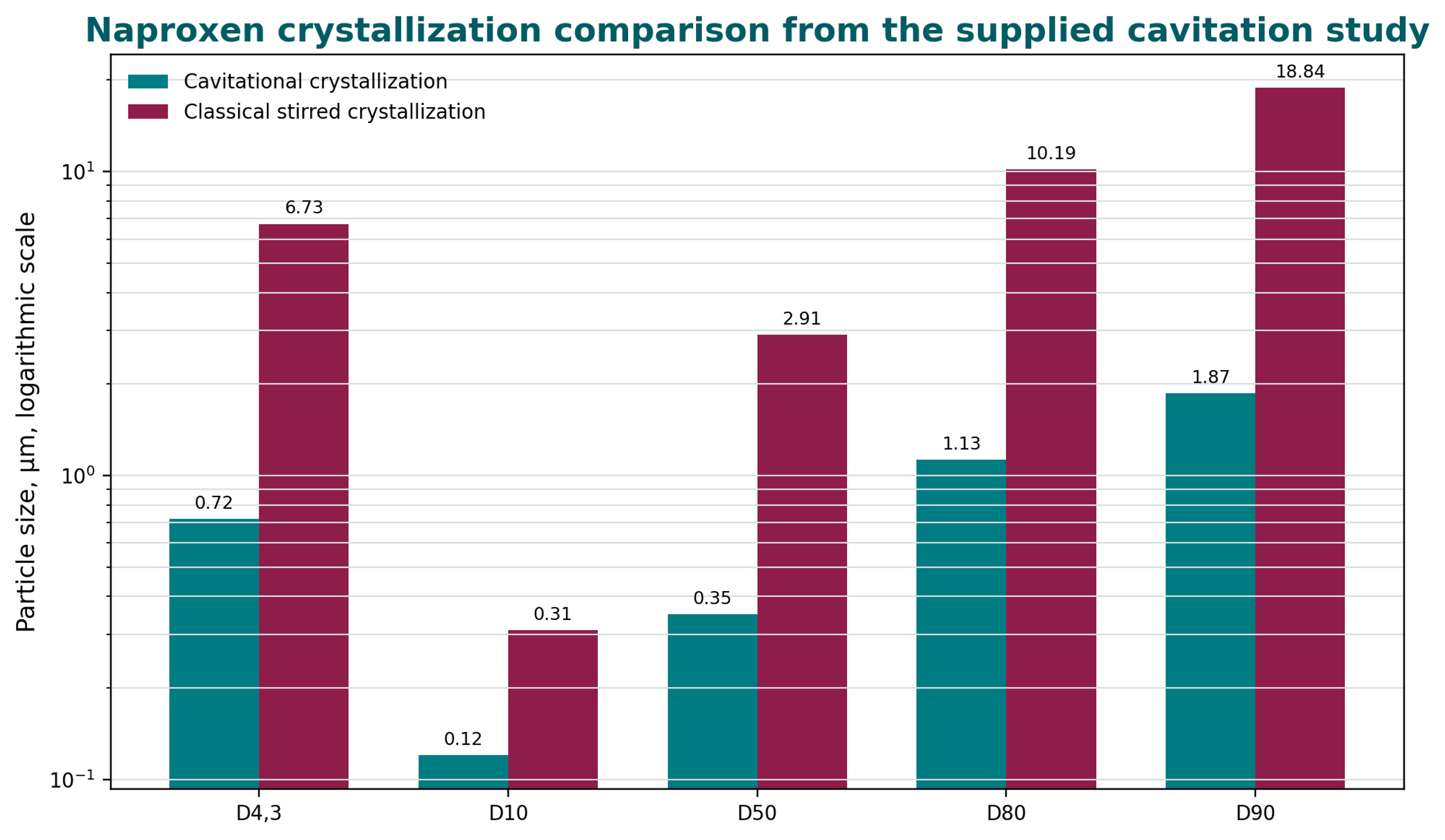
Figure 5.3. Particle size metrics for cavitational and classical naproxen crystallization study. [1].
Table 5.1. Naproxen crystallization comparison. [1].
| Process | D[3,4], µm | D10, µm | D50, µm | D80, µm | D90, µm |
|---|---|---|---|---|---|
| Cavitational crystallization | 0.72 | 0.12 | 0.35 | 1.13 | 1.87 |
| Classical stirred crystallization | 6.73 | 0.31 | 2.91 | 10.19 | 18.84 |
This result is consistent with fast supersaturation generation and a high nucleation to growth ratio. It does not establish that cavitation will always outperform a stirred crystallizer. Solvent system, stabilizer adsorption, temperature, antisolvent ratio, nucleation kinetics, orifice geometry, back pressure, and post process hold time can reverse the result. The product should be followed after processing because submicron particles may grow, transform, or agglomerate during solvent removal or storage.
5.4 Microfluidics Reaction Technology and the PureNano Crystallizer
Microfluidics Reaction Technology, or MRT, is a bottom up platform based on impinging cavitating jets. The supplied paper describes two opposing liquid jets that collide within a microliter volume. Reported channel dimensions were approximately 75 to 150 µm, average velocities could exceed 400 m/s, and jet Reynolds numbers exceeded 20,000. Solvent and antisolvent streams were proportioned to limit uncontrolled mixing before the chamber and were then exposed to intense turbulence and rapid micromixing in the collision region [26].
The MRT paper reports stable nanosuspensions with median sizes from 50 to 767 nm for several active pharmaceutical ingredients. Azithromycin produced a reported median size of 50 to 100 nm. Oxycarbazepine produced a median size of 767 nm by the bottom up route, while a control sample grown in a beaker and reduced by top down Microfluidizer processing reached 1.2 µm after 25 passes. API 2 produced reported median sizes from 166 to 312 nm. Loratadine formed submicron particles initially but showed growth and stability problems, demonstrating that rapid nucleation does not guarantee long term stability [26].
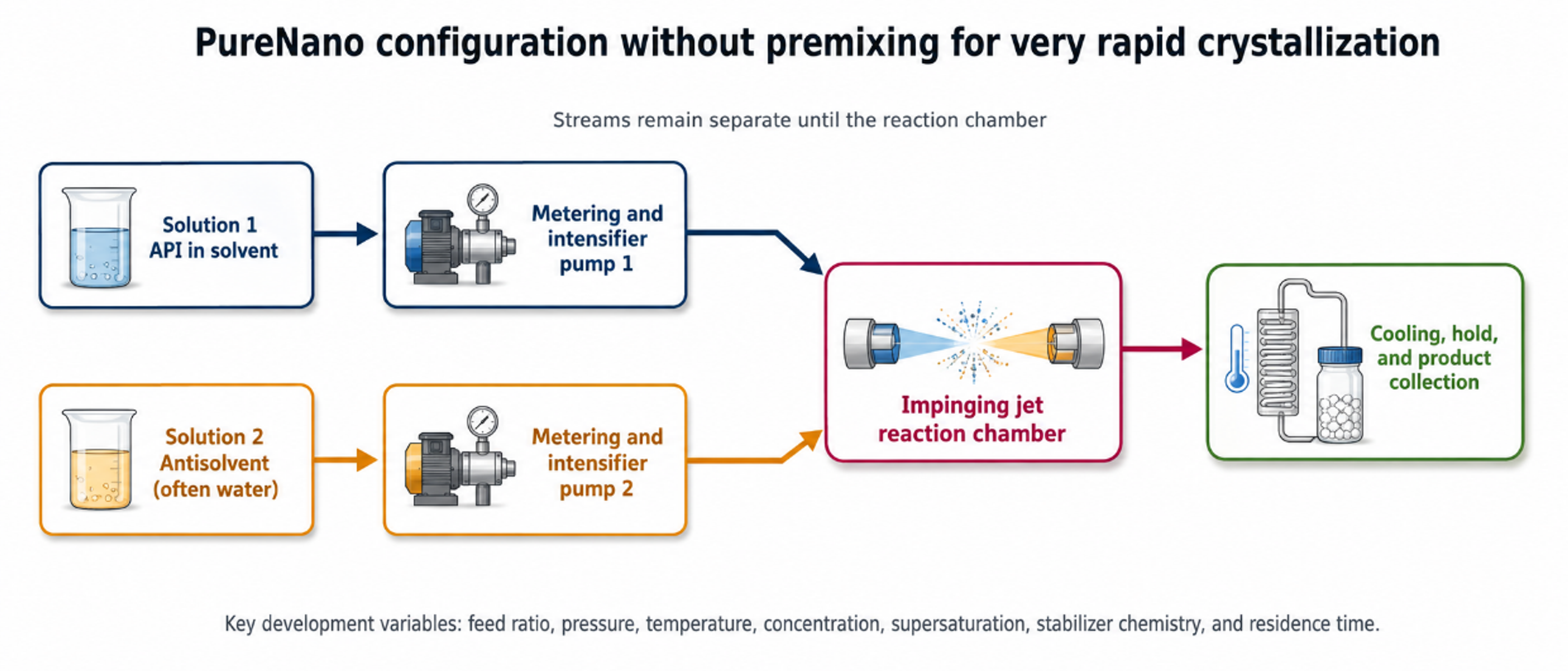
Figure 5.4. Simplified PureNano configuration without premixing for rapid crystallization. [27].
The PureNano technical literature describes two configurations. In the arrangement without premixing, the streams remain separate until the reaction chamber to support very rapid crystallization. In the controlled premixing arrangement, a coaxial macromixing zone creates a selected residence time, often several milliseconds, before the chamber. The source reports feed ratio control from 1:1 to 1:40 and identifies solvent, antisolvent, surfactant, pressure, concentration, and residence time as development variables [27].
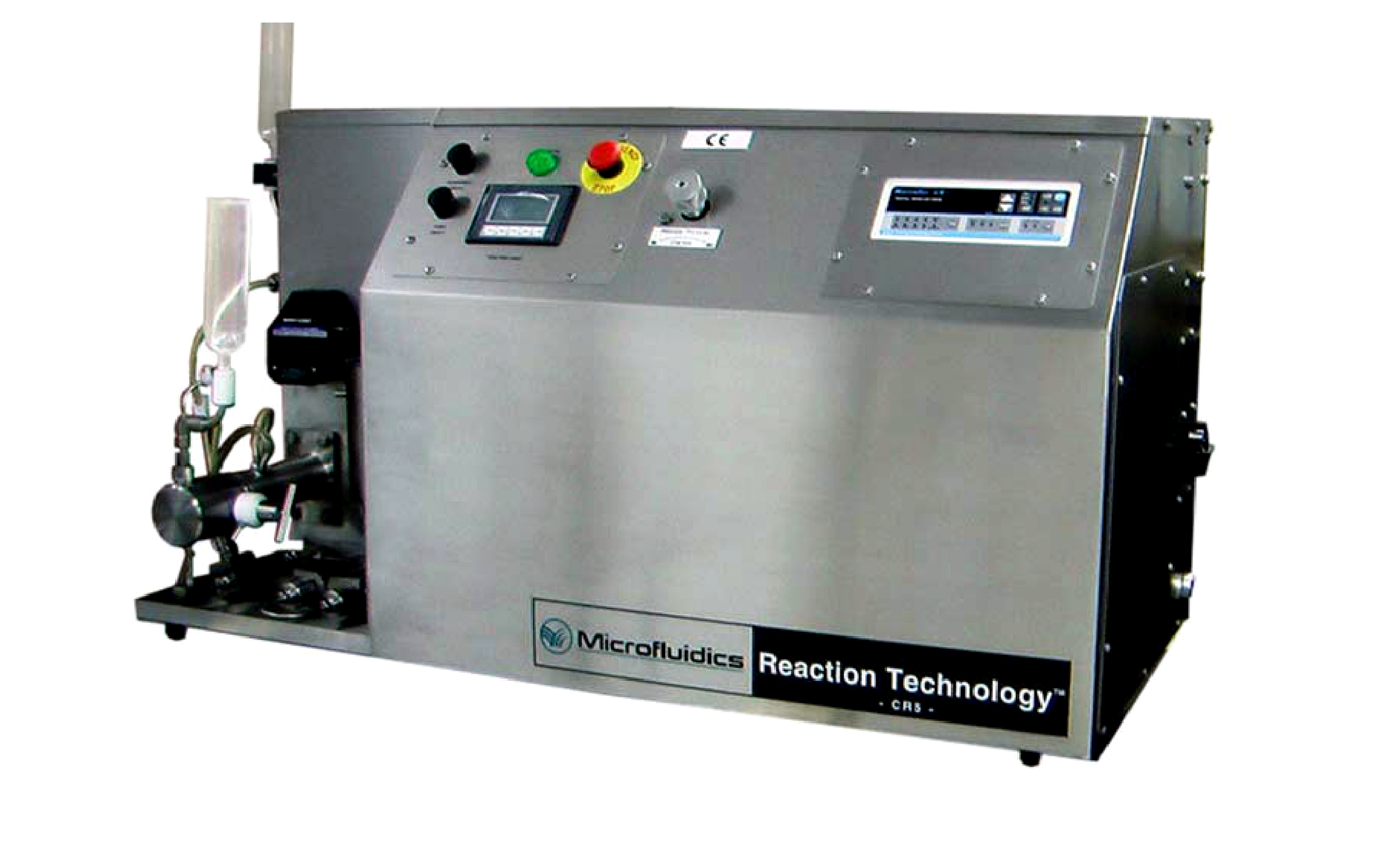
Figure 5.5. PureNano laboratory crystallizer shown in the supplied Microfluidics material. [27].
5.5 Oncology Nanosuspension Case Study
The supplied PureNano case study describes a poorly water soluble oncology compound whose identity was withheld. The target median size was below 0.200 µm. Top down processing in an M-110EH-30 reduced the mean size from 1.401 µm to 0.410 µm after 40 passes at 23,000 psi, with D50 decreasing from 0.470 µm to 0.379 µm. Additional passes did not provide sufficient reduction, and the resulting suspension did not meet the source stability requirement [27].
A bottom up process dissolved the compound in polyethylene glycol and mixed it with water as antisolvent. The source reports a stable nanosuspension with D50 of 0.102 µm and mean size of 0.126 µm at 50 mg/mL and a 1:10 solvent to antisolvent ratio after one pass. Higher concentration did not automatically improve the result. At 120 mg/mL and 1:10, the reported D50 was 0.529 µm. This illustrates the nonlinear interaction among concentration, supersaturation, ratio, viscosity, and stabilization [27].
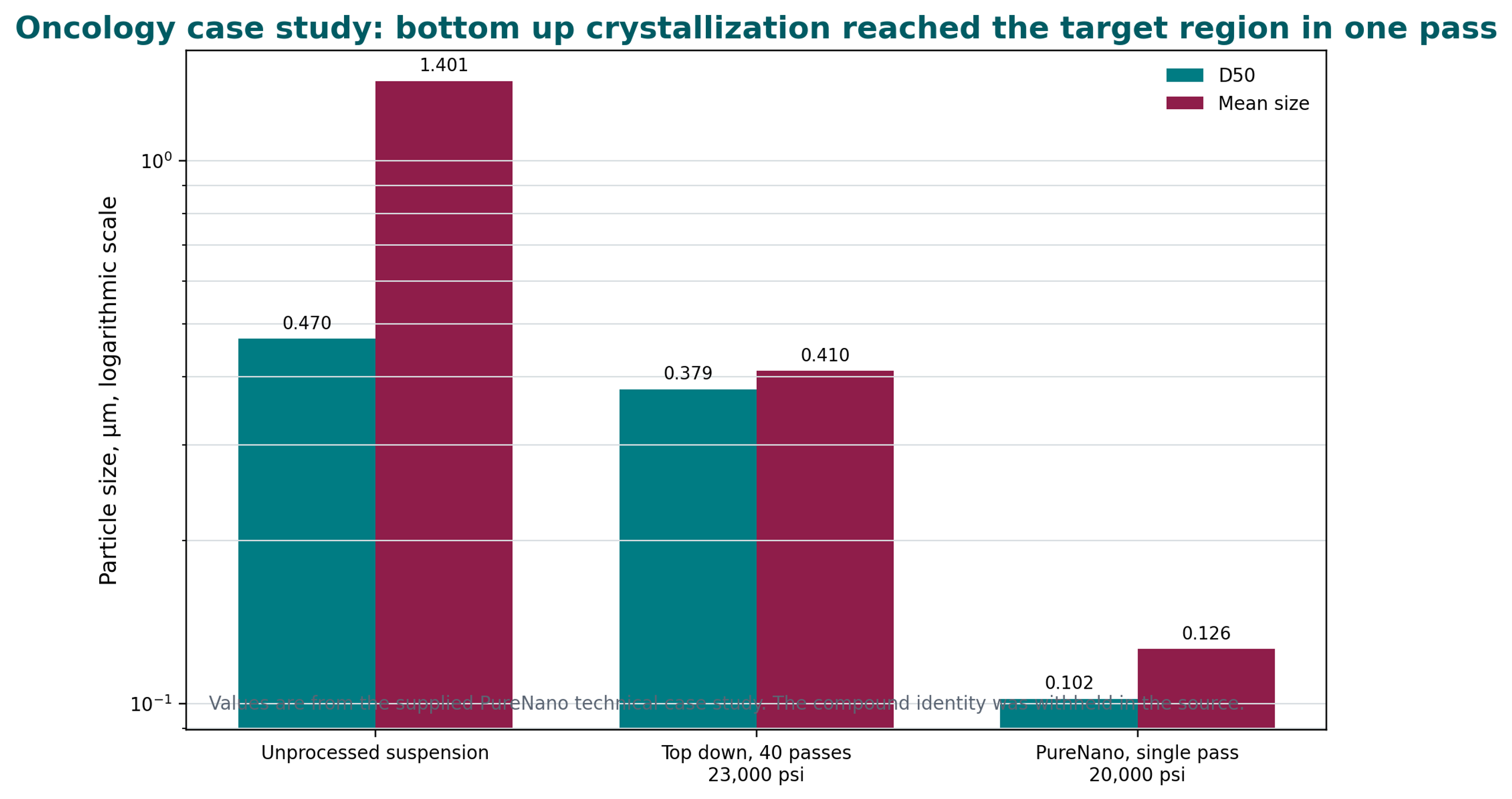
Figure 5.6. Comparison of top down and bottom up processing in the supplied oncology case study. [27].
Table 5.2. Selected MRT and PureNano crystallization results. [26,27].
| Material or case | Route and conditions | Reported product size | Key observation |
|---|---|---|---|
| Azithromycin | MRT solvent and antisolvent crystallization | 50 to 100 nm median | Stable nanosuspension in the reported system. |
| Oxycarbazepine | MRT bottom up crystallization | 767 nm median | Smaller than 1.2 µm obtained after 25 top down passes in the source comparison. |
| API 2 | MRT crystallization with varying supersaturation | 166 to 312 nm median | Size and process efficiency decreased as supersaturation decreased. |
| Loratadine | MRT with different solvents and surfactants | Initial 90 to 379 nm, followed by growth | Particle formation was rapid, but stability remained formulation dependent. |
| Oncology Compound V | PureNano, PEG and water, 50 mg/mL, 1:10 ratio | D50 0.102 µm; mean 0.126 µm | Single pass bottom up process met the source target region. |
5.6 Population Balance Interpretation
A population balance model provides a systematic way to represent nucleation, growth, aggregation, and breakage. It is useful when a process contains repeated passage through a high energy zone or when crystallization and breakage occur simultaneously. A one dimensional number density balance can be written as:
where n(L, t) is the number density at characteristic size L and time t; G(L, t) is the size dependent growth rate; B(L, t) is the birth term from nucleation, aggregation, or breakage of larger particles; and D(L, t) is the disappearance term from aggregation, dissolution, or breakage.
For cavitation assisted crystallization, the birth term can include primary nucleation driven by supersaturation and secondary nucleation driven by collision or fragmentation. The disappearance term can include agglomeration, dissolution, or fracture into smaller classes. A practical model should be fitted to time resolved size data, not only final D50. Where shape is important, a two dimensional population balance using length and width is preferable [40,41].
5.7 Downstream Stabilization and Isolation
Crystallization does not end at the device outlet. The product can continue to grow, ripen, agglomerate, dissolve, or transform while it is held, concentrated, washed, filtered, dried, or redispersed. Stabilizer selection should consider adsorption kinetics, toxicological acceptability, route of administration, solvent exchange, and compatibility with drying. Rapid dilution can reduce supersaturation and suppress further growth. Crossflow filtration, centrifugation, diafiltration, solvent removal, or lyophilization may be needed, but each downstream operation can change the particle distribution [26,27].
The hold vessel should be treated as part of the crystallizer. Mixing intensity, wall material, temperature profile, gas exposure, and residence time distribution can all change the product. For continuous manufacturing, diversion logic and traceability should define which material belongs to the accepted state and how startup and shutdown material is handled [12–14].