
Technical publication
Back to publications
Other
Fabrication of High Performance Catalysts by Controlled Flow Cavitation
okozyuk.com
Published
Read complete publication for whole-document Find and printing. Browser Find and native printing on this reader include only loaded content.
9 Experimental Design, Scale Up, and Process Analytical Technology
9.1 Designed Experiments and Product Quality Models
Cavitation variables are strongly coupled. One factor experiments can identify gross trends but cannot separate interactions among pressure, restriction geometry, back pressure, feed rate, pH, temperature, solids concentration, and recycle. Factorial screening should identify influential variables and interactions, after which response surface methods can map a practical operating window. Replicated center points are essential because slurry preparation and drying can introduce substantial variability.
A generic dimensionless material quality response can be written as Equation 9.1. The form is illustrative. Exponents must be fitted for a defined material, reactor, chemistry, and quality attribute:
The response may represent normalized phase purity, inverse crystallite size, microstrain, active surface area, or another quality attribute. The precipitation age ratio is included because mechanical similarity is insufficient when the chemical intermediate enters the processor at a different stage of formation.
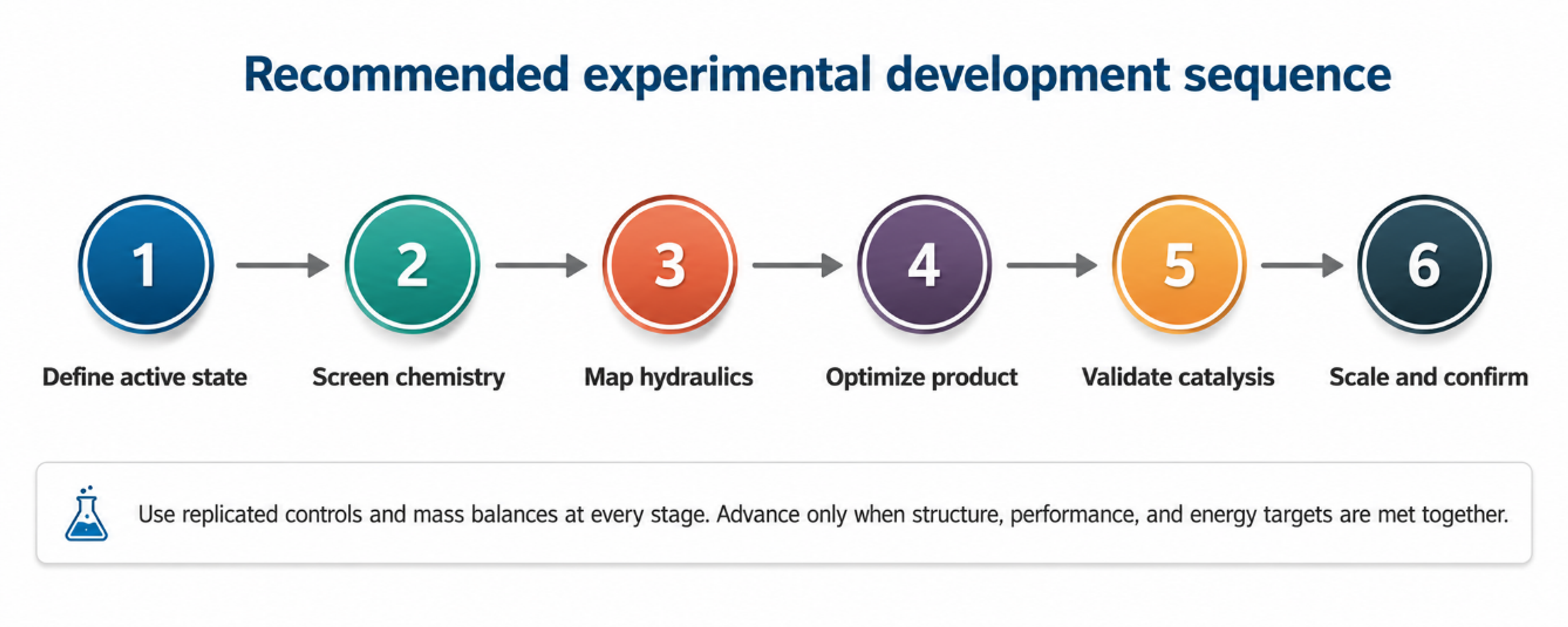
Figure 9.1. Recommended experimental development sequence for a cavitation catalyst. [29].
Table 9.1. Suggested designed experiment sequence
| Phase | Factors | Responses | Decision |
|---|---|---|---|
| Chemistry screening | Precipitant, pH, solvent, metal concentration, feed order | Yield, phase, composition, induction time | Select a reproducible reactive intermediate |
| Hydraulic screening | Pressure, first restriction, second restriction, back pressure, flow | Pressure stability, temperature, agglomerate size, phase, strain | Identify safe and responsive hydraulic window |
| Interaction study | Chemistry and hydraulic factors together | Critical quality attributes and energy | Quantify interactions and curvature |
| Robustness study | Raw material lot, ambient temperature, pump wear, solids concentration | Mean, variance, failure rate | Define control limits and alarms |
| Scale confirmation | Geometry, parallel channels, flow distribution, heat removal | Product equivalence, throughput, energy, contamination | Approve scale only after active state and performance equivalence |
9.2 Scale Up by Preserving Material Forming History
Scale up should preserve the material forming history rather than nominal pressure. Relevant variables include the interval from feed contact to the first restriction, local supersaturation, pressure trajectory, bubble population, solids concentration, pass distribution, bulk temperature rise, quench rate, separation delay, and drying history. A larger pump operating at the same pressure can still produce a different velocity, active volume fraction, and pressure recovery profile.
Numbering up with parallel calibrated channels can preserve local geometry more effectively than enlarging a single restriction. However, flow maldistribution and unequal plugging can create separate product populations. Manifolds should be designed for equal pressure loss, and each branch should provide a verifiable flow or differential pressure signal. Production qualification should demonstrate statistical equivalence in composition, phase, active area, catalytic performance, and stability.
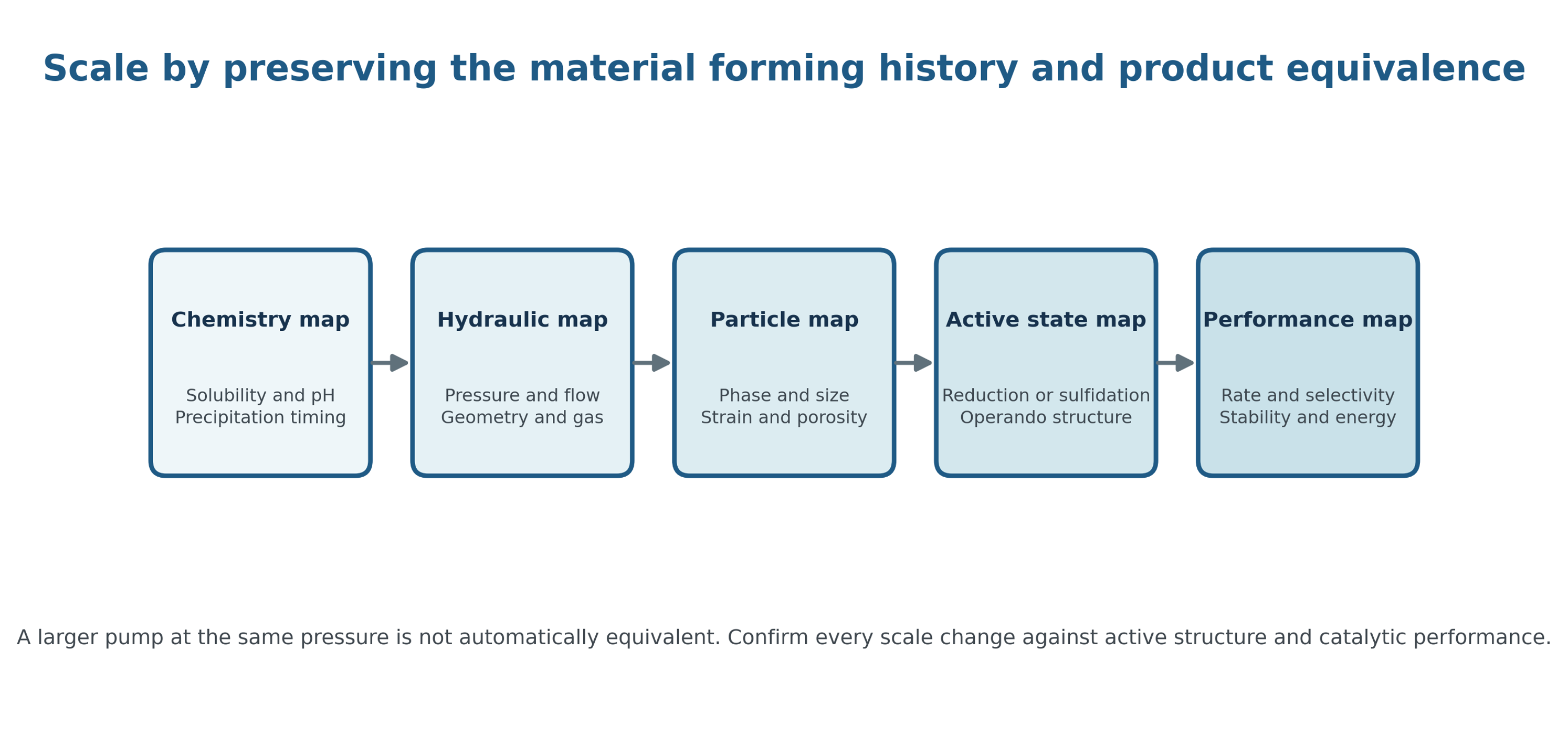
Figure 9.2. Scale up hierarchy from chemistry mapping to active state performance. [29].
Table 9.2. Minimum evidence before scale up
| Area | Critical question | Minimum evidence |
|---|---|---|
| Chemistry | Are precipitation kinetics, gas evolution, and incompatibilities known? | Solubility map, pH window, calorimetry, and validated feed sequence |
| Hydraulics | Are pressure references, flow, geometry, and recovery defined? | Documented pressure and flow data, cavitation map, and repeatable window |
| Materials of construction | Will erosion contaminate product or weaken equipment? | Wear test, alloy compatibility, product metal analysis, and inspection plan |
| Solids handling | Can the finest fraction be recovered without hard agglomeration? | Yield and wash balance, filtration study, and drying comparison |
| Energy | Does any avoided calcination exceed pump and recycle energy? | Total specific energy and carbon accounting at equivalent quality |
| Catalytic equivalence | Does the scaled product retain active structure and performance? | Replicated equivalence for structure, rate, selectivity, and stability |
9.3 Process Analytical Technology and Control
A production cavitation process should integrate feed control, hydraulic monitoring, inline signals, and periodic product analytics. Pressure before and after each restriction, flow, temperature, pump power, and valve position constitute the minimum data set. Acoustic emission, vibration, turbidity, focused beam reflectance, inline spectroscopy, or electrical conductivity can provide additional signatures, but each signal must be calibrated against product quality.
A multivariate control model can identify drift caused by restriction wear, feed concentration changes, gas entrainment, solids accumulation, or pump degradation, but it should not replace hard safety limits. High pressure interlocks, maximum temperature, minimum flow, differential pressure, and vibration limits must remain independent protection layers.
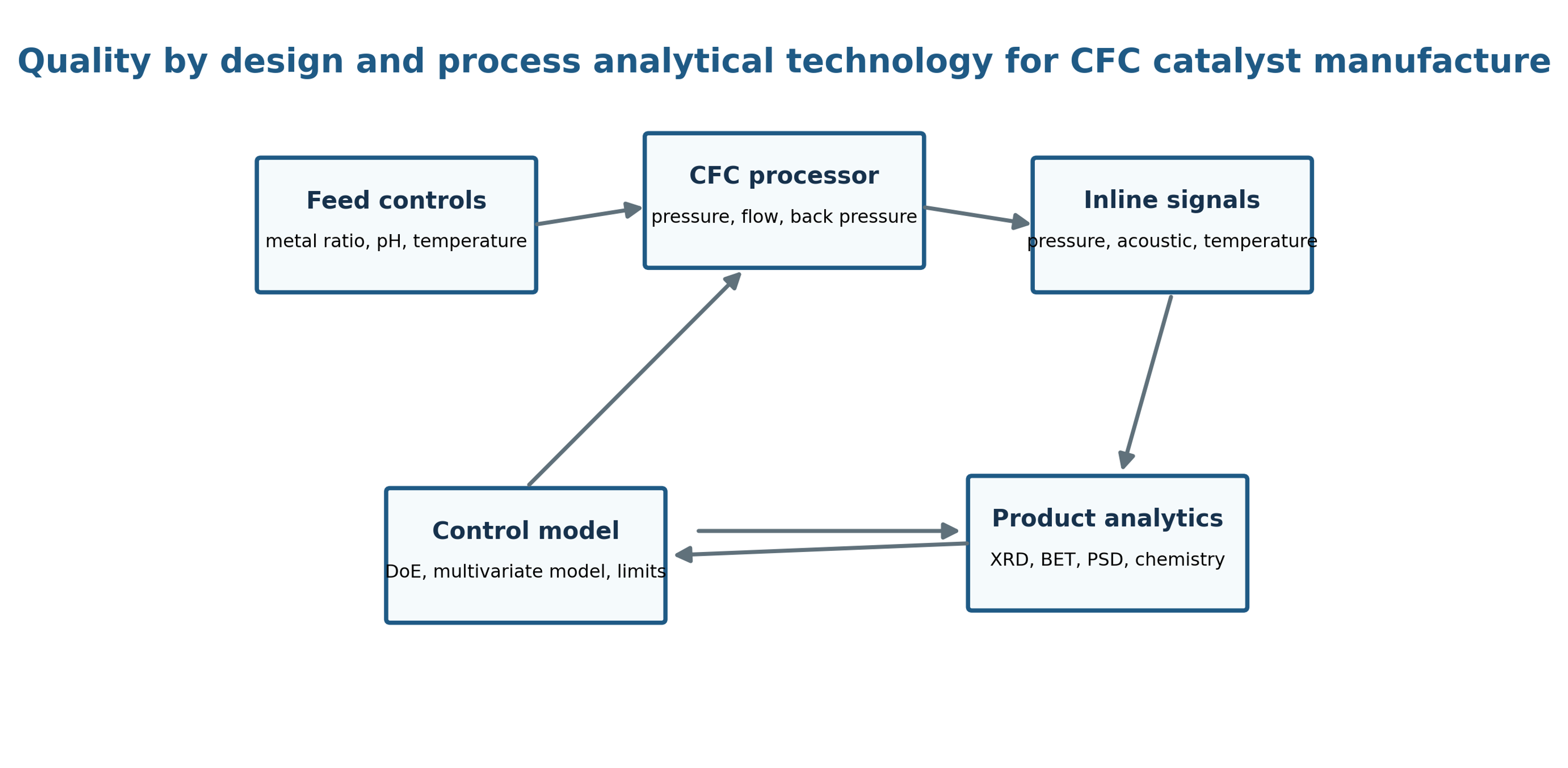
Figure 9.3. Quality by design and process analytical technology control loop for catalyst manufacture. [29].