
Technical publication
Back to publications
Industrial applications
Emerging Frontiers in Hydrodynamic Cavitation
okozyuk.com
Published
Read complete publication for whole-document Find and printing. Browser Find and native printing on this reader include only loaded content.
1 Introduction
The common hydraulic definitions, energy boundaries, residence time expressions, uncertainty requirements, and scale translation principles used in this article are consolidated in the general hydrodynamic cavitation framework. The present analysis applies that framework to emerging applications and develops the mechanisms, performance metrics, design constraints, and acceptance criteria that are specific to each application.
Hydrodynamic cavitation is the formation and dynamic evolution of vapor or gas cavities caused by a local pressure reduction in a moving liquid. The pressure decrease may be generated in an orifice, Venturi throat, vortex core, nozzle, rotating gap, valve, or fluidic oscillator. When cavities enter a region of higher pressure, they may collapse violently or persist as dispersed gas bubbles depending on gas content, size, interfacial stabilization, and the pressure recovery history. These distinct hydraulic states explain why the same general technology can function as an advanced oxidation reactor, microbubble generator, degasser, flotation contactor, or mechanical erosion tool [1-5].
The applications considered in this article extend beyond the conventional categories of pollutant oxidation and bulk mixing. Their technical significance arises from three capabilities that can be combined within a hydraulic device. Cavitation can create a large gas liquid or vapor liquid interfacial area, collapse can generate localized pressure pulses, shear, microjets, and transient chemical activity, and the device can operate continuously in a side stream loop, flotation reactor, submerged nozzle system, or drilling fluid circuit. The principal design problem is therefore to select the useful cavitation function and suppress competing effects.
Cooling water treatment uses the hydrodynamic and equilibrium consequences of cavitation to promote bulk mineral precipitation, expose circulating microorganisms to a high stress zone, and release carbon dioxide, while a separate cyclone or filter removes precipitated solids. Aeration and flotation use injected or dissolved gas to generate fine bubbles. Degassing uses the low pressure region to activate dissolved gas nuclei but requires downstream disengagement or venting. Cavitating jet cleaning and drilling deliberately position collapse near a solid surface so that pressure pulses and microjets remove deposits or damage rock. Lithium and critical mineral processing are less mature; the best supported role is process intensification within conventional leaching, attrition, carbonation, flotation, or crystallization trains [13,15-19,35-37].
A recurring design error is to specify a cavitation device only by pressure drop. Pressure drop defines an energy input but does not fully characterize the two phase flow. Cavitation number, geometry, dissolved gas content, gas injection ratio, fluid properties, backpressure, residence time, pass count, and the location of pressure recovery determine whether the device produces collapse dominated cavitation, a stable gas cavity, a dispersed microbubble plume, or hydraulic choking. These distinctions govern the applications evaluated below.
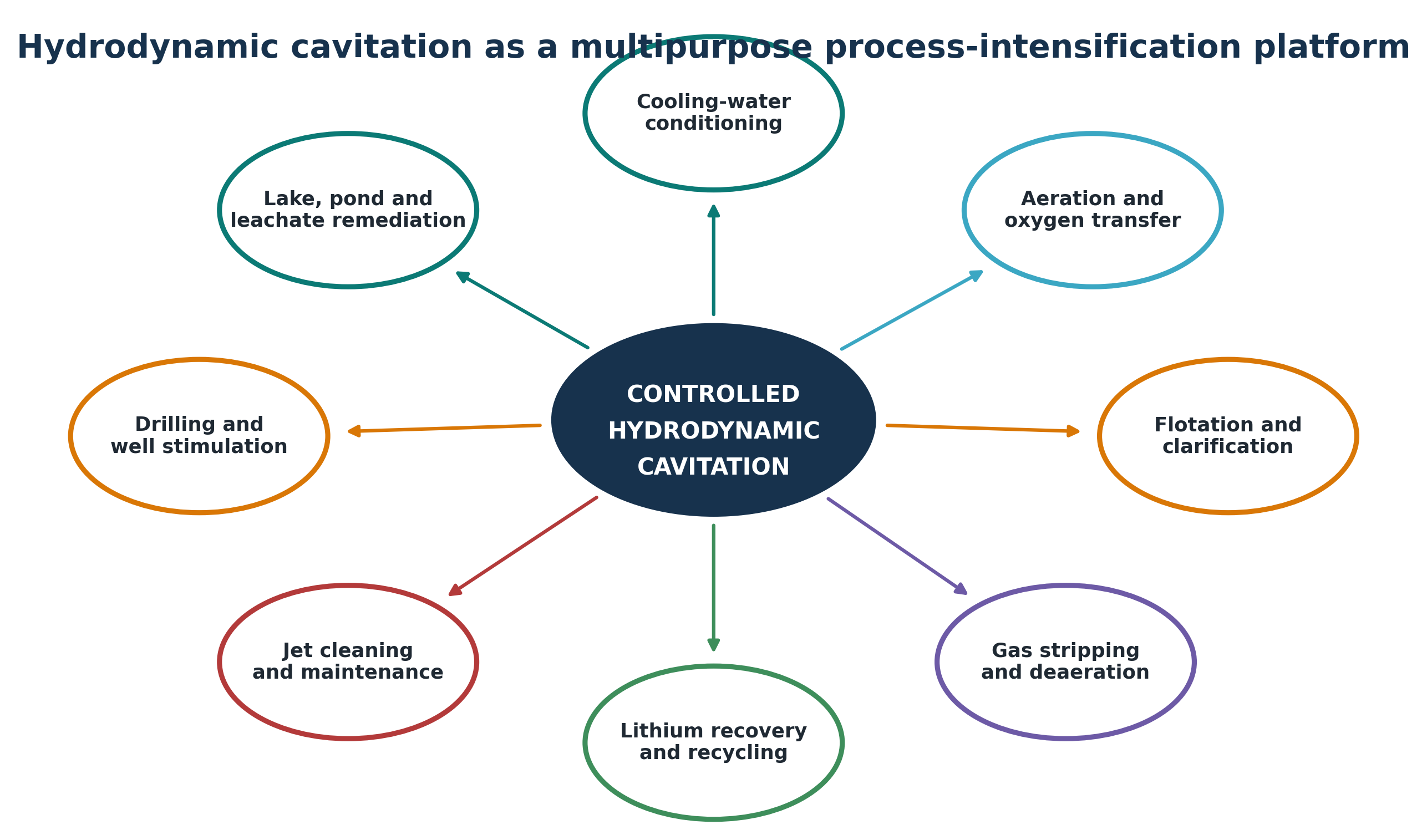
Figure 1.1. Hydrodynamic cavitation as a multipurpose process intensification platform. [70].