
Technical publication
Back to publications
Industrial applications
Emerging Frontiers in Hydrodynamic Cavitation
okozyuk.com
Published
Read complete publication for whole-document Find and printing. Browser Find and native printing on this reader include only loaded content.
11 Drilling and Well Stimulation
11.1 Cavitation Jets and Self Resonating Nozzles
A conventional bit uses drilling fluid jets to cool cutters and remove cuttings. A cavitating or self resonating nozzle converts steady flow into an unsteady jet with periodic pressure fluctuations and cavitation clouds. Organ pipe, Helmholtz, or feedback geometries can generate self excited oscillation without moving mechanical parts. The design objective is to position repeated collapse and impact events at the rock face while maintaining sufficient crossflow to transport cuttings [43-48].
Hydrostatic bottomhole pressure suppresses cavitation and shortens the cavity. Higher pump pressure, appropriate nozzle geometry, gas content, and resonance tuning can compensate, but each increases complexity or erosion risk. Mud density, viscosity, solids, gas, temperature, and nozzle wear shift the resonant condition. Field performance therefore depends on maintaining the hydraulic state, not simply installing a nominally cavitating nozzle.
11.2 Rock Destruction and Cutter Assistance
When cavitation clouds collapse against the bottom of the hole, pressure pulses and microjets extend surface flaws, remove weak grains, and reduce the confinement immediately ahead of the cutter. The jet is not necessarily intended to excavate the entire hole. A smaller amount of hydraulic damage can reduce cutter force, expose fresh rock, and assist a tricone, PDC, or hybrid bit.
Li and coworkers reported that an organ pipe self resonating nozzle increased pressure fluctuation amplitude by 24%, maximum impact pressure by 37%, and rock erosion by one to two times relative to a conventional nozzle in their tests. Field applications reportedly increased average tricone rate of penetration by 31.2% and bit footage by 29.1% [43]. These results are application specific, but they demonstrate the combined role of pulsation and cavitation rather than steady jet pressure alone.
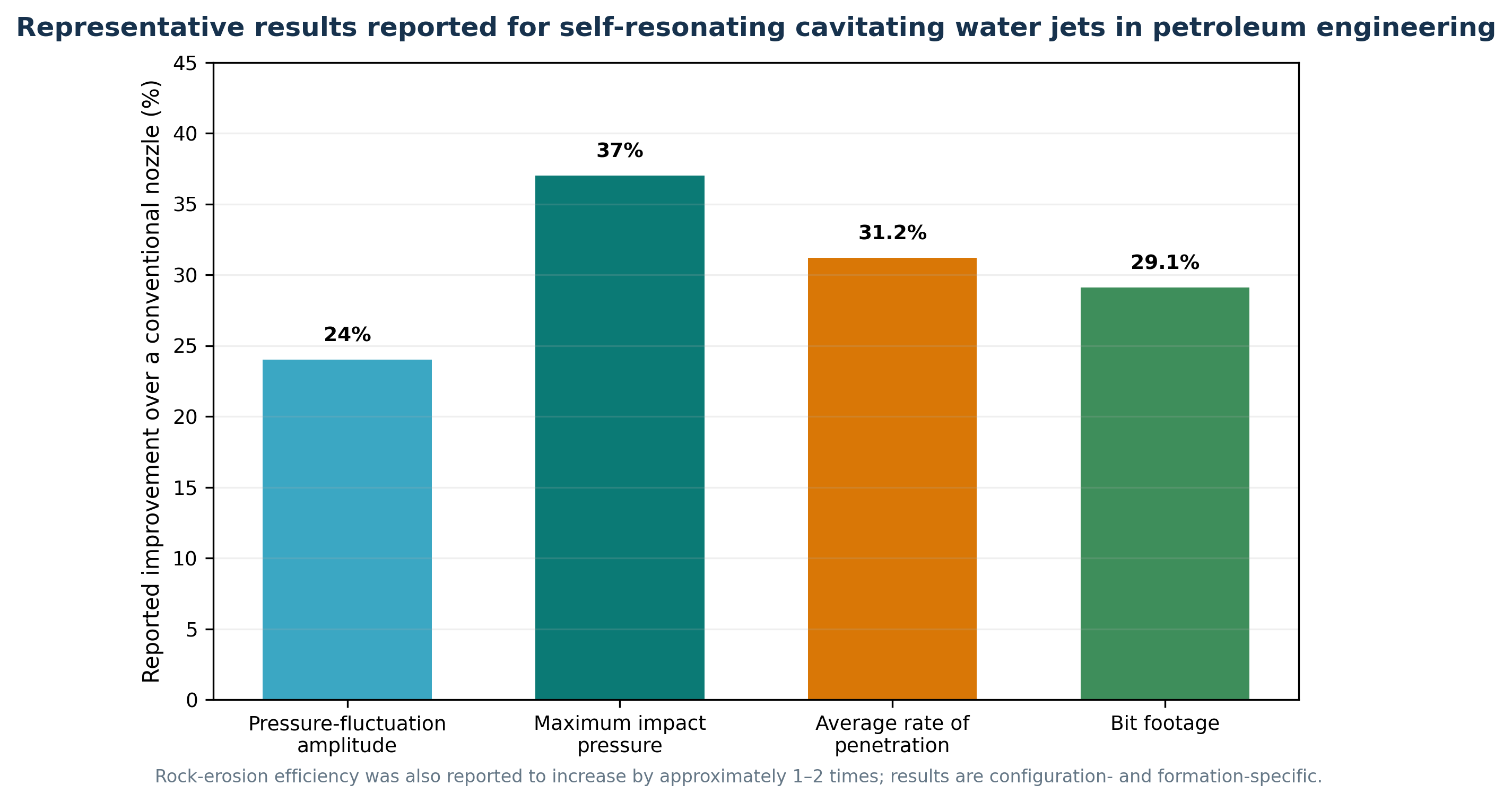
Figure 11.1. Representative results reported for self resonating cavitating water jets in petroleum engineering. [43].
11.3 Bottomhole Cleaning and Regrinding Control
Cuttings that remain under a cutter are reground instead of transported into the annulus. Regrinding consumes mechanical energy, raises temperature, and can accelerate bit wear. A pulsating jet intermittently increases wall shear and crossflow, breaks filter cake, and lifts chips from pockets between cutters. The hydraulic design should therefore be evaluated by both rock damage and bottomhole cleaning efficiency. High impact at the wrong location can erode the bit body or enlarge the hole without increasing penetration.
Annular transport remains governed by mud rheology, cuttings size and density, inclination, pipe rotation, eccentricity, and flow rate. Cavitation assisted bit cleaning does not replace adequate annular velocity or hole cleaning practices.
Pbit is the hydraulic power dissipated across the bit nozzles in SI units.
This oilfield unit equation gives hydraulic horsepower at the bit, neglecting pump/mechanical efficiency.
is average annular velocity and Aann is annular flow area. Local velocity can differ substantially in inclined or eccentric holes.
Mechanical specific energy combines weight on bit WOB, bit area Ab, rotary speed N, torque T, and rate of penetration ROP. Unit consistency is essential.
Improvement should be compared at matched formation, bit, WOB, rotary speed, mud properties, and hydraulic power.
11.4 Sonic Hydrovibrators and Downhole Stimulation
Downhole hydrovibrators convert steady mud flow into pressure pulses and axial vibration. Cavitation can participate in the feedback mechanism or occur in a resonant chamber. The vibration reduces static friction, helps weight transfer to the bit, and may improve penetration through hard or interbedded formations. The useful frequency must be distinguished from damaging drill string resonance. Accelerometers, standpipe pressure spectra, and fatigue analysis are required.
Cavitation spray guns and oscillating jet tools are also used to wash sand bridges, clean perforations, remove scale, and stimulate near wellbore flow. Here the target is controlled erosion of deposits rather than uncontrolled damage to casing, cement, or formation. Tool qualification should include causing material loss, perforation geometry, debris return, pressure containment, and compatibility with completion fluids.
Table 11.1. Cavitation assisted drilling functions, expected benefits, and constraints
| Function | Cavitation contribution | Expected benefit | Key constraints |
|---|---|---|---|
| Rock weakening | Collapse pressure, microjets, cyclic loading | Lower cutter force and higher ROP in suitable rock | Confining pressure, standoff, rock porosity and strength |
| Bottomhole cleaning | Pulsating crossflow and chip lift | Reduced regrinding and cutter balling | Mud rheology, nozzle placement, annular transport |
| Sonic hydrovibration | Self-excited pressure pulses | Improved weight transfer and lower friction | Frequency tuning, fatigue, tool wear and telemetry |
| Perforation/scale cleaning | Localized cavitating spray | Restore inflow area and remove sand or scale | Casing/cement damage, debris handling, pressure control |
11.5 Resonant Downhole Tools and Mud Jet Augmented Bits
The ORION ST concept replaces a piston hammer with hydraulically generated resonant pressure pulses in drilling fluid. The vendor technical information describes a liquid driven tool suitable for rotating or nonrotating strings, with tunable pulse patterns between approximately 500 and 15,000 Hz and the stated capability to adapt the pulse field to changing formation conditions. These performance statements are commercial claims that require independent full scale verification under representative mud weight, depth, temperature, backpressure, and bit loading [62].
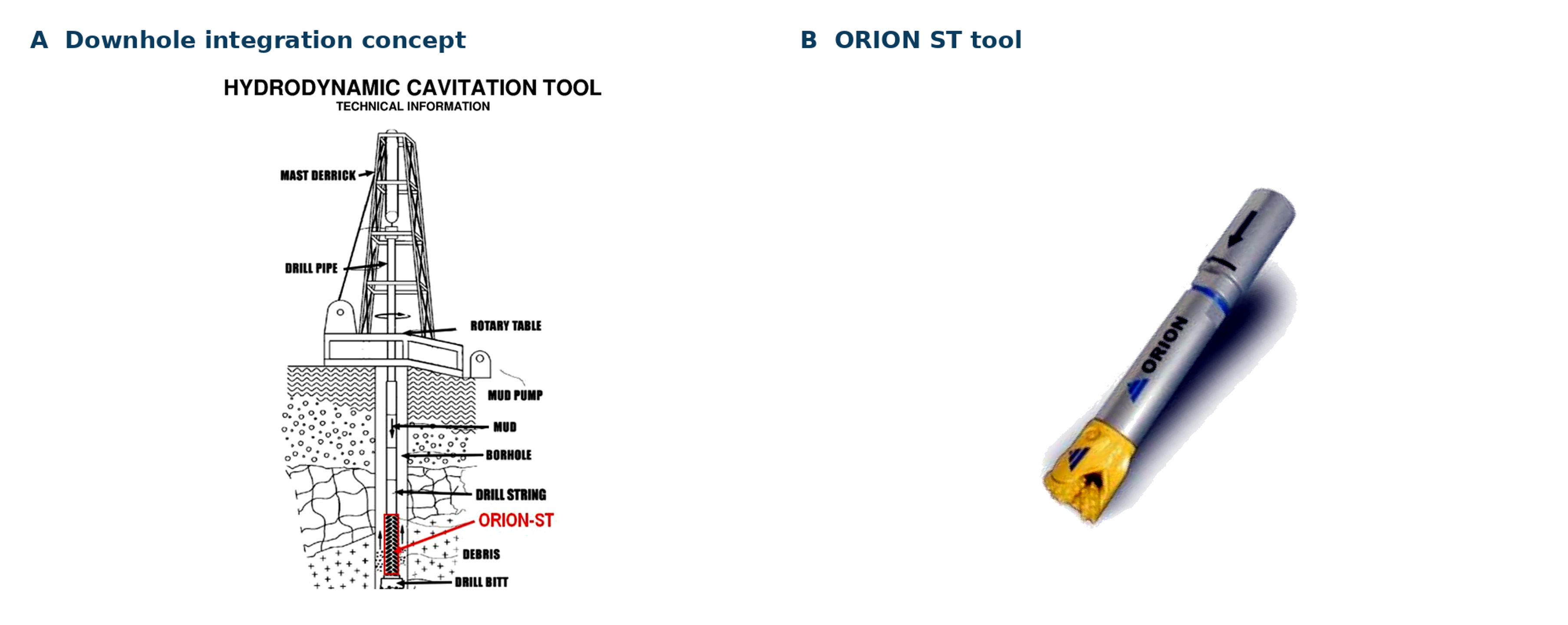
Figure 11.2. Downhole integration concept and ORION ST resonant cavitation tool. [62].
A related Sandia program developed and tested a mud jet augmented polycrystalline diamond compact bit. The design directed structured, pulsed, cavitating jets at the rock immediately ahead of the cutters. The engineering objective was to weaken the rock, improve bottomhole cleaning, and reduce the mechanical work required from the cutters. The report emphasizes that nozzle orientation, hydraulic power allocation, bit geometry, and standoff must be optimized together; adding pressure drop to an otherwise conventional bit does not guarantee higher penetration [63].
For both resonant tools and mud jet bits, the acceptance test should compare rate of penetration, mechanical specific energy, torque, vibration, bit wear, hydraulic horsepower, cuttings size, and hole quality against a conventional reference at equal formation and operating conditions. The tool must also remain stable as borehole backpressure rises and as mud rheology, gas content, and abrasive solids change.