
Technical publication
Back to publications
Reactors & equipment
Cavitation Driven Exfoliation of Graphene and Two Dimensional Materials
okozyuk.com
Published
Read complete publication for whole-document Find and printing. Browser Find and native printing on this reader include only loaded content.
11 Post Processing, Classification, Concentration, and Formulation
Exfoliation is only the first unit operation. Reactor output generally contains unexfoliated graphite, thick nanosheets, target material, fines, dissolved stabilizer, wear particles, and gas bubbles. Classification determines the actual product distribution and often dominates usable yield. Centrifugation, sedimentation, membrane filtration, cross flow filtration, hydrocyclones, decantation, and selective flocculation can be used individually or in sequence.
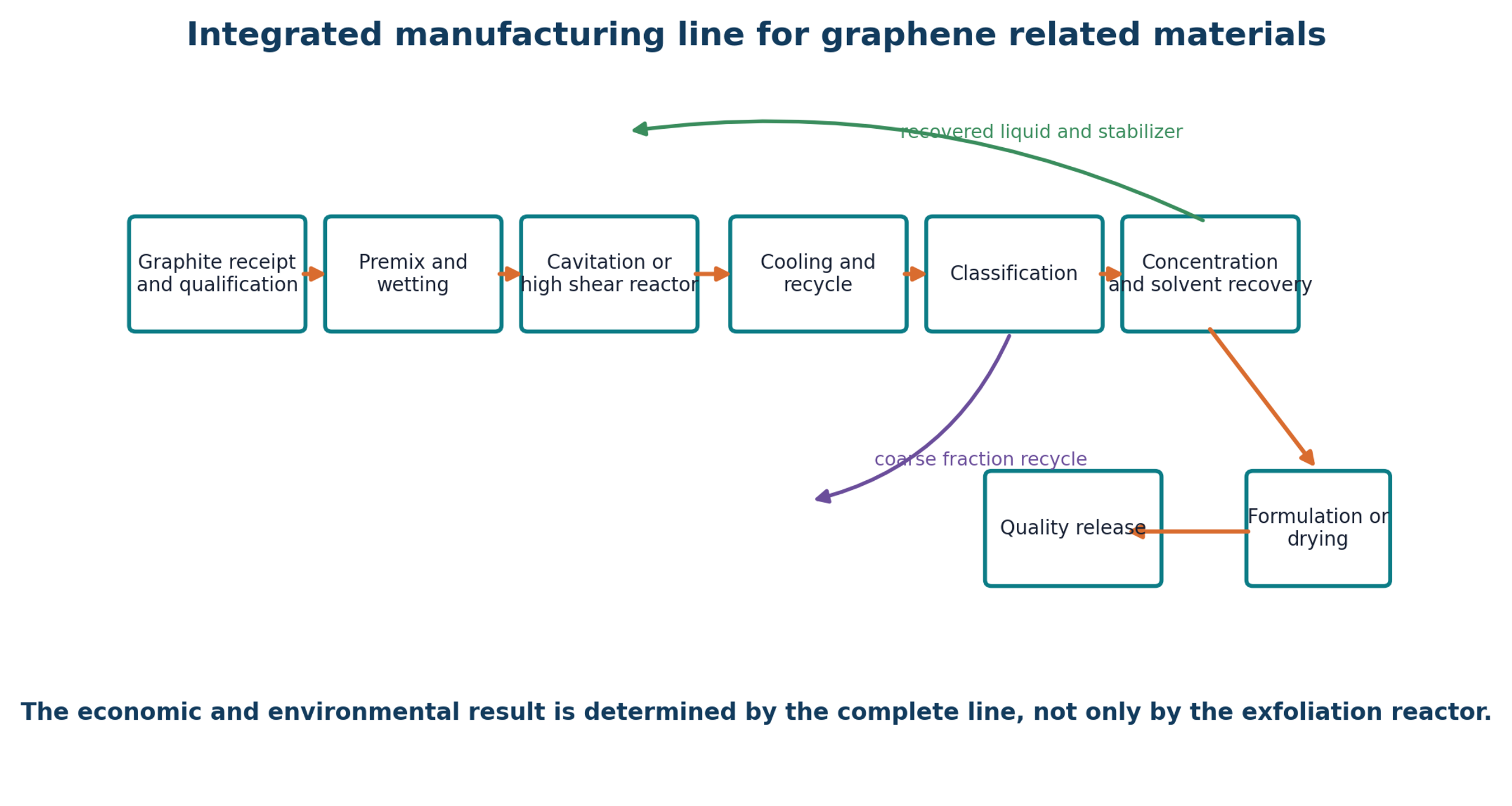
Figure 11.1. Integrated manufacturing line from feed qualification to product release. Recycle and solvent recovery are part of the process definition [37].
11.1 Centrifugal Classification
Centrifugal classification is widely employed for separating and fractionating suspended particulate matter, such as exfoliated nanosheets, based on sedimentation behavior. The relative centrifugal force (, expressed in units of ) is a function of the rotational radius (in centimetres) and the rotational speed (in revolutions per minute):
RCF is relative centrifugal force in units of g, r is rotational radius in centimetres, and n is rotational speed in revolutions per minute. Reporting rpm without radius is insufficient.
The Stokes settling velocity () for an equivalent spherical particle of diameter is given by:
where is the density difference between the dispersed phase and the medium, and is the dynamic viscosity of the liquid. Because anisotropic structures such as platelets and nanosheets deviate significantly from ideal spheres, this equation serves only as a preliminary screening approximation.
A centrifugal cascade can remove the largest particles at low acceleration and then collect a selected nanosheet fraction at higher acceleration. Every centrifugation step changes both product quality and yield. The complete protocol should state rotor radius, relative centrifugal force, time, temperature, collected fraction, and concentration method. Two laboratories can report different yields from identical reactor output solely because one uses a more severe separation protocol.
11.2 Membranes and Cross Flow Filtration
Membranes can concentrate nanosheets and recover solvent, but cake formation and irreversible fouling are common. Cross flow operation reduces cake growth and can support continuous processing. Membrane materials must tolerate the solvent and stabilizer and should not shed particles. A staged design can use a coarse protective filter, a product retention membrane, and a solvent polishing step. Both permeate and retentate should be included in the solids balance.
11.3 Drying and Redispersion
Drying can cause irreversible restacking. Spray drying, freeze drying, vacuum drying, drum drying, and direct masterbatch production create different agglomerate structures. When the final application is a liquid formulation or polymer composite, avoiding dry powder may be preferable. Concentrated paste or masterbatch formats reduce dust exposure and can preserve dispersion. Redispersion energy and final application performance should be measured after any drying route.
11.4 Formulation and Application Conversion
Printed electronics require controlled viscosity, surface tension, particle size relative to the nozzle or screen, conductivity after drying, adhesion, and flexibility. A Microfluidizer application note reported printed features near 100 micrometers and conductivity up to 2 × 10⁴ S m⁻¹ in a case study, while structural distortion was reported above approximately 70 cycles [20]. These values are useful process indicators but remain supplier reported and formulation specific.
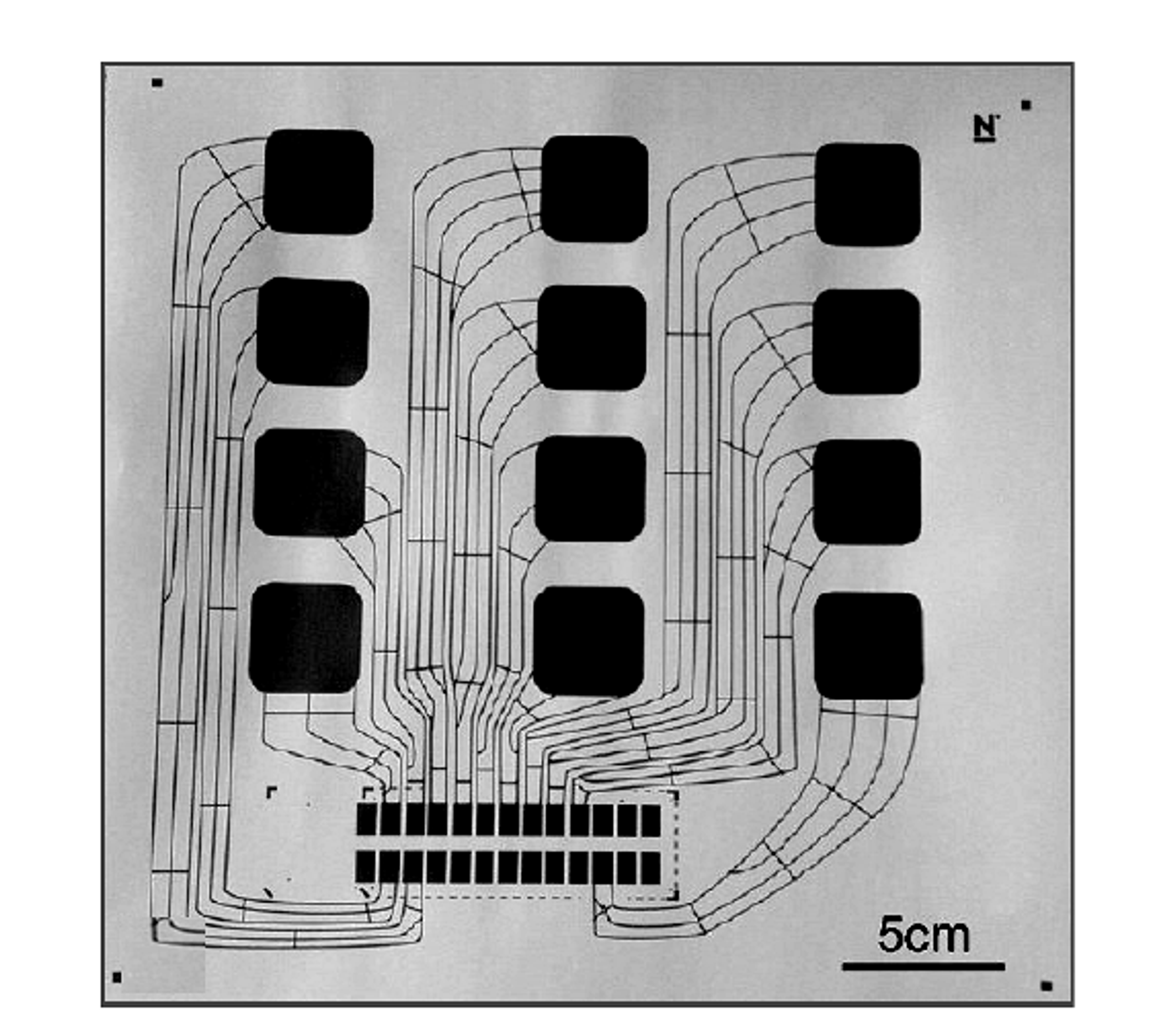
Figure 11.2. Printed capacitive circuit prepared from microfluidized graphene ink [20].
Table 11.1. Downstream operations and their influence on product quality.
| Operation | Primary purpose | Key control variables | Main risk |
|---|---|---|---|
| Low acceleration centrifugation | Remove unexfoliated graphite and large fragments. | RCF, time, temperature, fill volume, collected fraction. | Loss of large but thin flakes and inconsistent decanting. |
| High acceleration centrifugation | Collect or sort thin nanosheets. | RCF distribution, rotor geometry, time, density and viscosity. | Low throughput and difficult scale up. |
| Membrane filtration | Concentrate product and recover liquid. | Pore size, transmembrane pressure, cross flow velocity, fouling. | Cake formation, membrane shedding, irreversible loss. |
| Sedimentation or decantation | Low cost removal of unstable coarse material. | Time, temperature, container geometry, stabilizer. | Slow operation and sensitivity to vibration and convection. |
| Drying | Produce powder for storage or compounding. | Droplet size, temperature, pressure, residual solvent. | Restacking, oxidation, dust, and poor redispersion. |
| Paste or masterbatch production | Avoid dry powder and deliver application ready material. | Carrier compatibility, solids loading, rheology, mixing history. | Product becomes carrier specific and may hide nanosheet quality. |
| Solvent recovery | Reduce cost and environmental burden. | Recovery fraction, purity, energy, stabilizer carryover. | Accumulation of impurities in recycle. |