
Technical publication
Back to publications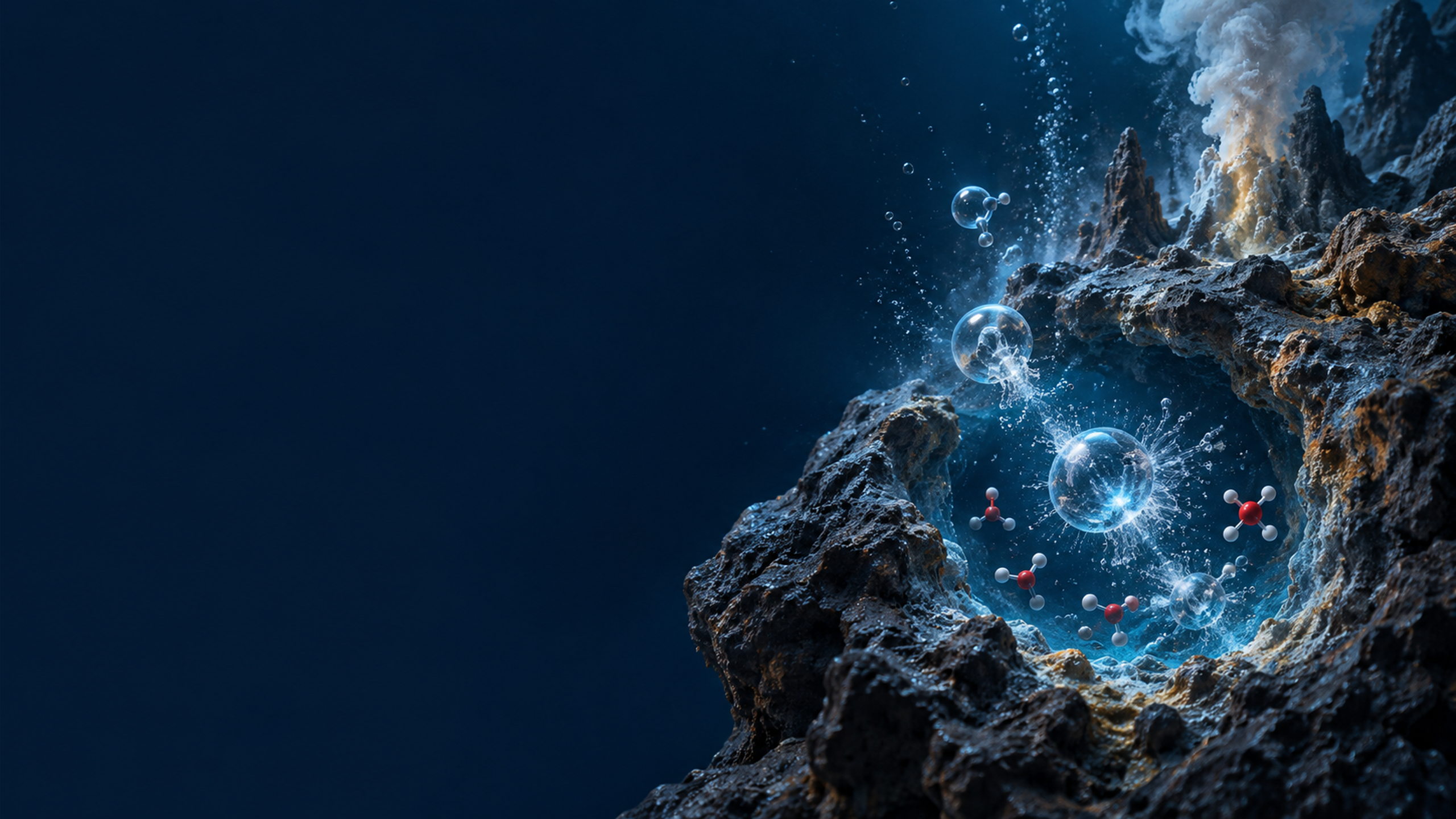
Reactors & equipment
The Rise of Life on Earth: Cavitation in Nature
okozyuk.com
Published
Read complete publication for whole-document Find and printing. Browser Find and native printing on this reader include only loaded content.
Abstract
The phenomenon of cavitation has been known in science and technology for more than a hundred years. It was first recognized as an important hydrodynamic phenomenon in connection with high speed marine propulsion, including early observations associated with British destroyers in the late nineteenth century. Osborne Reynolds and later researchers helped establish cavitation as a serious problem in ship propellers, pumps, and turbines [1,2].
Amino Acids and Biogenic Molecules
Modern studies have explored the possibility that cavitation could participate in prebiotic synthesis. Research on cavitation induced chemistry suggests that collapsing bubbles can drive reactions relevant to the formation of biologically important molecules [7,8].
A 2017 study, “Cavitation-Induced Synthesis of Biogenic Molecules on Primordial Earth,” examined how cavitation bubbles containing simple gases could generate prebiotic compounds. The study proposed that natural cavitation in primordial oceans may have contributed to the synthesis of molecules relevant to life’s emergence [8].
The study found that methane could be an especially effective carbon source under modeled cavitation conditions, while carbon monoxide and carbon dioxide could also participate in reaction pathways depending on the chemical environment [8].
This does not prove that cavitation alone produced the first amino acids. However, it supports the broader idea that cavitation could have been one of several natural mechanisms contributing to prebiotic chemical evolution.