
Technical publication
Back to publications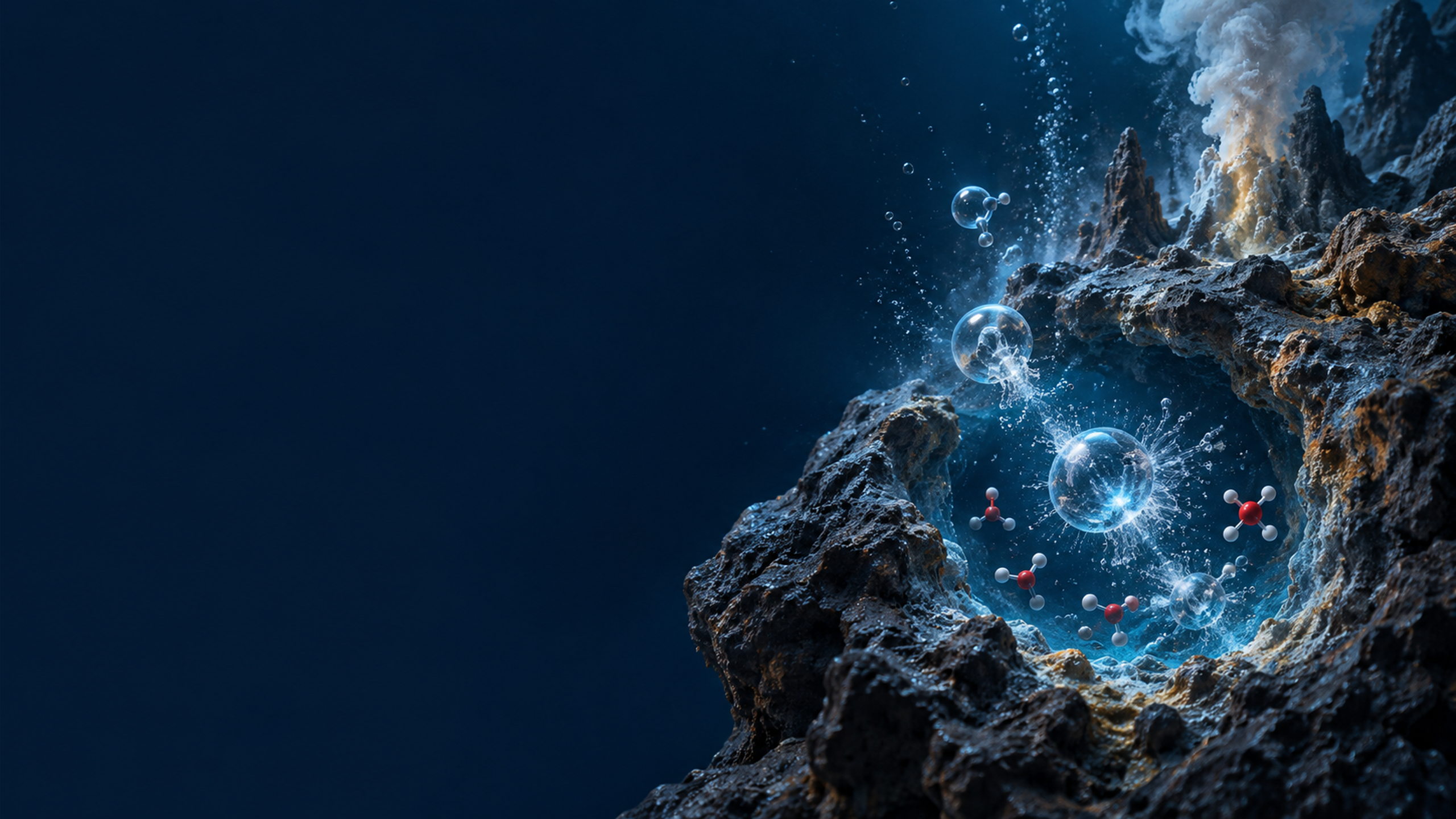
Reactors & equipment
The Rise of Life on Earth: Cavitation in Nature
okozyuk.com
Published
Read complete publication for whole-document Find and printing. Browser Find and native printing on this reader include only loaded content.
Abstract
The phenomenon of cavitation has been known in science and technology for more than a hundred years. It was first recognized as an important hydrodynamic phenomenon in connection with high speed marine propulsion, including early observations associated with British destroyers in the late nineteenth century. Osborne Reynolds and later researchers helped establish cavitation as a serious problem in ship propellers, pumps, and turbines [1,2].
The Creative Violence of Water
Cavitation is usually seen as destructive. It damages propellers, erodes metal, breaks surfaces, and generates shock waves. But in nature, destructive processes often create new possibilities.
The same collapse that tears apart molecules can also create new bonds. The same shock wave that destroys a structure can activate chemistry. The same bubble that disappears in a fraction of a second may leave behind reactive products.
On early Earth, water was not passive. It was a dynamic chemical medium. It flowed, boiled, froze, evaporated, condensed, circulated through rocks, erupted from vents, absorbed gases, and experienced shocks from storms, volcanoes, and impacts. Within this restless water, cavitation may have created countless microscopic flashes of chemical transformation.