
Technical publication
Back to publications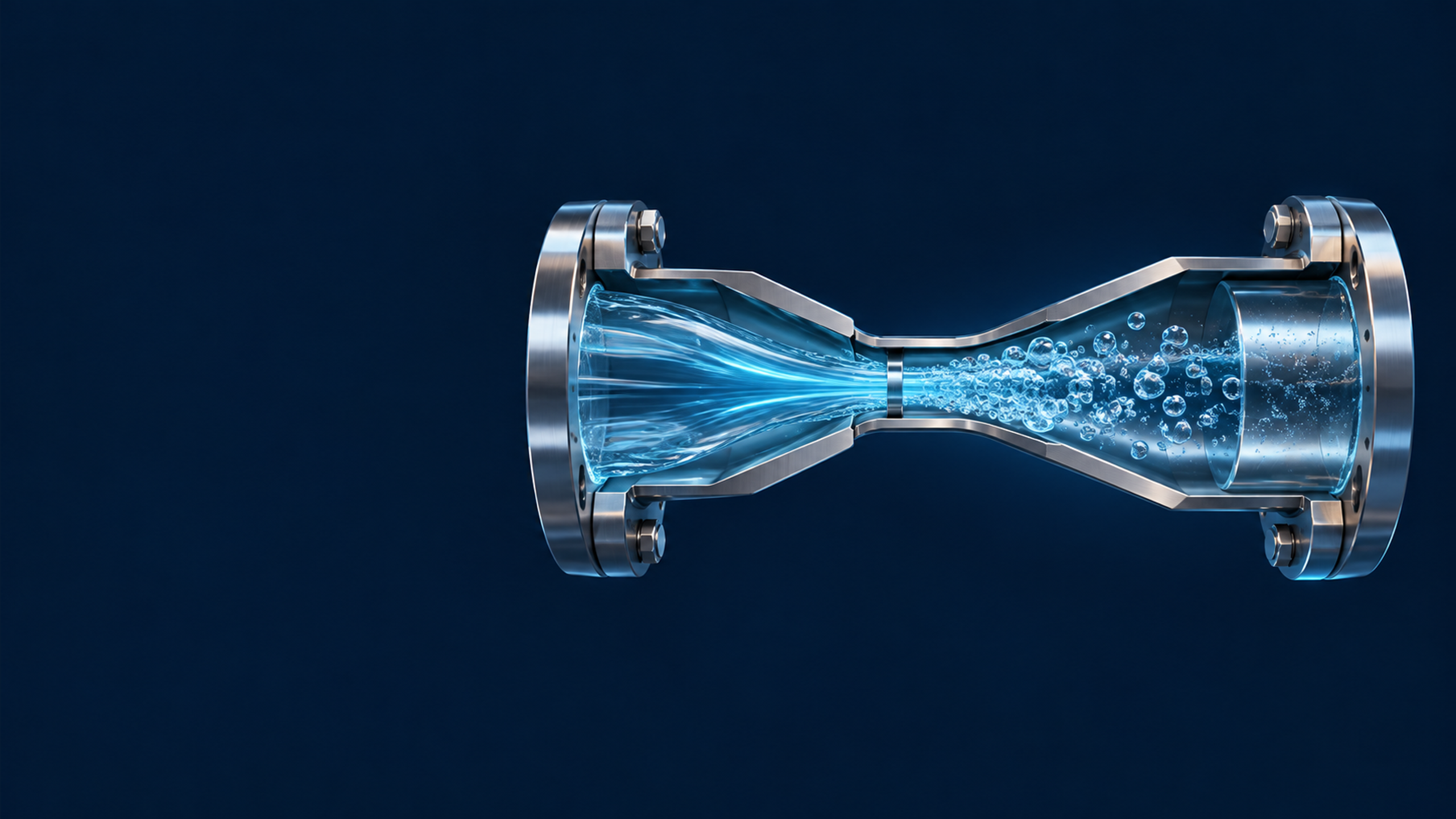
Reactors & equipment
Hydrodynamic Cavitation Technological Equipment
okozyuk.com
Published
Read complete publication for whole-document Find and printing. Browser Find and native printing on this reader include only loaded content.
Hydrodynamic Cavitation Technological Equipment
Abstract
Hydrodynamic cavitation equipment intentionally generates controlled low pressure regions and subsequent pressure recovery so that cavity growth and collapse can be used for process intensification. This article examines the hydraulic, mechanical, and process design of static and dynamic cavitation systems, including orifice, Venturi, bluff body, vortex, multistage, opposed flow, rotor stator, pinned disc, cavity rotor, and high pressure interaction architectures. The principal hydrodynamic quantities governing equipment comparison are summarized through continuity, pressure balance, cavitation number, Reynolds number, Euler number, Weber number, Strouhal number, and rotating equipment similarity parameters. Representative commercial systems are reviewed with emphasis on operating envelope, pressure control, cleanability, erosion, flow distribution, temperature management, energy accounting, and product qualification. Hydraulic power, shaft power, and measured electrical input are distinguished to establish a consistent basis for specific energy and thermal balance. Scale up is treated as preservation of the local geometry, pressure history, collapse environment, exposure distribution, residence time, and product response rather than geometric enlargement alone. Reproducible hydrodynamic cavitation processing therefore requires complete reporting of device geometry, pressure reference locations, flow conditions, gas state, temperature history, energy boundary, product response, and equipment integrity. When validated local cavitation conditions cannot be maintained in a larger unit, parallel scale out provides a conservative alternative for increasing throughput.