
Technical publication
Back to publications
Industrial applications
Hydrodynamic Cavitation in Food and Fermentation Processing
okozyuk.com
Published
Read complete publication for whole-document Find and printing. Browser Find and native printing on this reader include only loaded content.
3 Beer Brewing
3.1 Process context and opportunities for intensification
Beer production converts grain starch into fermentable sugars and then uses yeast to convert those sugars into ethanol, carbon dioxide, flavor compounds, and biomass. The main brewhouse stages are malt milling, mashing, saccharification, solids separation, hopping and wort boiling, clarification, cooling, and transfer to fermentation. Conventional mashing relies on carefully controlled temperature rests to balance proteolysis, starch gelatinization, and alpha- and beta amylase activity. Wort boiling extracts and isomerizes hop alpha acids, removes volatile sulfur compounds, inactivates enzymes, precipitates proteins, and provides microbial control [15-17].
Hydrodynamic cavitation can combine several of these duties. Grain and malt particles are fractured, liquid films are renewed, soluble starch and enzymes are released, the wort is mixed intensely, hops are dispersed, and mechanical energy is converted into heat. This combination permits process sequences that are not direct one for one replacements for conventional vessels. The strongest evidence is from 230 L real scale experiments with a recirculating Venturi system and from a smaller rotor pulsation apparatus [9,10]. To quantify performance in brewing applications, brewhouse extraction efficiency () is defined as:
where is brewhouse extraction efficiency, is the mass of soluble extract recovered in wort, and is the theoretical extract available from the grist. The same definition and moisture basis must be used for conventional and cavitation assisted trials.
In biological and bioprocessing applications, the fermentation product yield () is evaluated by relating the formation of a target product to substrate depletion:
where is fermentation product yield, ΔP is the increase in ethanol or another product, and -ΔS is substrate consumption over the same interval. Building on product yield metrics, process productivity (), expressed on either a volumetric or mass specific basis, is quantified over a defined fermentation interval ():
where is volumetric or mass specific productivity and Δt is the selected fermentation interval.
3.2 Cavitation brewing equipment
The principal real scale brewing unit reported by Albanese and coworkers was a closed stainless steel hydraulic loop with a total volume near 230 L, a 7.5 kW centrifugal pump, an open impeller approximately 0.174 m in diameter, and operation near 2900 rpm. A circular Venturi generated cavitation, while pressure release valve controlled downstream pressure. A secondary pump and plate heat exchanger enabled isothermal rests, cooling, and transfer. The Venturi was preferred to an orifice plate because circulating malt and hop solids could obstruct small holes [9].
The equipment was configured either for direct circulation of malt particles or with a stainless steel brew in the bag cage that retained solids while wort circulated through the cavitation loop. Fermentation was normally performed in separate 200 L cylinder conical vessels, although some trials used the main unit as a fermenter. The basic loop architecture is readily scaled by larger pumps and reactors or by parallel trains, but similarity in cavitation number alone is insufficient. Pass frequency, solids loading, heat loss, pressure recovery, and separation equipment must also be scaled [9,13,14].
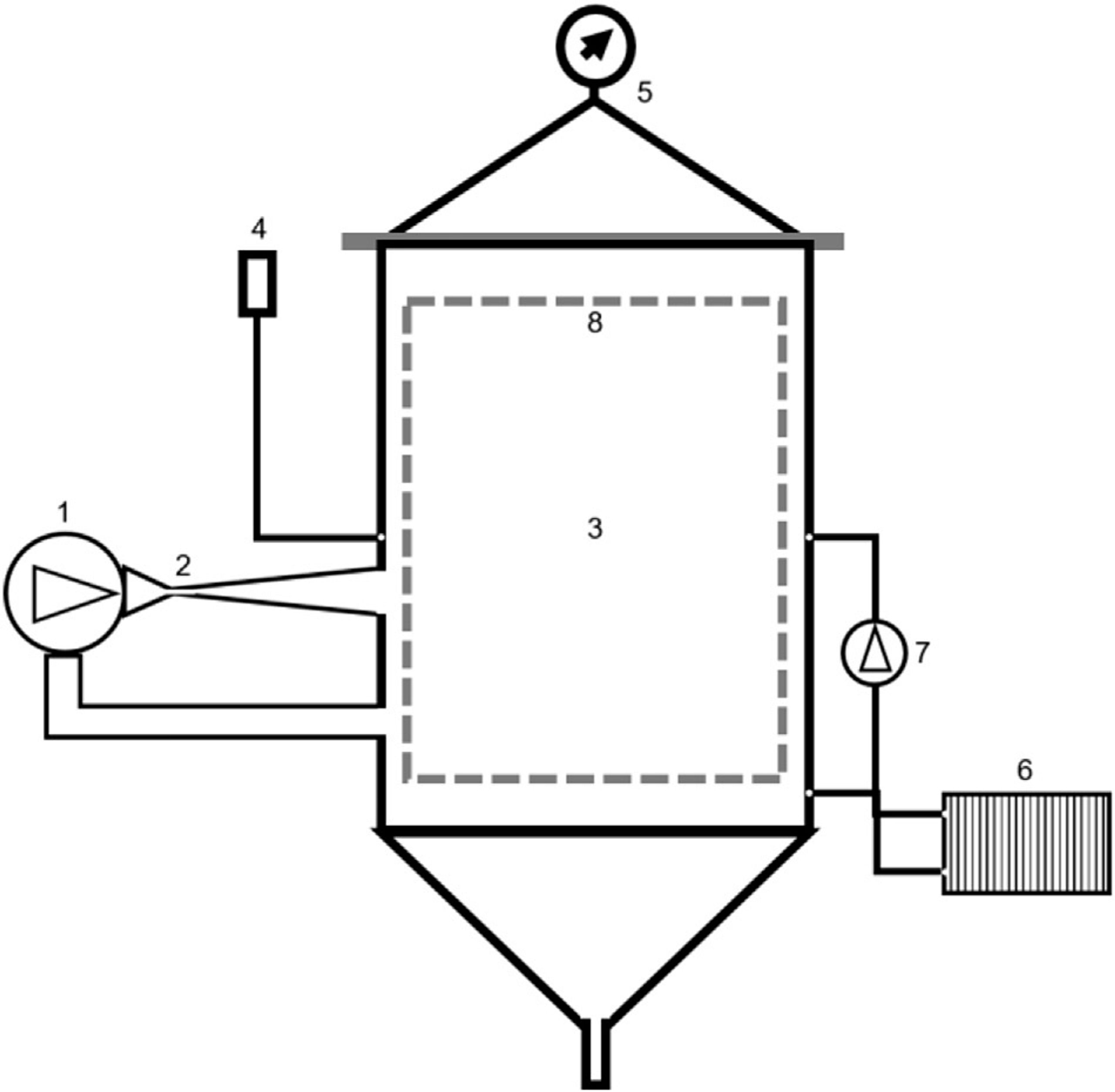
Figure 3.1. Simplified 230 L hydrodynamic cavitation brewing loop with centrifugal pump, Venturi reactor, main vessel, pressure control, heat exchanger, circulation pump, and malt cage. [9].
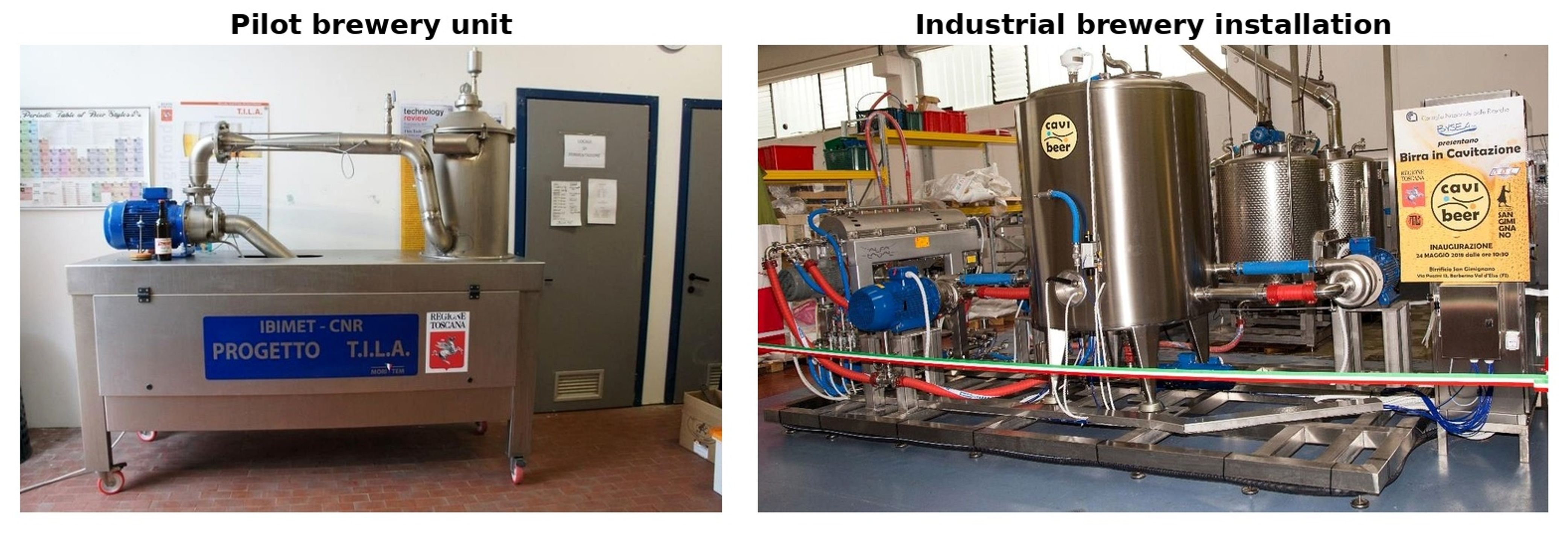
Figure 3.2. Pilot and industrial grade cavitation assisted brewing installations. [14].
3.3 Mashing, starch extraction, and solids handling
Cavitation assisted mashing modifies both the raw material and the liquid side transport resistance. Direct circulation of malt can eliminate a separate dry milling step because repeated collapse and impeller action progressively reduce the particle structure. Microscopy and photographs from the real scale study show substantially more disintegrated spent malt after cavitation than after conventional brewing. The larger accessible surface and thinner boundary layer increase release of starch, soluble proteins, minerals, and endogenous enzymes [9].
In the reported real scale experiments, peak starch extraction was accelerated and, in selected comparisons, increased by as much as 30% while using approximately 12% less energy. The effective saccharification temperature could be reduced by as much as 35 °C relative to the conventional temperature program. These values describe a specific recipe, installation, and analytical method; they should be treated as proof of process opportunity rather than universal design values [9].
The rotor pulsation study used a 1.12 L apparatus with rotor speed up to 4000 rpm, narrow rotor stator clearances, and a cooling jacket. At selected conditions near 2000 rpm, complete saccharification was reported after approximately 10-15 min at 70-80 °C. The same study reported that short treatment of brewing yeast in nutrient media could reduce fermentation time by about 1.5 d while preserving acceptable organoleptic quality. The results show the sensitivity of yeast response to mechanical intensity and the protective role of wort or whey, but they require broader replication and scale up validation [10].
Solids separation remains a decisive design issue. Directly cavitated malt produces fine particles that may overload traditional lautering. A retained malt cage, decanter centrifuge, rotary screen, or hydrocyclone may be required. The value of intensified extraction must therefore be assessed together with filtration rate, clarity, yield loss in the solids phase, and cleaning demand.
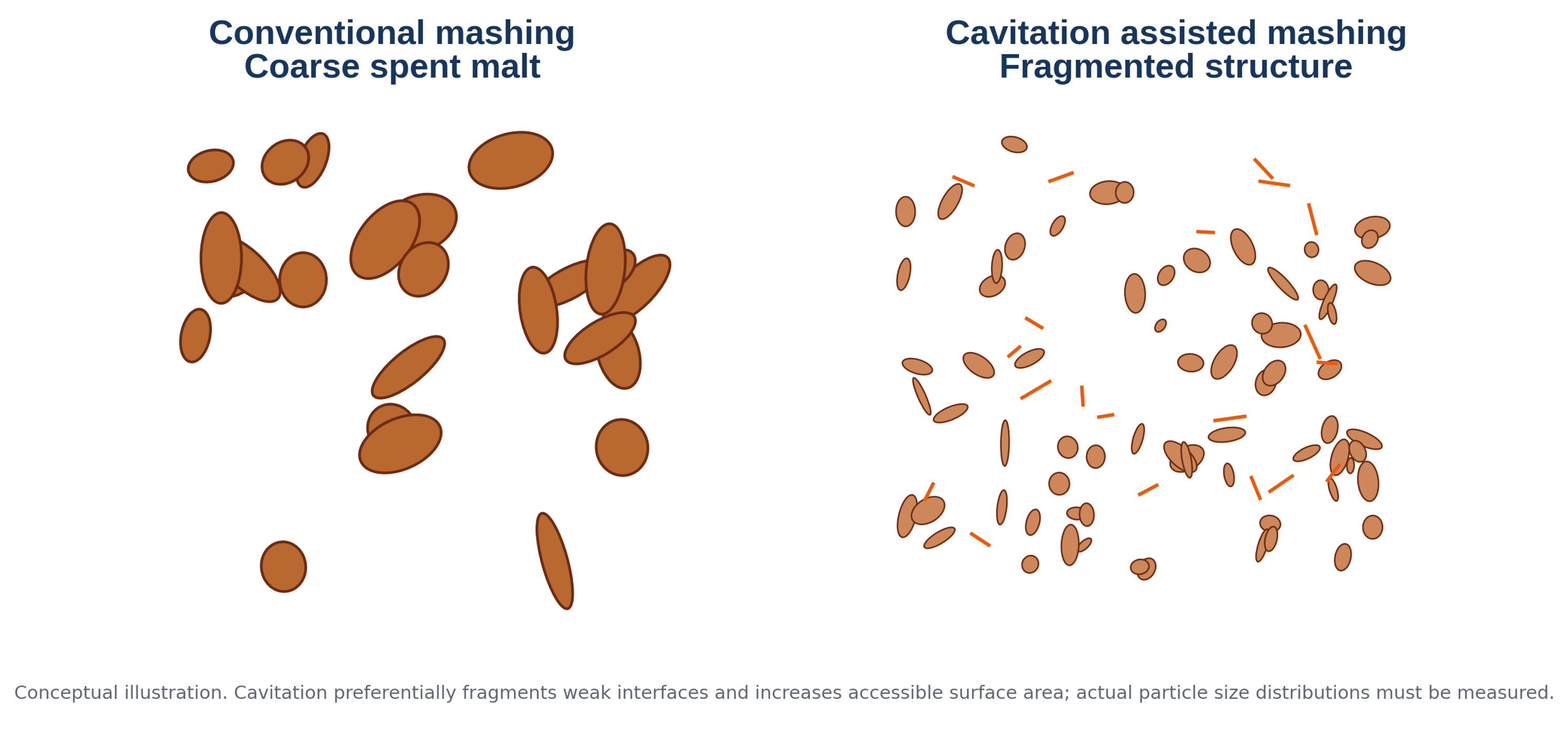
Figure 3.3. Conceptual comparison of coarse spent malt after conventional mashing and the more fragmented structure expected after cavitation assisted circulation [66].
3.4 Hopping, volatile removal, and wort boiling
Hop processing involves extraction of alpha acids and aromatic compounds, isomerization of alpha acids to soluble iso alpha acids, and control of dimethyl sulfide and other volatiles. Conventional boiling provides the required mixing and gas stripping but also consumes substantial thermal energy and can degrade hop compounds. Cavitation renews the hop liquid interface and produces intense local turbulence, so extraction and isomerization can proceed rapidly during bulk heating [9,17].
The real scale study reported useful hop alpha acid extraction before full boiling and concluded that the wort could be transferred to fermentation after heating to approximately 100 °C without the conventional long boil. Reported hop utilization was higher than in the conventional comparison, and later analysis found increased retention of xanthohumol and other prenylflavonoids under selected time temperature histories [9,12]. The process still requires validated removal of dimethyl sulfide and other recipe specific volatiles, because cavitation is not equivalent to open vessel evaporation.
Hydrodynamic cavitation was also reported to reduce measurable gluten in barley malt beers under selected operating regimes [11]. This result does not establish suitability for people with celiac disease. In the United States, a food bearing a gluten free claim must contain less than 20 ppm unavoidable gluten, and FDA has a separate compliance framework for fermented or hydrolyzed foods, including FDA regulated beer. Ingredient control, analytical evidence before fermentation, process records, cross contact prevention, and the applicable labeling jurisdiction must therefore be addressed independently [62].
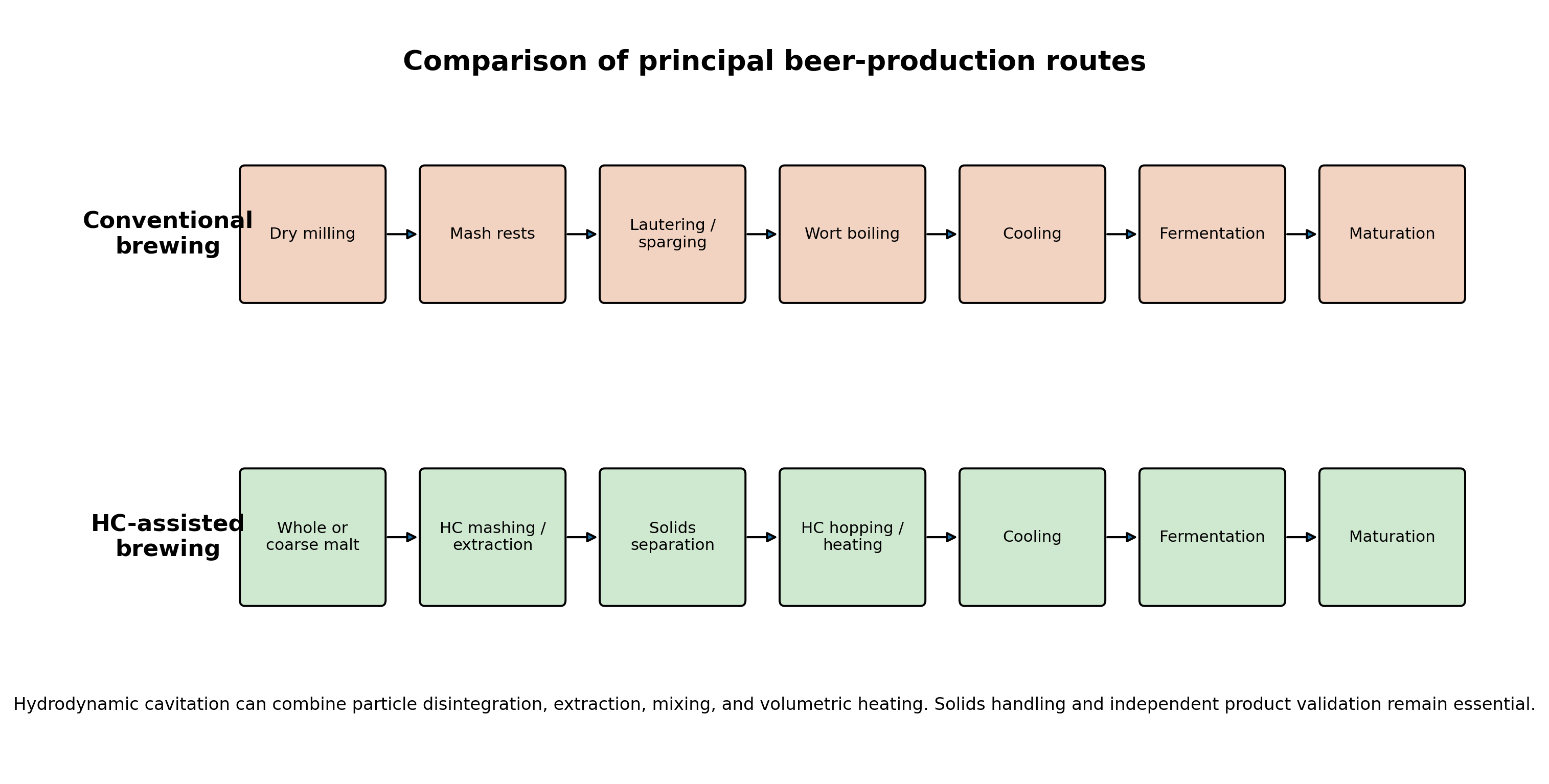
Figure 3.4. Comparison of conventional and hydrodynamic cavitation assisted beer production routes [66].
3.5 Fermentation, gas transfer, and yeast management
Cavitation can assist fermentation indirectly through rapid wort aeration, carbon dioxide removal, nutrient dispersion, and reduced mass transfer resistance. Manufacturer literature describes rotor cavitators for dispersing oxygen before yeast pitching and for producing fine carbon dioxide or nitrogen bubbles before filling [32]. Low power cavitation studies cited in the brewing literature reported faster sugar and free amino nitrogen utilization, but response peaks at intermediate severity. Excess treatment can rupture cells, inactivate enzymes, oxidize wort, or alter aroma precursors [9,10].
The preferred engineering strategy is therefore to separate objectives. Strong treatment is applied before inoculation for extraction, homogenization, heating, and microbial control. Yeast contact treatment, when used, is short and conducted in a protective nutrient medium under controlled temperature. Post fermentation cavitation is limited to gas dispersion, texture adjustment, or specially validated product treatment. Viable count, budding rate, membrane integrity, dissolved oxygen, fermentation rate, attenuation, ester profile, higher alcohols, and sensory quality should be measured together.
3.6 Energy, quality, sanitation, and scale up
The 230 L cavitation assisted process consumed approximately 24 kWh per hectoliter from equipment start up through wort transfer in one reported trial. The study compared this with a literature benchmark near 32 kWh/hL for conventional medium to large breweries and approximately 44 kWh/hL measured in a conventional 50 L brewer. The cavitation system was not fully insulated, and separate energy for dry milling was avoided. These comparisons suggest a strong opportunity for energy reduction, but they combine different scales and system boundaries and should be verified by plant specific metering [9].
Finished beers from the study showed acceptable physicochemical and sensory characteristics, and one illustrated sample retained visible foam stability after 124 d. Industrial implementation requires recipe by recipe validation of bitterness, color, haze, foam, volatile profile, ethanol, microbiological stability, and packaging behavior. Cleaning in place must account for grain fines, proteins, hop resins, seals, and dead legs. The sanitary design should allow complete drainability and inspection of the Venturi throat or rotor passages [9,13,14].
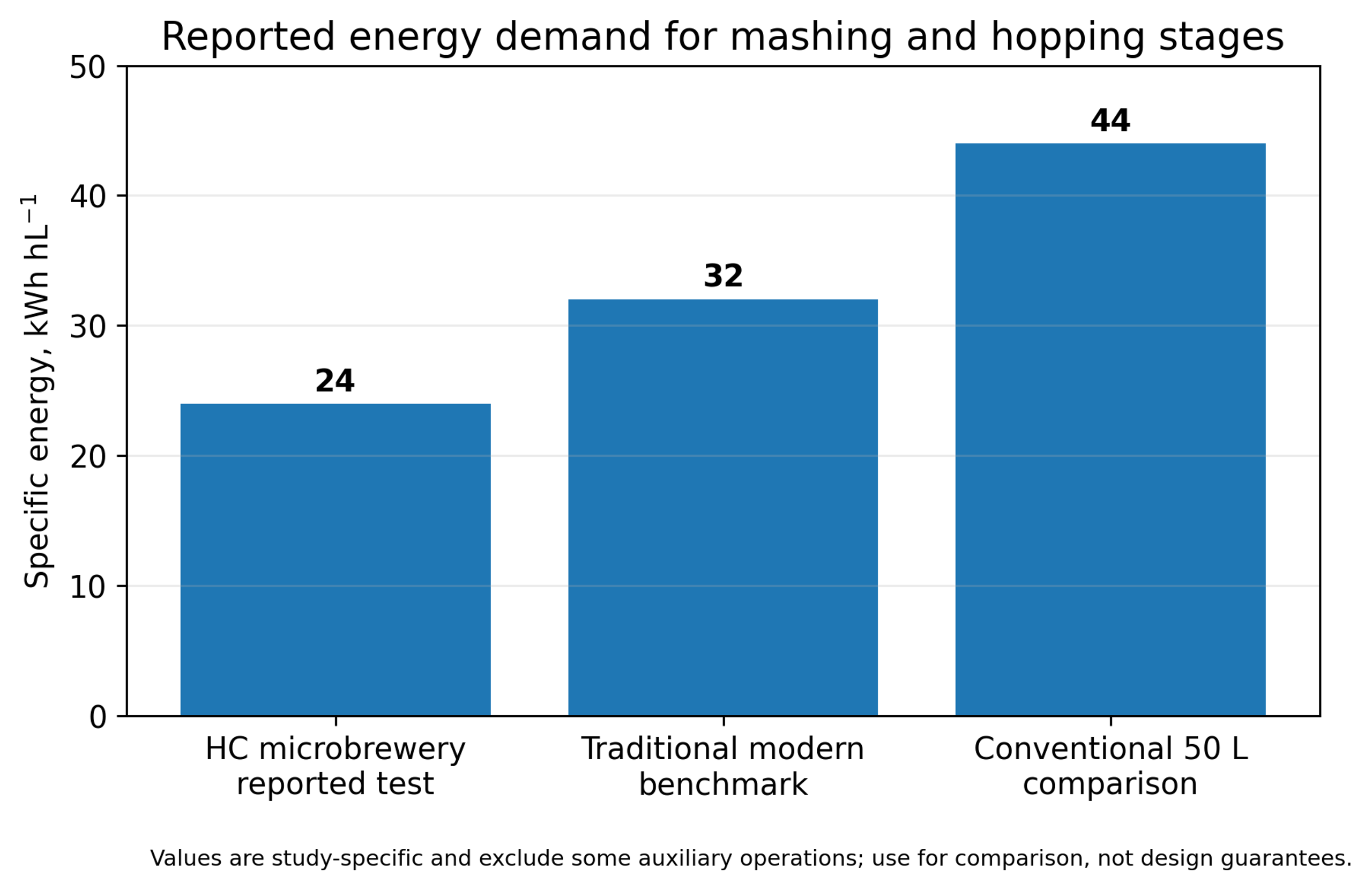
Figure 3.5. Specific energy reported for one cavitation assisted microbrewery trial, a conventional literature benchmark, and a 50 L conventional comparison. [9].
Table 3.1. Representative beer brewing evidence and engineering interpretation.
| Study or source | Scale and device | Reported result | Engineering interpretation |
|---|---|---|---|
| Albanese et al. [9] | 230 L loop; 7.5 kW pump; circular Venturi | Faster extraction; selected peak extraction up to 30% higher; lower saccharification temperature; approximately 24 kWh/hL in one trial | Strong proof of integrated mashing, heating, and hopping; solids separation and recipe validation remain essential |
| Safonova et al. [10] | 1.12 L rotor pulsation apparatus | Mashing reported in 10-15 min; fermentation shortened by about 1.5 d after yeast activation | Promising mechanistic and laboratory evidence; high mechanical intensity and scale up need validation |
| Gluten study [11] | Same HC brewing platform | Very low measured gluten under selected regimes | Specialty application; cannot substitute for full allergen and labeling validation |
| Prenylflavonoid study [12] | HC assisted hopping and brewing | Higher retention of xanthohumol and related compounds | Time temperature severity optimization can preserve or extract bioactives |
| Patent and workshop [13,14] | Pilot and industrial plant concepts | Integrated apparatus and process sequence | Useful equipment disclosure; performance claims should be verified independently |