
Technical publication
Back to publications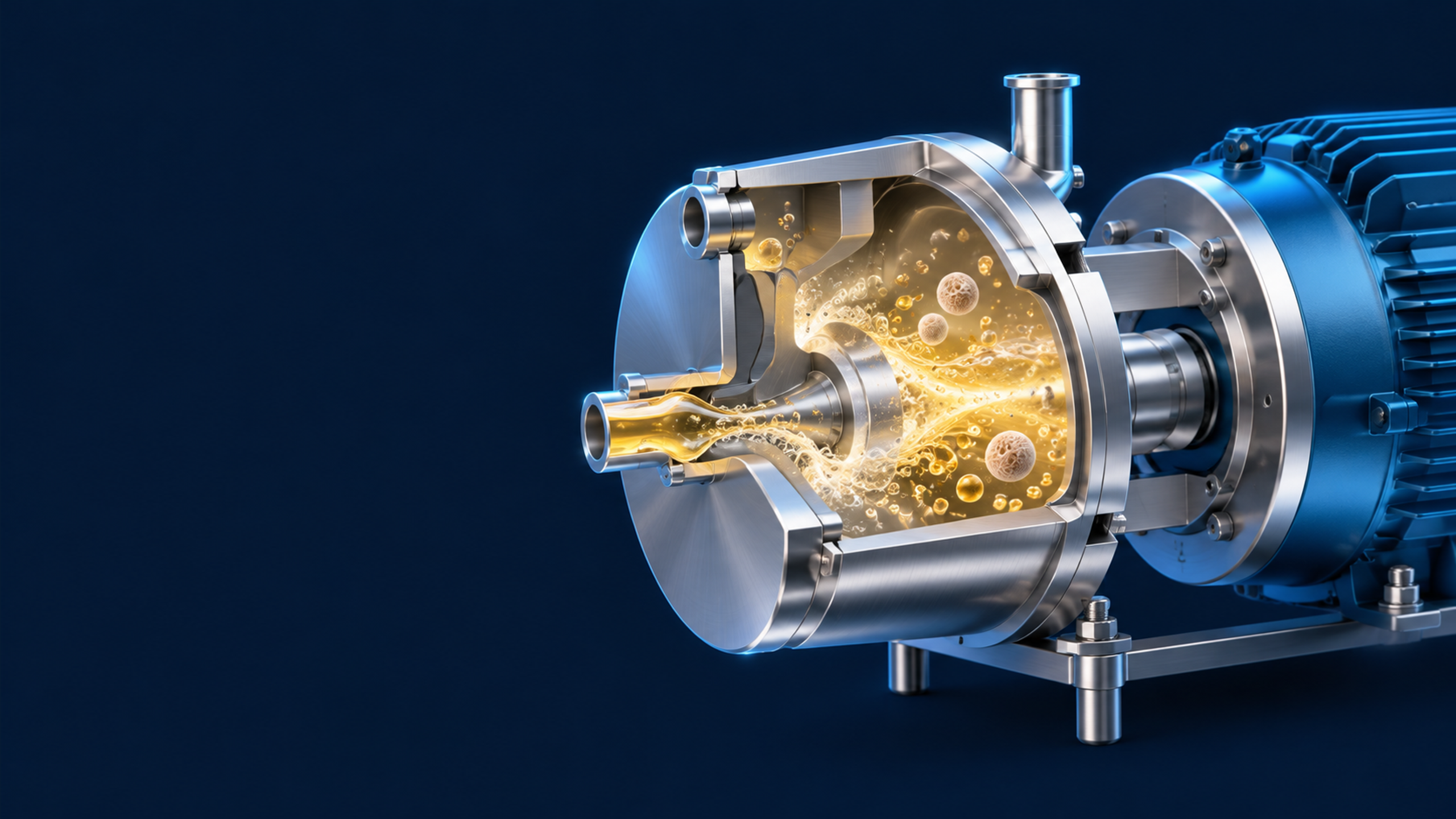
Industrial applications
Hydrodynamic Cavitation in Food and Fermentation Processing
okozyuk.com
Published
Read complete publication for whole-document Find and printing. Browser Find and native printing on this reader include only loaded content.
1 Introduction
This article applies the hydraulic definitions, energy boundaries, residence time expressions, uncertainty requirements, and scale translation principles required to evaluate hydrodynamic cavitation in food and fermentation processing. It develops the mechanisms, models, operating variables, applications, and acceptance criteria relevant to product quality, process safety, and industrial scale up.
Food and fermentation processing must satisfy several competing objectives at the same time. A successful operation controls microorganisms and enzymes while retaining flavor, color, nutrients, protein functionality, emulsion stability, and the required rheology. Conventional plants therefore combine mixers, mills, homogenizers, heat exchangers, deaerators, fermenters, separators, and holding tubes. Hydrodynamic cavitation provides a process intensification option because one compact flow device can generate pressure oscillation, cavity growth and collapse, localized shear, microjets, turbulence, interfacial renewal, gas dispersion, particle disruption, and viscous heating within the same circulation loop [1-8].
The value of hydrodynamic cavitation does not arise from one universal mechanism. In beer and corn mash, the principal opportunities are particle disintegration, extraction, starch accessibility, and volumetric heating. In juice and milk, the critical responses may be cloud stability, fat globule or pulp particle size, enzyme activity, and microbial reduction. In liquid egg, ice cream, mayonnaise, and salad dressing, the key functions are controlled homogenization, powder hydration, emulsification, and protection of heat sensitive proteins. The acceptable process window is therefore product specific, and a pressure drop or rotor speed cannot be transferred directly between products or devices [3,6,7].
This article emphasizes engineering interpretation and validation. Every treatment should be characterized by device geometry, pressure reference locations, flow rate, number of passes, residence time distribution, inlet and outlet temperature, energy input, dissolved gas condition, solids loading, viscosity, and downstream holding or separation. Microbial control requires challenge studies with defined target organisms and validation of the combined cavitation, temperature, gas, and holding history. Product quality requires complete particle or droplet distributions, mass balances, storage studies, and appropriate untreated and conventional process controls.