
Technical publication
Back to publications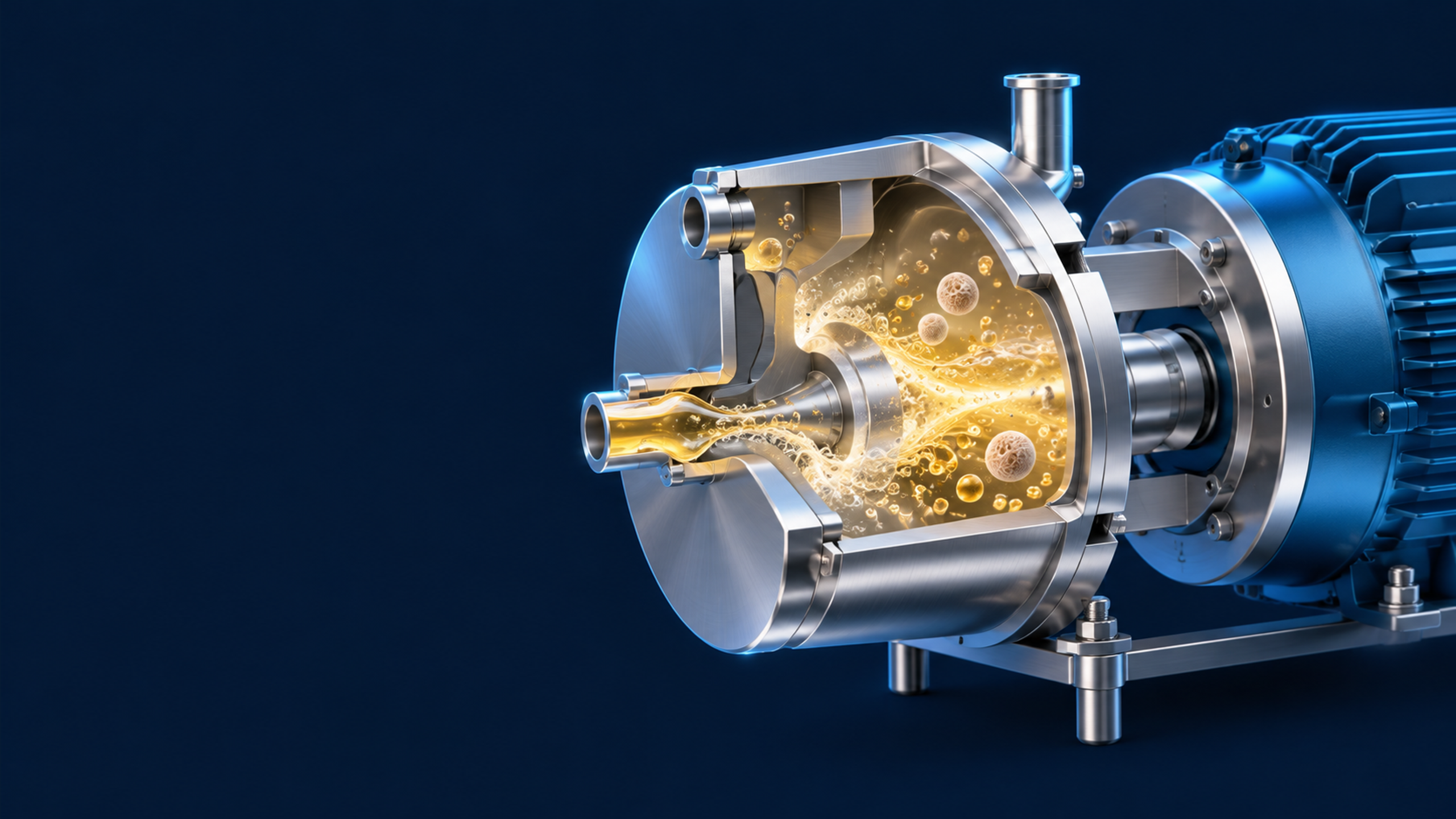
Industrial applications
Hydrodynamic Cavitation in Food and Fermentation Processing
okozyuk.com
Published
Read complete publication for whole-document Find and printing. Browser Find and native printing on this reader include only loaded content.
Hydrodynamic Cavitation in Food and Fermentation Processing
Mechanisms, Applications, and Future Prospects
Abstract
Hydrodynamic cavitation is an intensification technology that couples rapid pressure variation, cavity growth and collapse, turbulence, interfacial renewal, particle disruption, gas dispersion, and hydraulic energy dissipation within compact flow equipment. This article examines its application to food and fermentation processing, with emphasis on beer brewing, fruit and vegetable juices, dairy products, liquid egg, ice cream, mayonnaise and salad dressing, protein processing, bioproduct recovery, and dry mill corn ethanol production. The analysis relates product response to cavitation number, pressure history, specific energy, residence time, pass frequency, temperature, rheology, gas content, particle or droplet size distribution, and downstream holding or separation. Reported studies show that cavitation can intensify extraction, homogenization, powder hydration, emulsification, starch accessibility, protein functionalization, fermentation pretreatment, and combined thermal and mechanical processing. The same mechanisms can also cause overprocessing, oxidation, protein damage, persistent emulsions, excess fines, erosion, or reduced separation efficiency. Microbial and enzyme control therefore require product specific validation rather than reliance on pressure or visible cavitation alone. Scale up should preserve the mechanism governing the critical quality attribute and should include sanitary design, residence time distribution, thermal and energy balances, cleanability, wear control, and matched process economics. The evidence supports hydrodynamic cavitation as a versatile platform when operating conditions are selected from product quality and process performance requirements.